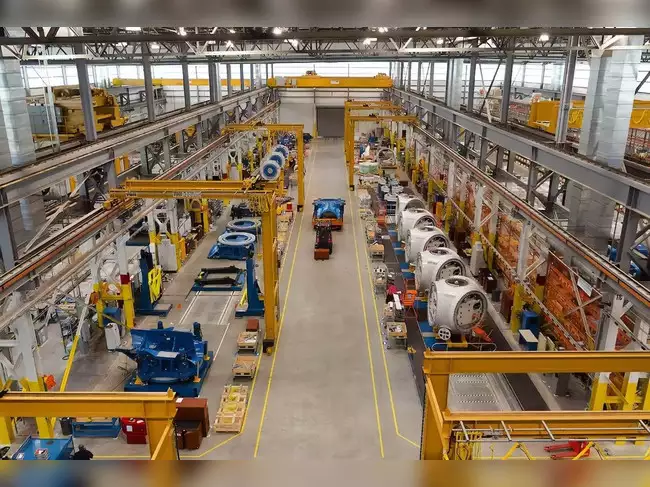
India is set to bolster its domestic manufacturing of IT hardware products, including laptops, tablets, and servers. The government is expected to offer concessions in import quotas to electronics manufacturers that can increase domestic production through the Production-Linked Incentive (PLI) scheme for IT hardware, according to sources familiar with the matter. Import restrictions on laptops, tablets, all-in-one personal computers, ultra-small form factor computers, and servers were first implemented on August 3, 2023.
Additionally, the government is targeting an ambitious 80% local value addition in IT equipment within the next 5 to 10 years.
Beyond IT hardware, India is striving to produce a wide array of goods domestically. Recently, Prime Minister Narendra Modi inaugurated the TATA Advanced Systems Limited (TASL) Campus in Vadodara, which will manufacture C-295 defense transport aircraft in collaboration with Airbus. This facility marks India’s first private sector final assembly line for military aircraft. Under the C-295 program, Airbus will deliver 16 aircraft directly from Spain, while TASL will be responsible for the production of the remaining 40 aircraft in India.
The establishment of this aircraft plant is expected to contribute to the growth of India’s aviation industry and enhance the aviation manufacturing ecosystem, crucial for India’s aspirations to produce commercial aircraft domestically.
This initiative follows another significant Make in India project for semiconductors, with the India Semiconductor Mission approving five semiconductor units that will benefit from central and state government subsidies amounting to a total of ₹76,000 crore.
India is rapidly building its domestic manufacturing capabilities.
Incentives for Mobile Phone Component Production
The government is also looking to incentivize the production of 12 out of the 30 component sub-assemblies essential for mobile device manufacturing, according to a senior official. This effort is part of a broader incentive scheme aimed at developing a local ecosystem for electronic components, with incentives linked to production, capital expenditure, and job creation, reflecting the government’s renewed focus on employment generation. “This will set a new template for the manufacturing sector,” the official stated. Currently, China’s value addition stands at approximately 30%, while India aims to achieve 25-30% value addition within the next seven years.
Over the past decade, India has significantly scaled its mobile phone manufacturing and is now focusing on enhancing value addition and expanding into IT hardware, servers, and chips. The country hopes to capitalize on the global shift of the electronics supply chain away from countries like China. Among the identified sub-assemblies for local production are cameras, printed circuit boards, speakers, microphones, displays, and chip subsystems. The strategy emphasizes establishing a comprehensive ecosystem for sub-assemblies rather than maintaining an open-ended component scheme. “We believe we will be a world leader in three of the 12 sub-assemblies and a dominant player in around five,” the official added.
Mobile phone manufacturing in India has surged, increasing twenty-onefold over the past decade to reach ₹4.1 lakh crore in FY24. Government policies, including production-linked incentives, have been instrumental in attracting global players to enhance local production, according to the industry body ICEA.
India has emerged as the second-largest mobile phone manufacturer after China, with cumulative shipments of domestically produced handsets exceeding 2 billion units from 2014 to 2022, as reported by Counterpoint Research. However, local value addition in mobile phone manufacturing currently stands at 15%.
Apple Inc. has seen a significant increase in iPhone exports from India, which rose by one-third in the six months ending in September. The company exported nearly $6 billion worth of India-made iPhones, marking a substantial growth in value compared to the previous year. This trend positions annual exports on track to exceed the approximately $10 billion target for fiscal 2024.
Electronics Component Manufacturing Scheme
The government has proposed an allocation of up to ₹40,000 crore for an electronics component manufacturing scheme, expected to be rolled out later this year. Initial discussions among stakeholders suggest that the scheme may include capital expenditure subsidies in some cases, operational expenditure subsidies in others, or a combination of both, as needed. Of the ₹40,000 crore, around ₹19,800 crore is anticipated for operational expenditure subsidies, while approximately ₹13,000 crore is earmarked for capital expenditure subsidies.
Components and sub-assemblies constitute 60-70% of India’s total electronics imports, essential for the production of mobile phones, televisions, laptops, and personal computers.
Policy to Promote Local 5G Equipment Production
The Department of Telecommunications (DoT) has recently added a clause to the latest public procurement policy order, ensuring preferential treatment for domestic companies that demonstrate the capability to achieve scale in the production of locally developed 5G technology products. This move aims to give local companies a competitive edge over global counterparts in securing public sector contracts.