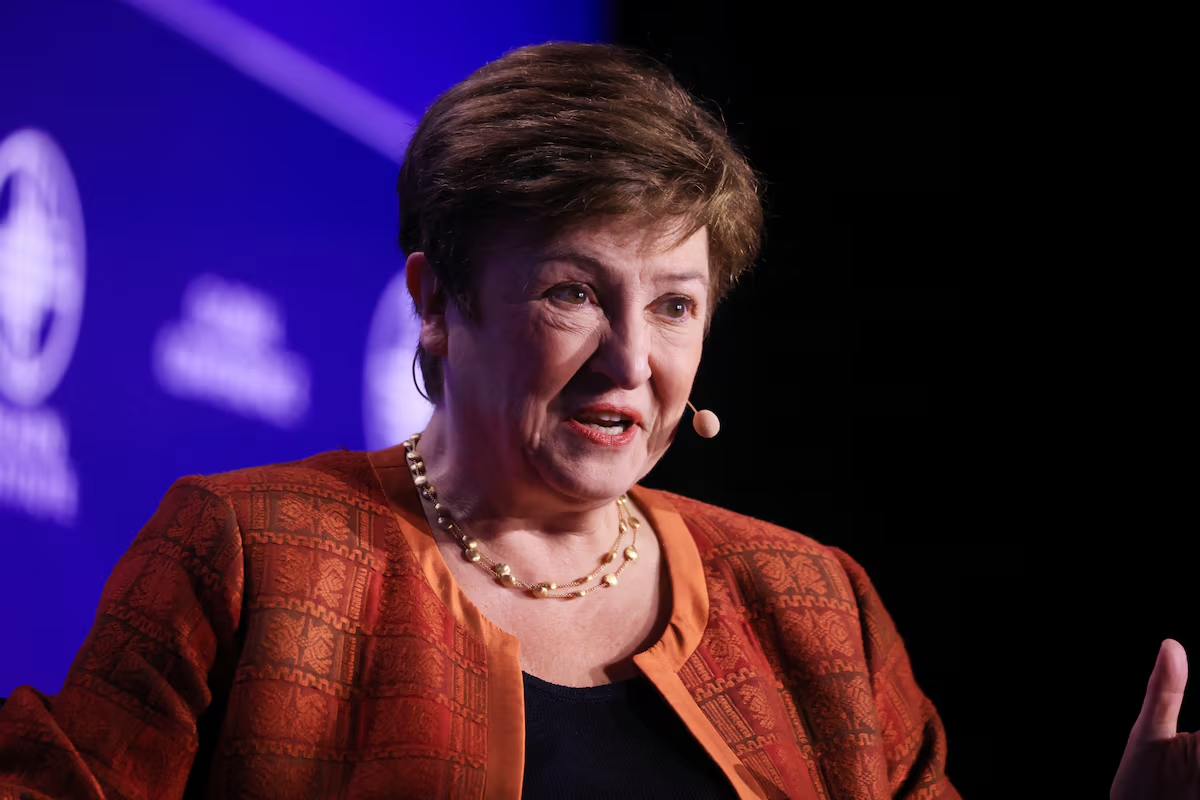
WASHINGTON, Oct 17 (Reuters) – International Monetary Fund (IMF) Managing Director Kristalina Georgieva warned that China must transition from its export-dependent economic model to one driven by domestic consumption, or risk dangerously slow growth. In an interview with Reuters on Thursday, Georgieva emphasized that China’s current trajectory could result in growth falling below 4% in the medium term—a level that would be socially challenging for the country.
Speaking ahead of the annual IMF and World Bank meetings in Washington, where discussions on China’s export surge are expected to take center stage, Georgieva noted that IMF research indicates China could achieve higher growth if it enhances consumer confidence and spending.
“China stands at a critical crossroads,” Georgieva said. “If they continue with their current export-led growth model, the economy could face serious challenges. The sheer scale of China’s economy means that its exports are no longer a minor player in global trade.”
Beijing, she stressed, cannot rely indefinitely on an export-driven model, as the size of its economy now demands a more sustainable, consumption-based growth strategy.
Georgieva welcomed China’s recent fiscal stimulus measures aimed at restoring consumer confidence, which has been undermined by the country’s protracted real estate crisis. However, she highlighted that these steps are just the beginning, and more comprehensive reforms are necessary to fully shift towards a consumption-led economy.
China’s lack of strong domestic demand has led to a surplus in manufacturing output, which has been increasingly diverted to exports. This has triggered a rise in tariff barriers from countries like the U.S. and Europe, with some sectors, such as electric vehicles, being particularly affected. Republican presidential candidate Donald Trump has even proposed tariffs as high as 60% on Chinese imports, and 10% on goods from other nations.
While acknowledging China’s recent efforts, Georgieva insisted that more profound reforms are needed, including pension reforms, the establishment of a robust social safety net to reduce the need for excessive savings, and investments in underdeveloped areas like healthcare and education.
In response to remarks from a U.S. Treasury official accusing the IMF of being “too polite” on China’s industrial and exchange rate policies, Georgieva rejected the claim, stating that the IMF has consistently advocated for reform. “We have always spoken candidly about the need for China to reform subsidies and ensure equal treatment of state-owned and private companies,” she said.