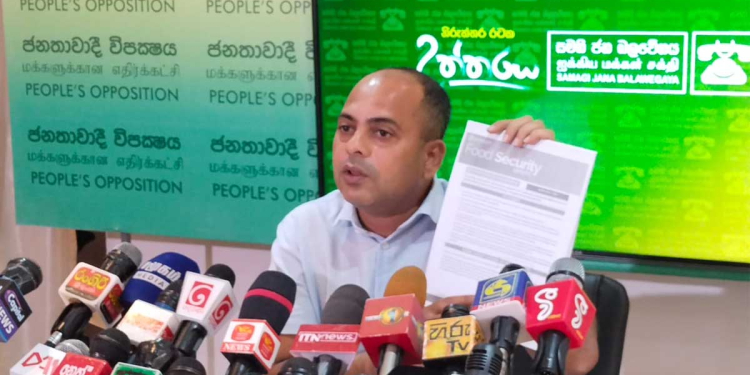
Colombo: MP S. M. Marikkar addressed a media conference held today (15) at the Samagi Jana Balawegaya headquarters, shedding light on a significant tax revenue loss suffered by the government due to irregularities in coconut oil imports.
Key Points from the Statement
MP Marikkar disclosed that the government has lost tax revenue amounting to Rs. 5,000 crores as a result of several companies failing to pay taxes on the import of unrefined coconut oil. Prominent newspapers, including Divaina, Sunday Times, and Mawrata, have recently reported this alarming situation.
Background of the Tax Revenue Loss
Between January 1, 2024, and October 31, 2024, this revenue loss occurred due to lapses in enforcing tax regulations on coconut oil imports. Before January 2024, a tax structure was in place, imposing Rs. 125,000 per metric ton on unrefined coconut oil and Rs. 150,000 per metric ton on refined coconut oil under the Special Commodity Levy. Additionally, VAT was not applicable on imported coconut oil under previous gazette notifications.
However, a special gazette notification issued on January 1, 2024, amended VAT regulations. Coconut oil was no longer exempt from VAT, making it subject to an 18% VAT and a 2.5% social security tax, totaling a 20.5% tax on each kilogram.
Irregularities in Coconut Oil Imports
Despite these regulations, several companies have reportedly imported a combined total of 38.8 million kilograms of unrefined coconut oil without paying the applicable taxes. Breakdown of imports by individual companies includes:
- 12.9 million kilograms by one company.
- 624,000 kilograms by another.
- 18.8 million kilograms by a third.
- 4.23 million kilograms by an additional entity.
This failure to pay taxes has deprived the government of substantial revenue.
A Questionable Request for Tax Relief
MP Marikkar highlighted an instance where a company importing coconut oil wrote to former President Ranil Wickremesinghe on July 17, 2023, seeking tax relief. The letter was subsequently forwarded to the Department of State Fiscal Policy, which referred it to the Department of Inland Revenue on July 31, 2024. On August 29, 2024, the Department of Inland Revenue submitted its observations to the Department of State Fiscal Policy.
Implications and Concerns
Marikkar questioned the legality of such a request, emphasizing that any company subject to the country’s gazette notification must adhere to the prevailing laws. He pointed out that unrefined coconut oil, if sold directly without refining, is only subject to the Special Commodity Tax during import, but VAT is levied upon refining and sale. Companies that claim to sell unrefined oil risk causing serious public health concerns.
Political and Administrative Accountability
The MP also noted that this incident unfolded during the tenure of former President Ranil Wickremesinghe and appears to have persisted even after his presidency. On September 21, Mr. Anura Dissanayake was sworn in as the new President, yet by October 2024, 38,000 tons of coconut oil had been imported, further exacerbating the issue.
The matter raises critical questions about governance, tax enforcement, and public health policies, demanding urgent attention from the authorities.