
The Frontline Socialist Party (FSP) claims that the tender process for importing coal required for power generation in Sri Lanka has opened the door to serious corruption. Sri Lanka Latest News
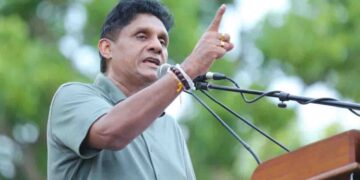
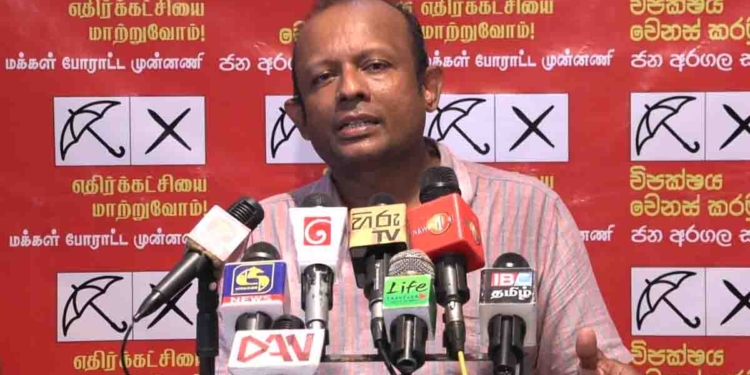
Speaking at a seminar titled “Uttaraya Api” held yesterday (28) at the Suja Hotel Hall, Bendiwewa, Polonnaruwa, FSP Education Secretary Pubudu Jayagoda made the following remarks:
“The tender for supplying coal for power generation was opened on September 15, and the contract was awarded to a company named Trident Chemphar, which submitted the lowest bid. However, a number of questions arise, as there is suspicion that procurement guidelines were deliberately violated to award the contract to this company.”
Jayagoda pointed out that according to the 2021 Sri Lanka Coal Registration Document, the minimum eligibility requirement was that companies must hold at least 1,000,000 metric tons of coal reserves with a GCV of 5900 kCal/kg. Yet, in the 2025 registration document, the minimum eligibility has been reduced to 100,000 metric tons.
“This means the eligibility criteria were reduced by 90% — from one million metric tons to just one hundred thousand. This change directly facilitated the registration of this company, which is highly suspicious,” he said.
The FSP also raised concerns about Trident Chemphar’s background. According to the Auditor General’s report presented to the Public Enterprises Committee on 20 September 2016, the company had violated government procurement guidelines when supplying 30,000 metric tons of rice to Sathosa in 2014.
Further allegations were highlighted regarding the company’s ownership. Sarath Chandra Reddy, one of Trident Chemphar’s owners, was arrested in New Delhi in 2022 on charges of money laundering connected to an excise duty scam.
In addition, the company’s local representative in Sri Lanka, Sarath Bandara Jayasundara, also faces corruption allegations. He was accused of match-fixing in cricket and was banned from the sport for seven years starting in 2019.
Jayagoda stressed that under the current government, even procurement guidelines have been altered in ways that benefit questionable companies. “The coal tender, its awarded company, its owners, and even its local representative are all tied to allegations of corruption. This shows how fraud and corruption in Sri Lanka are maintained by a network involving politicians, top government officials, and a racketeering business circle.”
He further argued that while public focus is often placed on politicians in the name of anti-corruption, the wider network continues to operate with or without political involvement.
Jayagoda also criticized the government’s inconsistent stance on essential services:
“When Ceylon Electricity Board employees resisted the ‘meat-and-sell act,’ the President declared electricity an essential service. But when the coal import tender — usually called in March — was delayed until July, the essential service principle was conveniently forgotten.”
“When procurement guidelines slashed the minimum coal reserve requirement by 90%, it was not remembered that electricity is an essential service.”
“Even policies discouraging rooftop solar contributions from households and small producers ignore the fact that electricity is essential.”
“When electricity tariffs are continuously increased to unsustainable levels, authorities forget that electricity is fundamental to people’s lives.”
Concluding his remarks, Jayagoda stated:
“This single tender scandal is enough to make us question who exactly this government stands for.”