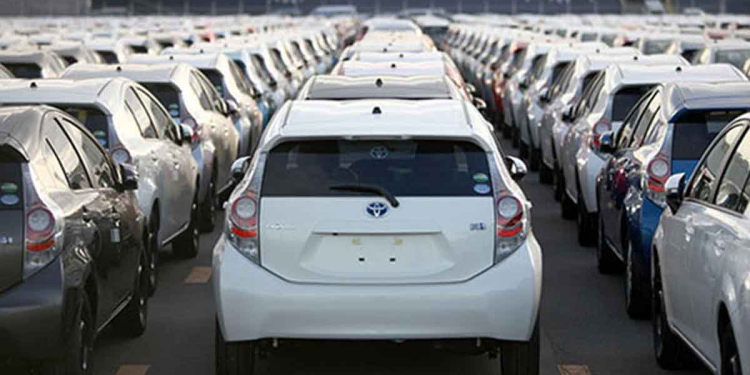
Excise Duty, which is calculated based on cylinder capacity and vehicle lifespan for fuel and electric vehicles, has been significantly increased. Vehicle importers report that with the revised taxes, the minimum price of a car affordable to the average citizen will exceed Rs. 5 million.
The President, in his capacity as the Minister of Finance, has approved these tax increases. The new rates, detailed in an extraordinary gazette notification, came into effect on the 11th of this month.
According to the gazette, vehicles not more than 10 years old from the date of manufacture will now incur an Excise Duty ranging between 200 and 300 percent. Despite this annual increase in Excise Duty, vehicle importers highlight that no steps have been taken to permit vehicle imports. They further note that these increases are not the final taxes to be applied to vehicle imports.
Economic analysts suggest that if vehicle imports are to resume, new legislation must be introduced, followed by Cabinet approval and the issuance of a corresponding gazette notification.
In addition to Excise Duty, other taxes such as Value Added Tax (VAT) and levies on cost, insurance, and freight (CIF) will also be imposed. As a result, vehicle importers predict that the prices of imported vehicles will align with or exceed current market rates. They also project that the cumulative taxes, including VAT, on vehicle imports will rise by approximately 50 percent.
Economic analysts estimate that under these revised tax policies, a vehicle with an engine capacity of 1500 CC will incur more than Rs. 2 million in Excise Duty alone, while a vehicle with an engine capacity of 1000 CC will be subject to over Rs. 1 million in Excise Duty.
Consequently, the cost of a Wagon R is expected to escalate to Rs. 7 million. Similarly, the price of a new Aqua model will surpass Rs. 10 million, and a new Prius will cost over Rs. 20 million.
Vehicle importers stress that these amendments, which encompass multiple taxes including VAT, will significantly impact the affordability of imported vehicles. Economic analysts underscore the need for a well-structured legislative framework to address vehicle imports and associated taxes.