The Wildlife Department has issued a controversial permit allowing the clearing of undergrowth on both sides of a carpeted road in Madupara National Park. This decision, dated June 5, 2024, has drawn sharp criticism for its ambiguity and potential to harm the park’s ecosystem. The permit, riddled with inaccuracies, incorrectly referred to the national park as a sanctuary, highlighting a glaring oversight by the department.
Political Influence and Questionable Intentions
It is widely speculated that the permit was issued under political influence, with then-President Ranil Wickremesinghe allegedly facilitating the decision to gain political favor. This situation exposes the vulnerability of government departments to political pressures, undermining their responsibility to protect the environment.
Unregulated Destruction
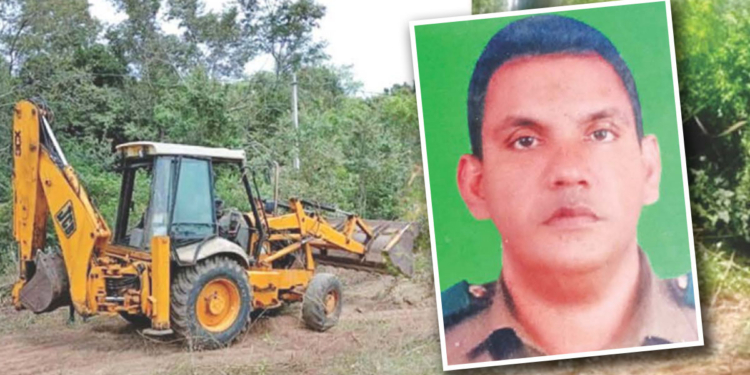
Once the permit was issued, the private party involved exceeded its scope, using large bulldozers to clear the land rather than limiting activities to the removal of undergrowth. The lack of precise guidelines in the permit, such as specifying the use of small machinery, has led to severe environmental damage. Bulldozing has paved the way for invasive fire grass to grow, potentially increasing human-wildlife conflict as elephants are drawn closer to the road.
Forest Conservation Department Intervenes
Alarmed by the scale of destruction, the Forest Conservation Department took legal action against the Wildlife Department, challenging the permit and its implications. Their swift response demonstrates a commitment to safeguarding the nation’s forests, a stance deserving public gratitude.
Ranger Kumarasiri Wijekoon’s Outcry
Wildlife ranger Kumarasiri Wijekoon, a vocal critic of the destruction, highlighted the issue on social media as president of the Wildlife Range Assistant Professionals Association. Despite his right to speak out as a union leader, he faced disciplinary action, including a halt to his salary increments. Attempts to contact Wijekoon for comments were unsuccessful.
Kumarasiri Wijekoon: A Dedicated Protector of Wildlife
Wijekoon’s career, marked by courage and dedication, reflects his commitment to wildlife conservation. Joining the department in 2000, he has fought tirelessly against illegal activities, such as evicting settlers from protected areas and reclaiming over 4,000 acres of forest. Notably, he succeeded in legal battles against 219 illegal cultivators in Veheragodaya and 51 families in Jalagaluma National Park.
Despite his sacrifices, including surviving a brutal mob attack in 2005 that left him with broken legs and a six-month recovery period, Wijekoon continues to be a beacon of integrity in a challenging field. His efforts have earned him recognition from district officials but not from the Wildlife Department itself, a glaring omission that reflects poorly on the organization.
Call for Accountability
The case of Madupara National Park underscores the need for stringent oversight and accountability within the Wildlife Department. Clear guidelines must be established to prevent exploitation under vague permissions. Additionally, exemplary officers like Kumarasiri Wijekoon must be recognized and protected, ensuring their work continues unimpeded.
This issue serves as a wake-up call for policymakers, environmentalists, and citizens to rally together in safeguarding Sri Lanka’s natural heritage. As the destruction unfolds, the voices advocating for conservation grow louder, demanding immediate action to rectify these grave missteps.