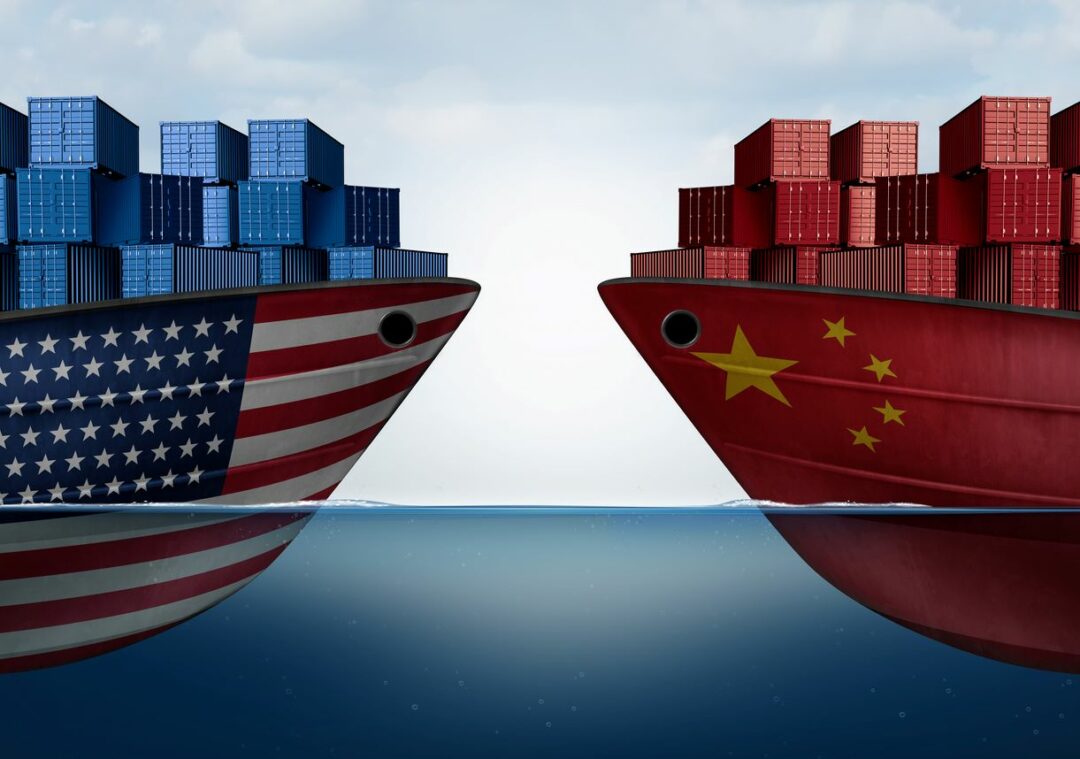
As the trade tensions between the United States and China continue to escalate, China is actively seeking alternative markets for its exports—particularly in North Africa—potentially paving the way for new international shipping routes, according to an international shipping and logistics expert.
Nilud Fernando, a seasoned professional in global shipping and logistics, as well as a marketer and business consultant, told The Sunday Business Times:
“We are currently observing a decline in shipping traffic from China to the US, primarily due to the imposition of higher tariffs. US imports from China have already fallen by approximately 30 per cent, and this figure is expected to reach 40 per cent. However, it is noteworthy that around 60 to 70 per cent of previous trade volumes are still being shipped from China to the US.”
The volume of US imports from China currently stands at US$440 billion, while China’s imports from the US total US$145 billion. Against this backdrop, Mr. Fernando noted that China is strategically exploring new export markets, with a strong focus on North Africa, which may give rise to emerging trade routes within the global shipping landscape.
At present, there is a 90-day suspension on further tariff hikes for imports to the US, Mr. Fernando explained. However, China remains an exception, facing a substantial tariff rate of 145 per cent. In contrast, other countries face a 10 per cent tariff. Sri Lanka, in particular, is subject to a 12 per cent tariff in addition to the 10 per cent, resulting in a total of 22 per cent.
Mr. Fernando added that although the exceptionally high tariff rate on Chinese goods may see some reduction, it is unlikely to be eliminated entirely.
“We are hopeful that the end of the 90-day grace period will lead to constructive discussions between the two nations, ultimately resulting in a more balanced trade framework.”
Looking ahead, Mr. Fernando suggested that if the US were to implement higher taxation on imports, Sri Lanka could benefit by considering a reduction in its own higher taxation rates, thereby encouraging greater import flows from the US.
“If the US and China find themselves in a rapidly escalating trade conflict, Sri Lanka should proactively position itself to attract investors and develop into a semi-production hub,” he said.
He further pointed out that certain goods exported to the US remain unaffected under the new proposed tariff structure, due to their categorisation under the Harmonised System (HS) code. This classification may continue to offer relief even if further US import tariffs are introduced.
Sunday Times