China is preparing to restart its maritime research activities in the Indian Ocean following the expiration of a one-year temporary ban in January 2025. The ban, implemented by Sri Lanka’s previous government, was prompted by strong protests from India over security concerns related to Chinese research vessels.
The ban, introduced in December last year, prohibited all foreign research vessels from conducting research in Sri Lankan waters. India had expressed significant apprehension about Chinese maritime research activities in the region, citing potential security implications.
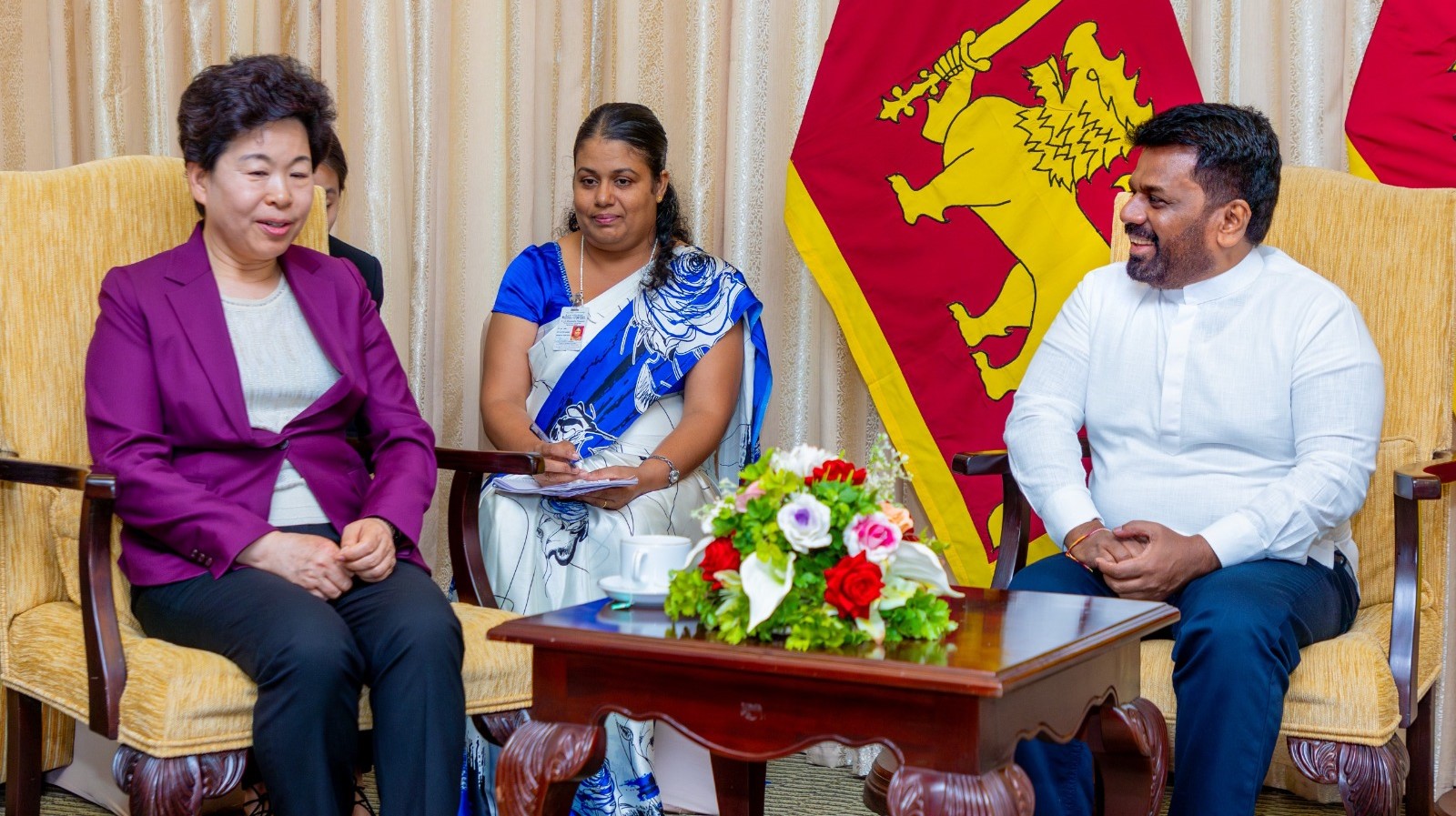
Qin Boyong, Vice Chairperson of the National Committee of the Chinese People’s Political Consultative Conference (CPPCC), discussed China’s plans to resume these activities during a meeting with Sri Lankan President Anura Kumara Dissanayake on Wednesday (18).
During the discussions, President Dissanayake emphasized the importance of completing pending sections of the Central Expressway under Chinese management. He also expressed hopes for accelerating the development of supply hubs and institutional projects centered around the Colombo Port City and Hambantota District, according to a statement by the President’s Media Division (PMD).
“Ms. Qin Boyong stated that there are plans to restart maritime research activities, which were temporarily halted for various reasons, along with initiating relevant projects,” the PMD said.
“She further highlighted the intention of Chinese companies to establish operations in the Hambantota investment zone, aiming to enhance Sri Lanka’s global trade access.”
Additionally, Ms. Qin noted that preparations are underway to warmly welcome President Dissanayake during his upcoming visit to China.
China’s announcement regarding the resumption of maritime research came just two days after Indian officials reiterated their concerns about Chinese research vessels in the Indian Ocean.
Indian Foreign Secretary Shri Vikram Misri, addressing the media on Monday (16), expressed confidence that Sri Lanka would consider India’s security concerns. He underscored India’s significant role in regional maritime security and research.
The Foreign Secretary’s remarks followed a meeting between Sri Lankan President Anura Kumara Dissanayake and Indian Prime Minister Narendra Modi during the President’s three-day official visit to India.
President Dissanayake assured that Sri Lanka’s territory would not be used in ways that could compromise India’s security.
The temporary ban on foreign research vessels was reportedly aimed at establishing a Standard Operating Procedure (SOP) for such activities. However, Sri Lankan Foreign Ministry officials indicated that no such SOP has been put in place.
Despite the ban, two Chinese research vessels were allowed to dock at Sri Lankan ports within the last 14 months. The first, the Chinese naval vessel Yuan Wang 5, arrived at Hambantota in August 2022 for replenishment. The second, Shi Yan 6, docked in Colombo in October 2023 for what Beijing described as “geophysical scientific research” in collaboration with Sri Lanka’s National Aquatic Resources Research and Development Agency (NARA).
Both visits sparked strong protests from India, citing security concerns in the Indian Ocean.
India remains a key stakeholder in Sri Lanka’s maritime activities, with Colombo Port serving as a vital transshipment hub for Indian trade, accounting for approximately 70% of the port’s total transshipment volume.
(Colombo/December 16/2024)