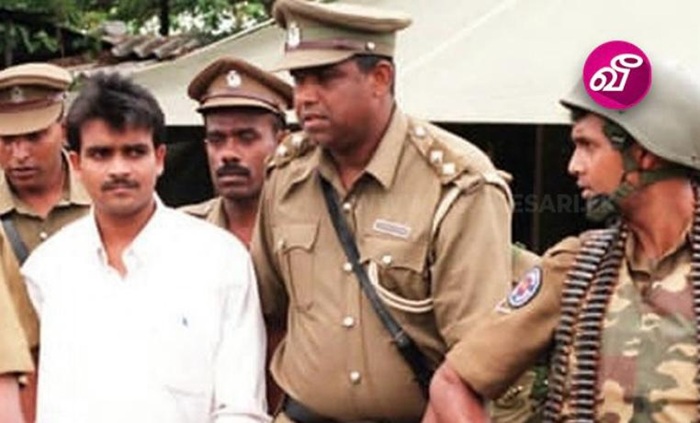
The wife of Lance Corporal Somaratne Rajapaksa has reportedly stated that her husband is prepared to testify if an international investigation is launched into the Chemmani mass grave in Jaffna.
Somaratne Rajapaksa was convicted as the main perpetrator in the Krishanthy Kumaraswamy murder case, which is believed to be connected to the mass grave.
According to a report by the Virakesari newspaper, Rajapaksa’s wife, S.C. Wijewickrama, has made this assertion in a letter recently addressed to President Anura Kumara Dissanayake.
In her letter, she claims that her husband was not involved in any action beyond burying the bodies of Krishanthy Kumaraswamy and her family members. She alleges that the victims had been brought to the Chemmani checkpoint after being killed at the 7th Brigade headquarters on the orders of Captain Lalith Hewage.
The report further highlights her accusation that previous governments misled the international community by portraying themselves as having taken action against military personnel responsible for human rights violations, while in reality shielding high-ranking officers and punishing only junior soldiers.
Rajapaksa, who is currently on death row for his role in the Krishanthy Kumaraswamy case, had reportedly shared information with his wife about the incident and the Chemmani mass grave.
Based on these disclosures, Wijewickrama has sent letters to President Anura Kumara Dissanayake, Prime Minister Harini Amarasuriya, and Justice Minister Harsha Nanayakkara, calling for an impartial and independent investigation.
It is also reported that she intends to submit a letter to the United Nations Human Rights Council later this week in relation to the matter.
The Krishanthy Kumaraswamy case, which shocked the nation in the late 1990s, involved the abduction, rape, and murder of a schoolgirl and three of her family members by military personnel.
In 1998, a Trial-at-Bar found the accused guilty and sentenced them to death. A five-judge bench of the Supreme Court later upheld the verdict and dismissed the appeals filed by the convicted individuals.