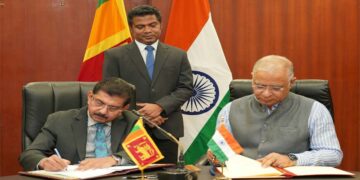
The 8th Indian Ocean Conference commenced in Muscat With the theme “Voyage to New Horizons of Maritime Partnership,” the event was a testament to the region’s growing significance in global affairs. Addressing an audience of esteemed dignitaries, India’s External Affairs Minister, Dr. S. Jaishankar, laid out a compelling vision for a secure, stable, and prosperous Indian Ocean community.
A Region in Flux: The Need for Cooperation
Dr Jaishankar began by acknowledging the turbulent state of world affairs, emphasizing that changes in global order manifest not just in policies but also in the shifting geopolitical landscape. He noted that the Indian Ocean is a vital artery of global trade and security, impacting nations both within and beyond its waters.
Highlighting two critical regions experiencing turmoil, he pointed to the ongoing conflicts in the Middle East and West Asia, which have severely disrupted global shipping and added economic strain. Meanwhile, tensions in the Indo-Pacific have raised pressing concerns about adherence to international law and the stability of maritime interactions.
Closer to home, littoral and island nations in the Indian Ocean face their challenges, from economic instability and mounting debt to connectivity gaps and security threats like illegal trafficking and terrorism. The need for cooperative solutions has never been more urgent.
India’s Commitment: 10 Key Contributions
Reaffirming India’s role as a responsible regional leader, Dr. Jaishankar outlined ten key ways in which India is strengthening maritime partnerships:
- Economic Stabilization: India has provided crucial financial aid and essential supplies to nations in distress, most notably extending a $4 billion package to Sri Lanka.
- Enhanced Connectivity: Initiatives like the India-Middle East-Europe Economic Corridor (IMEC), the India-Myanmar-Thailand Trilateral Highway (IMTT), and the International North-South Transport Corridor (INSTC) are reshaping regional linkages.
- First Responder in Crises: From natural disasters to conflicts, India has consistently stepped up, providing relief in Yemen, Mozambique, Sri Lanka, and beyond.
- Strengthening Plurilateral Cooperation: India plays a leading role in disaster response collaborations like the Quad initiative and the ReCAAP anti-piracy center.
- Maritime Security and Surveillance: The International Fusion Centre near Delhi and coastal surveillance radar systems enhance safety in the region.
- Naval Deployments for Security: Indian naval forces have actively countered threats in the Northern Arabian Sea and the Gulf of Aden, ensuring safer waters.
- Capacity Building for Neighboring Navies: India trains and equips naval and coast guard forces from Vietnam to Mauritius, fostering stronger defense collaborations.
- Digital Security Initiatives: Recognizing the importance of secure communication, India is investing in trusted digital networks and consortiums.
- Balancing Global Interests: India acts as a bridge between major global powers and the Global South, ensuring that regional concerns are not overshadowed.
- Institution Building: Through IORA, BIMSTEC, the Indian Ocean Naval Symposium (IONS), and other forums, India is fostering dialogue and cooperative frameworks.
A Shared Journey Forward
Dr. Jaishankar concluded with a powerful message: the Indian Ocean region must move forward as a united flotilla, despite its diversity. By fostering collaboration, enhancing security, and promoting shared prosperity, the nations of the Indian Ocean can navigate these challenging waters together. India, he assured, will remain at the helm of these efforts, committed to ensuring a secure and thriving maritime future for all.
With a renewed spirit of partnership and a clear roadmap ahead, the conference set sail toward a future where the Indian Ocean is not just a global lifeline, but a beacon of cooperation and stability