

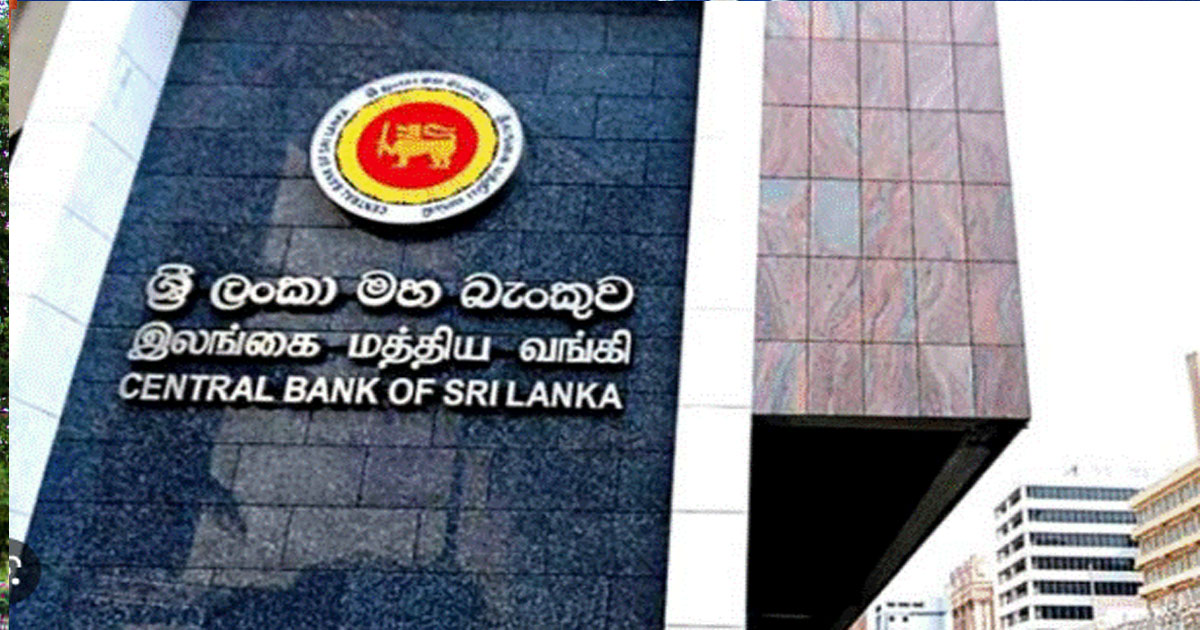
Sri Lanka’s central bank has decided to maintain its policy rate at 8.0 per cent as prices continue to deflate.
“Latest projections indicate deeper deflation than previously anticipated, mainly due to the larger-than-expected reduction in electricity tariffs announced in January 2025,” the central bank stated in its January policy statement. Despite previous electricity price hikes, the inflation index has remained stagnant since September 2022.
The bank expects inflation to turn positive by mid-2025 and gradually align with the targeted 5 per cent level over the medium term, supported by appropriate policy measures.
The full statement is provided below:
Headline inflation is projected to remain negative in the near term, before converging to the
target
Headline inflation, as measured by the year-on-year change in the Colombo Consumer Price Index
(CCPI), remained in the negative territory for the fourth consecutive month in December 2024. This
was mainly driven by the previous downward revisions to electricity tariffs and domestic fuel prices,
amidst subdued demand pressures.
Latest projections indicate deeper deflation than previously projected, mainly due to the more than anticipated downward adjustment in the electricity tariff announced in January 2025.
Inflation is expected to turn positive from mid-2025 and converge towards the targeted level of 5 per cent over the medium term, supported by appropriate policy adjustments.
Core inflation, which is currently in lower positive levels, is projected to decelerate further over the
next few months, before adjusting upwards thereafter.
The recovery in domestic economic activity continues
As per the GDP estimates published by the Department of Census and Statistics (DCS), the economy
is estimated to have grown by 5.5 per cent (year-on-year) in Q3 2024, following an expansion of 4.7
per cent (year-on-year) recorded in Q2 2024.
The latest economic indicators suggest that robust economic growth is likely to have continued, resulting in higher growth for 2024 than initially projected.
The downward adjustment in overall market lending interest rates continued
With further easing of monetary policy during the last Monetary Policy Review, the short-term money
market interest rates adjusted downward, while the Average Weighted Call Money Rate (AWCMR)
remained aligned with OPR. Market lending and deposit interest rates also continued to decline,
reflecting the accommodative monetary policy stance.
Supported by lower market lending interest rates and reflecting the recovery in economic activity, the growth of credit extended to the private sector by Licensed Commercial Banks (LCBs) continued to accelerate.
The expansionary momentum of credit to the private sector is expected to persist. Meanwhile, yields on government securities continued to decline, reflecting improved fiscal performance and reduced sovereign risk premia.
The external sector remained robust
The merchandise trade deficit widened during 2024 compared to the previous year, due to a larger
expansion in import expenditure relative to export earnings. However, improvements in earnings from
tourism and workers’ remittances contributed positively to the external current account during this
period. Following an appreciation of 10.7 per cent in 2024, the Sri Lanka rupee recorded a year-to-date depreciation of around 2.0 per cent against the US dollar thus far in 2025.
The external debt restructuring process, except for a small portion, was completed successfully in December 2024, strengthening the external sector outlook of the country. The Gross Official Reserves (GOR) stood at US dollars 6.1 billion at end 2024.
This includes the Bilateral Currency Swap facility from the People’s Bank of China, which was renewed for a further period of three years in December 2024.
The current monetary policy stance is maintained
In consideration of the current and expected macroeconomic developments, the Monetary Policy
Board of the Central Bank of Sri Lanka decided to maintain the Overnight Policy Rate (OPR) at its
current level of 8.00 per cent.
The Board noted that the economic recovery is gaining momentum supported by the improving business confidence and market sentiments as well as the robust expansion of private sector credit, reflecting relaxed monetary conditions.
While the ongoing period of deflation is likely to deepen in the immediate future due to supply side factors, a gradual convergence towards the inflation target is expected by the second half of 2025.
The Monetary Policy Board will continue to closely observe incoming data and assess risks to the inflation outlook, among others, and stand ready to take appropriate measures to maintain domestic price stability in the period ahead while supporting the economy to reach its potential.