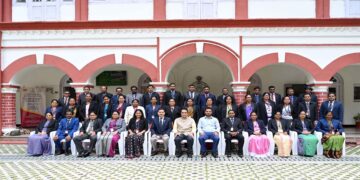

In the heart of Colombo, amidst the hum of innovation and the promise of a digitally connected future, the BIMSTEC Digital Conclave 2025 commenced. The air was charged with anticipation as dignitaries and thought leaders gathered to explore the transformative power of digital public infrastructure. Among them was H.E. Santosh Jha, the High Commissioner of India, poised to share India’s remarkable digital journey and its vision for the region.
Taking the stage, High Commissioner Jha extended his heartfelt congratulations to the Government of Sri Lanka for its newly launched digital initiatives, including the groundbreaking ‘GovPay’ platform and the introduction of electronic certificates for Sri Lankans abroad. These advancements, he noted, underscored Sri Lanka’s commitment to digital transformation under the leadership of President Anura Kumara Disanayaka.
With a warm “Namaskar,” he delved into the broader significance of BIMSTEC, emphasizing its pivotal role at the crossroads of India’s ‘Neighborhood First’ policy, the ‘Act East’ initiative, and the ‘SAGAR’ vision. The Bay of Bengal, once a thriving conduit of commerce and culture, had in modern times fallen short of its true potential. The conclave, he asserted, was a step towards rekindling this legacy, harnessing shared history, and leveraging digital innovations for collective progress.
Digitization, he explained, was the linchpin of this transformation. India’s own digital revolution, powered by Aadhaar, mobile connectivity, and a robust digital payments ecosystem, had fundamentally reshaped governance and financial inclusion. He painted a vivid picture: 1.3 billion digital identities, 1.2 billion mobile users, 950 million internet subscribers, and 40% of the world’s real-time digital transactions occurring in India. The Unified Payments Interface (UPI), Direct Benefits Transfer, and the CoWIN vaccination platform were just a few testaments to India’s digital prowess.
As the audience absorbed these insights, he turned to the promise of collaboration. India stood ready to share its experiences, extending support for Sri Lanka’s Unique Digital Identity (SLUDI) project, fostering digital commerce through ONDC, and exploring UPI integration for seamless cross-border transactions. The prospect of applying India’s digital governance successes—like the GeM procurement portal and the PM Gati Shakti infrastructure platform—offered a tantalizing glimpse of the efficiencies that could be unlocked.
Yet, the digital horizon extended beyond just payments and governance. The world was shifting towards open-source AI, and India was building its own foundational AI models with an ambitious infrastructure of 18,000+ high-end GPUs. The cost of computation, a crucial factor in AI development, was being drastically reduced, thanks to strategic government subsidies. India’s AI Mission, he affirmed, was rooted in the vision of “AI for All,” with an open invitation for BIMSTEC partners to partake in this technological leap.
As he concluded, High Commissioner Jha’s optimism was palpable. The BIMSTEC Digital Conclave was not just an event—it was a catalyst for action, a forum for ideas, and a beacon for a digitally empowered future. With an earnest hope that these discussions would translate into tangible collaborations, he extended his best wishes to the organizing team and thanked the audience for being part of this momentous dialogue.
The hall resounded with applause, not just for the eloquence of his words but for the shared vision of a digitally integrated BIMSTEC, ready to embrace the boundless opportunities of the future.