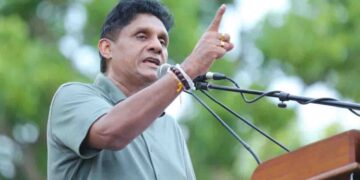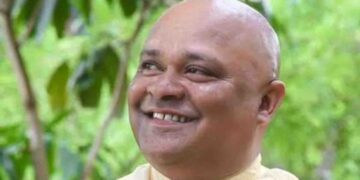


President Anura Kumara, addressing a campaign rally in Kandy during the 2024 general election, revealed that he had held successful discussions with the Japanese Ambassador on securing Japanese assistance for the Kandy expressway. He made the announcement after considering repeated requests from the Mahanayake Theros to complete the project.
However, in a surprising turn, the President recently launched the Mirigama–Kadawatha section of the expressway with funding secured through a Chinese loan. Japan had earlier extended loans for Sri Lanka’s airport development at a minimal 0.18% interest rate. In contrast, Anura’s government borrowed from China at 3.5% interest for the highway section.
Parliament’s COPF Chairman, Harsha de Silva, warned that the Chinese loan terms were highly unfavorable to Sri Lanka. China had initially agreed to lend one billion US dollars at a fixed rate of 2.5%. However, the Chinese government scaled the facility down to 500 million dollars, while the interest was raised to a floating rate of 3.5%. De Silva argued in COPF that this restructuring placed Sri Lanka at a clear disadvantage.
Ahead of the inauguration of the Mirigama–Kadawatha section, the Chinese Ambassador met with former President Mahinda Rajapaksa, the day he was leaving his official residence. Later, he met with Ranil Wickremesinghe. Embassy sources said the ambassador visited them officially to deliver invitations for China’s National Day. Some media reports, however, suggested the Ambassador had also sought assurances from Anura’s administration that Mahinda would not be harassed.
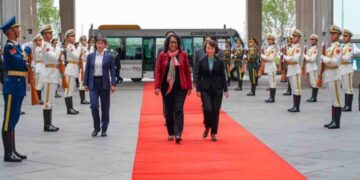
The Chinese Ambassador, who met Mahinda and Ranil, attended the opening ceremony of the Mirigama–Kadawatha section, praised Anura’s government, this is because the deal of the Mirigama–Kadawatha section is financially beneficial to China, and granting loans for building the expressway also provides an opportunity to win over the Mahanayake Theros and the Sinhala Buddhist population of Sri Lanka.
It is reported that whenever the Chinese Ambassador met the Mahanayake Theros, he also discussed the Kandy expressway. Based on the Chinese Ambassador’s interest in the Kandy expressway, the government had the opportunity to renegotiate this loan and interest in Sri Lanka’s favour. Observers argue this interest could have provided the government with an opportunity to renegotiate loan terms more favourably to Sri Lanka.
Yet the government failed to act—perhaps because the present government, too, has been trapped in the Chinese debt snare started by Mahinda’s government. The frightening aspect is that the government is moving into a disadvantageous deal for Sri Lanka at a time when the country’s economy has already collapsed.