In a small corner of the third page of the Divaina newspaper in 1992, a photo appeared that went largely unnoticed. The headline read, “Chandrika on a Tour to India.” The accompanying image showed then-Indian Foreign Secretary J. N. Dixit engaged in conversation with Chandrika Bandaranaike Kumaratunga.
Although the report stated that her visit was to deliver a lecture at Jawaharlal Nehru University in Delhi, in truth, the trip had been organized by the Indian government itself. At the time, Chandrika was not even a member of a Pradeshiya Sabha. Her visit came soon after she left the ‘Bahujana Peramuna’ and joined the Sri Lanka Freedom Party (SLFP).
Her brother, Anura Bandaranaike, and his supporters—who were locked in a fierce battle with her for the SLFP leadership—strongly opposed the visit. Yet India, perceiving Chandrika’s political potential after she joined the SLFP, extended the invitation nonetheless.
During her visit, Ranasinghe Premadasa was the President of Sri Lanka. No one then imagined that Premadasa would be assassinated or that the UNP government would soon collapse. But India, as it turned out, had accurately read the direction of Sri Lanka’s political winds.
Chandrika visited India in 1992. By 1993, she had become Chief Minister of the Western Province. In 1994, she rose to the post of Prime Minister, and later that same year, she was elected President of Sri Lanka.
Mahinda Rajapaksa became Leader of the Opposition in 2002. At that time, his relations with India were far from strong. Nevertheless, in January 2003, India invited him for an official visit. Following his return, Mahinda held a press conference on February 14, 2003, stating:
“My visit to India was important for several reasons. The current political situation in Sri Lanka was discussed with the leaders of the Indian government and the opposition. The issue of the people in the East received special attention.”
— Mahinda Rajapaksa, 14 February 2003
In August 2013, then–Opposition Leader Ranil Wickremesinghe visited India and met with senior Indian government figures. Although the visit was unofficial, the Mahinda Rajapaksa government, unsettled by the move, promptly dispatched Minister Prof. G. L. Peiris to India in response. Ranil went on to become Prime Minister the following year, in 2014.
After Mahinda Rajapaksa’s victory in the 2018 local government elections and his appointment as Leader of the Opposition, India once again extended an invitation to both Mahinda and Namal Rajapaksa. This gesture came despite Mahinda’s earlier accusations that India had conspired to bring about his 2015 electoral defeat.
Although much of the world believed the Rajapaksa family was politically finished after 2015, their 2018 victory revived their fortunes—and their second visit to India followed soon after. Mahinda became Prime Minister in 2019, Gotabaya Rajapaksa became President, and the Rajapaksa family once again held power in Sri Lanka.
In February 2024, India once again surprised Sri Lankans—this time by inviting JVP leader Anura Kumara Dissanayake for an official visit. At the time, Anura was merely an opposition MP, and the JVP had a long history of anti-India sentiment. Yet India rolled out the red carpet.
Although Anura’s popularity was rising, Sri Lanka’s middle class still doubted his ability to govern, and the business elite were skeptical of his economic competence. But that perception began to shift after he visited India. Political observers concluded that India had correctly read the signs—foreseeing Anura’s ascent to the presidency.
It proved true. Anura visited Delhi in February 2024. By September the same year, he was elected President of Sri Lanka.
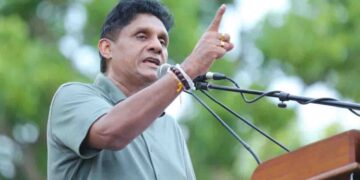
More recently, India invited Opposition Leader Sajith Premadasa for an official visit. During his stay, Sajith met with India’s External Affairs Minister, the National Security Advisor, and several senior leaders.
A closer look at India’s diplomatic pattern with Sri Lanka reveals that New Delhi extends such invitations to opposition leaders only after a long, careful reading of the country’s political direction.
To India, Sajith Premadasa is not just another opposition leader. The memory of his father—President Ranasinghe Premadasa, who expelled the Indian Peacekeeping Force (IPKF) from Sri Lanka—still lingers in New Delhi. Fully aware of this, Sajith has worked diligently to reshape India’s perception of his family’s legacy.
He established “Modi Village” in Hambantota, symbolizing friendship between the two nations. When Indian Prime Minister Narendra Modi visited Sri Lanka in 2019, then–Foreign Minister Mangala Samaraweera appointed Sajith as “Minister-in-Attendance,” giving him a direct opportunity to engage with Modi. Upon arrival, Modi shook Sajith’s hand and expressed India’s readiness to support his housing initiative.
Through careful diplomacy, Sajith successfully redefined India’s view of his father’s legacy. Modi met him again after Anura became President and personally promised to invite Sajith for an official visit—which he later fulfilled. Sajith, in turn, used the opportunity to strengthen his image with the Indian government, the political establishment, and the media.
The question now being asked in political circles is whether Sajith Premadasa will follow the same path as Chandrika, Mahinda, Ranil, and Anura — all opposition leaders who visited India before rising to power.
While the outcome remains uncertain, one pattern stands out: India does not invite Sri Lanka’s opposition leaders without reason. Its timing has always aligned with political transition.