Hidden Costs Behind Sri Lanka’s 20% US Tariff Victory
From Opposition to Endorsement: Casino Deal Unites Colombo Politicians
Modi’s Indigenous Economy Drive: What It Means for Sri Lanka
Can Sri Lanka Afford US-Priced Energy Imports?
Trump’s Tariff a Time Bomb?
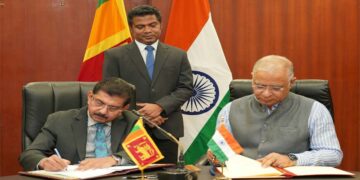
Last week, the government—and indeed the nation—hailed the reduction of the US-imposed tariff on Sri Lanka to 20% by President Donald Trump as a resounding diplomatic triumph. In this column, we previously reported that the shift from an initial 0% to a steep 44%, later reduced to 30% in the first phase and now to 20% in the second phase of negotiations with the US Trade Agency, marked a significant win for Sri Lanka.
While this milestone went largely unreported in both Sinhala and English media, it was in these pages of Inside Politics that readers were first informed of the intense, last-minute negotiations—particularly during the final two hours—that secured the much-needed tariff relief. We also revealed, in no uncertain terms, the conditional proposals tabled by the US side during these sensitive discussions.
Yet, even as the government rushed to frame this development as an unqualified success, cautious voices warned of the metaphorical ‘firecrackers’ hidden behind the celebrations. Drawing from credible sources, we highlighted that the concessions granted came with strings attached—strings that now shape a critical path forward. As we reported last week, the next two to three months will be pivotal. Sri Lanka is expected to fulfill key commitments linked to this tariff reduction, and failure to do so could swiftly reverse the gains so far achieved.
Serious pressure
As previously warned in the ‘Inside Politics’ column, the anticipated danger has now materialized in a highly concerning manner. The Trump administration implemented strategic tax adjustments targeting various nations, aiming not only to strengthen the American economy but also to economically isolate China and Russia on the international stage. As part of this broader strategy, the White House imposed several conditions specifically targeting Sri Lanka.
Sri Lanka’s response to these conditions was mixed: some were accepted immediately, while others required extensive negotiations through multiple rounds of discussions between representatives from both sides.
During these negotiations, the ‘Inside Politics’ column exclusively revealed that Sri Lanka had proposed purchasing oil and gas from the United States as a measure to reduce the trade deficit between the two countries.
However, the government now faces a critical challenge: can Sri Lanka actually follow through on its commitment to import oil and gas as promised? According to sources reporting to this column, the United States has begun applying serious pressure on Sri Lanka, repeatedly questioning officials about implementation timelines and concrete steps taken toward fulfilling the agreement. The American side is reportedly asking pointed questions: “When will you begin purchasing oil and gas as agreed?” and “What specific measures have been implemented?”
These persistent inquiries from the U.S. side indicate growing impatience and suggest that Sri Lanka may be under significant pressure to deliver on its commitments.
Critical Challenges
The Sri Lankan government faces serious consequences if it fails to correctly interpret signals from the United States. While making and breaking promises to Sri Lankan citizens has proven relatively easy for the government, the same approach will not work with the US. The risk extends beyond losing the current 20% tariff relief – penalties could escalate to over 40%.
Despite government agreements to purchase oil and gas from the US, no preliminary discussions have been initiated. The government understands that energy procurement requires a formal tender process with awards going to the lowest bidder, not verbal commitments.
Procurement Landscape
Recent accountability measures have changed the procurement landscape. Senior government officials now face blame and punishment for decisions influenced by former MPs that bypassed proper procedures. Consequently, civil servants will only approve tenders awarded to the lowest bidders, strictly following established protocols.
US oil and gas bids will likely be significantly higher than alternatives. This raises serious questions about whether officials will approve such expensive tenders, making US energy purchases highly unlikely.
Last week our reports accurately confirmed that the government agreed to provide full tariff relief on approximately 2,100 American goods, with discussions ongoing for additional tax reductions on other products, including American vehicles.
American vehicles
However, implementing tax-free systems for American vehicles creates a significant diplomatic challenge. Japan, India, and China – Sri Lanka’s three primary vehicle import sources – will inevitably demand equal tax concessions. The government appears unprepared for these negotiations, with no evidence of discussions with customs authorities regarding the proposed American vehicle tax relief.
The US Trade Agency is now reportedly pressuring the Sri Lankan government, demanding explanations for these delays and implementation gaps. The government’s traditional approach of making commitments without proper follow-through mechanisms is being tested in ways that could have severe economic consequences for the country.
What would India do?
Tariff controversy Trump has created takes a new shape globally as well as regionally. Trump’s sudden shift of initial 12% -15% tariff up to a 50% is a shock to all, Sri Lanka cannot just ignore it as well.
Learning India decided to continue buying oil from Russia despite American opposition, Trump doubled the tax to 50%. In retaliation to this Modi embarked on a ‘indigenous’ economy stand.
India will try to reach trade agreements with its closest neighbor, Sri Lanka, and open the Sri Lankan market to Indian goods more. The impact for that will be doubled and tripled. If India is pushed to an anti-American stance while Sri Lanka adopts a pro-American policy, there is a risk of a conflict between Sri Lanka and India.
Anti-American countries
On the other hand, anti-American countries are standing together in the face of Trump’s tax. In particular, China, Russia, and Brazil have intensified their opposition to America in the face of Trump’s tax, and the BRICS community representing these countries is ready to respond strongly to it. There will also be a tendency for the conflicts between China and India to decrease.
Confirming this, Indian Prime Minister Narendra Modi is also ready to visit China towards the end of this month. Modi is visiting China after 7 years. If so, the influence of China coming to Sri Lanka is also very high. Therefore, in the face of the new trends that have emerged on the international stage through Trump’s tax, it is only necessary to mention that Sri Lanka will have to face more challenges.
Another attack on Harini?
Confirming our earlier reports dating back to President Anura’s assumption of office, the tug-of-war between the JVP and the Malima government has flared up once again. The latest salvo — an aggressively orchestrated attack on Prime Minister Harini — has emerged from Pelawatta.
We have previously detailed how Bimal once appeared on state media, openly demanding changes to the roles and responsibilities of the Prime Minister and cabinet ministers, and how the President, with Harini by his side, made pointed remarks about certain “political circles.”
What had long been a cold war behind closed doors burst into the open in Parliament last week, when D.V. Chanaka questioned the Prime Minister about the rocket allegedly launched by Rohitha Rajapaksa.
Citing Board of Investment records, Harini told Parliament that not a single rupee of government funds had been spent on Rohitha’s rocket — in fact, the project had generated income for the state. With that statement, the political mudslinging over “Chichi’s rocket” came to an abrupt end.
Wasantha’s scandal
Within 24 hrs wasantha Samarasinghe negated Prime Ministers statement in Parliament and said she is wrong and once again reiterated a large- scale financial fraud has taken place through Cichi’s rocket.
This was a huge insult aimed at the Prime Minister. The Prime Minister is the head of the ruling party in Parliament. Or the second in command. The Prime Minister also does not express her views even when she comes and goes. If there was any mistake on the part of the Prime Minister, it would have been acceptable if it had been discussed within the party and the Prime Minister herself had corrected it the next day.
However, this goes in to records as an incident in recent parliamentary history that minister in the government rejecting a statement made by the Prime Minister, the head of the government, whether right or wrong, within 24 hours after the first statement was made.
This story did not go that far because there was an unorganized and roving opposition in Parliament when Wasantha made this statement. Otherwise, if there had been an organized and opportunistic opposition, this public division within the government would undoubtedly have turned into a major political issue.
On the other hand, what Harini stated was information given to her by the Board of Investment. If there had been any mistake, the government could have summoned Board of Investment officials, inquired about it and taken further action. But there was no report that such a thing had happened. Accordingly, through this statement made by Wasantha, Harini was in great embarrassment as Prime Minister.
Anura’s attack
However, the Constitutional Council of Parliament was also scheduled to meet on the afternoon of the day Harini was attacked. The name of the new IGP was scheduled to be presented to the Constitutional Council on that day, but the President had not presented the proposal to it until the afternoon. Instead, the President suddenly came to Parliament on Thursday and launched a strong political attack on the opposition and some opposition politicians.
It has now become a matter of questioning whether the President suddenly launched a strong political attack in Parliament to dissipate the heat of the attack on Harini by Wasantha. Many have opined doubts as to whether any discussion had taken place within the JVP regarding this.
Capturing youth council power
In 1978 after J.R Jayewardene government was formed, the Youth Services Council was established with the aim of helping the youth of the country hone their skills and talents without politics and their influence. There was no politics involved in it. The government’s ministers never participated in the youth society elections. The sons, relatives of the ministers, and defeated candidates did not infiltrate their positions. However, after the formation of the current Malima government, the people of the country became aware of a youth society election for the first time because serious crises had emerged in many districts.
The accusation was that the government had taken steps to politicize these youth society offices by completely filling them with Malima and JVP supporters. The media had broadcast the way the government’s ministers participated in these elections and spoke, and the way the youth were protesting against them, so the public had come to understand that there was some truth to those accusations. The most remarkable incident witnessed here is the political intervention in a movement in which the youth are involved, under a JVP government, after leading two unsuccessful youth uprisings.
Tilvin’s Dream
However, despite the protests of many, why is the JVP trying to seize power in youth societies even when it has presidential power, government power and local government institutions? Although no one has been able to identify the story behind this, we revealed to the country for the first time two months ago about this in this column.
This was based on a visit to China by JVP General Secretary Tilvin Silva. Nearly 30 JVP MPs participated in this 13-day visit, where they met with high-ranking officials of the Communist Party of China and held number of discussions and seminars.
We highlighted during the discussions held with the leaders of the Chinese Communist Party, there were many discussions on how to make the JVP a long-term victorious party like the Chinese Communist Party, how to integrate China and Sri Lanka through various projects, how to create a close relationship between the Chinese President and the Sri Lankan President, and how to integrate the JVP cadre with the Chinese Communist Party cadre.
Accordingly, we point out today that despite various accusations, the JVP is trying to take control of the youth clubs in this way as a strategy to implement the agreements and plans reached during Tilvin’s visit to China. Many point out that this is the initial stage of it.
This is confirmed through a discussion that Tilvin held with social media last week. Tilvin said that during his visit to China, he held discussions with Chinese Communist Party leaders and that they informed him that in order to become as strong as the Chinese Communist Party, the JVP must win three or four more elections and rule the country for at least 20 years.
Tilvin also confirm that our revelations are 100% correct. Accordingly, we now have to wait and see whether the JVP has started seizing power in all fields, just as the Chinese Communist Party has taken steps to seize control in all fields. We reported this information this time because we have been disclosing information to the country from the beginning of these chain of events.
Experts’ deal
While we continue to report behind-the-scenes information on the government side, we have from time to time revealed information from this column about the games, deals, and activities of some members of the opposition and the activities of certain individuals.
Some members of the opposition, instead of playing the role of the opposition that they should play, had become pawns of various party leaders, businessmen and various ambassadors and had neglected the role of the opposition member just to fulfill their desires.
As previously done we expose these individuals true face to the mases and the way they move and benefit themselves mingling with some rich company owners and tycoons.
Some opposition MPs who are known for such deals made such deals for no other reason than because they were overwhelmed by the huge amounts of money that fell into their accounts from businessmen during election seasons. This is because these MPs received millions of ‘pocket money’ from those businessmen every month. This is why it was possible to see how these MPs silently benefited from certain bad decisions taken by the government without pointing them out to the public.
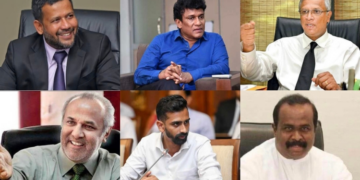
While the opposition MPs in Parliament made deals like this and remained silent, it was the political leaders outside who questioned such businessmen and huge companies who did not represent Parliament. In particular, politicians like Patali Champika Ranawaka, Wimal Weerawansa, and Pubudu Jayagoda of the Frontline Socialist Party, although they did not represent Parliament, it was possible to see how they had made a huge intervention in this regard over the past period.
Mujibar – Marikkar
Although the opposition leader in parliament tried to ask the government about such issues affecting the people in his usual style, only two or three MPs like Mujibar Rahman and S.M. Marikkar had made major revelations.
Mujibar Rahman made a major revelation about the casino incident that has now become a controversial incident and the BYD tax loophole, while MP Marikkar revealed to the country about a tax evasion of about 6 billion rupees in the import of unrefined coconut oil into the country in the past. However, the fact that none of the economic luminaries in the opposition did not make such revelations and did not speak about it had surprised many. They point out that this is a very sad situation.
We are revealing this information this time because John Keells, a leading business entity in Sri Lanka, has been the subject of two serious controversies. In particular, John Keells holds the exclusive right to import and distribute BYD vehicles to Sri Lanka, and serious allegations have been made against them for manipulating in import taxes.
It was Mujibur who first revealed this in Parliament. He said that John Keells had taken steps to create a huge tax loophole by showing BYD vehicles with a motor capacity of 150 kilowatts as 100 kilowatts. Through this, the government has lost a large amount of tax money that was supposed to be received.
A few hours after Mujibur published this story on our website ‘MawrataNews’, an order received by the Customs from the Presidential Secretariat stated that the export of the relevant vehicle stock should be stopped immediately and an investigation should be initiated.
What ‘Ostars’ did?
But the sad thing is that instead of discussing and revealing such tax loopholes when they were revealed, these economic ‘Ostars’ have taken steps to protect large-scale companies. These Ostars had stated that if this BYD vehicle stock was questioned, it would become an international problem between China and Sri Lanka. There were questions about whether Sri Lanka had the appropriate technology to check the engine capacity of the vehicles in question.
In this way, when the economic Ostars adopted a policy of protecting the companies in question, Wimal and Champika were seen standing outside and strongly reacting against it. Wimal directly said that the statements made by these economic Ostars were unacceptable. Champika also said that the University of Moratuwa has the necessary technology to check the engine capacity of the vehicles in question. Champika also said that international countries would not be offended by such an investigation.
John Keells’ Casino
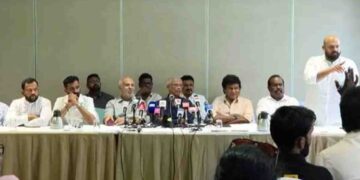
The second issue that arose regarding John Keells was the large-scale casino opened in in Colombo as ‘the City of Dreams’. The President’s participation in the opening of the casino also caused a great stir in the political arena. In this regard, Champika revealed at a media conference that when James Packer was preparing to open a huge casino in Colombo Fort under the Mahinda Rajapaksa government in 2014, it was the JVP that strongly opposed it.
While the JVP was rebelling against casinos outside, Champika was the one who rebelled against it from within the Rajapaksa government. The rebellion was so severe that Champika broke out of the government and came out. Wimal also spoke against casinos, but Wimal did not come out of the government at that time. However, Wimal led a huge fight within to stop casino in Colombo. In this regard, at a media conference held by Wimal last week, audio recordings of two special statements made by Anura against casinos while in the opposition.
JVP is dumb
No opposition was raised from the JVP when the City of Dreams Casino was opened this time. While the JVP remained silent, we first revealed to the country 3 weeks ago that a serious problem had arisen in granting approval to this casino and that a serious issue had arisen regarding its income tax. There, we said that in 2015, Ranil Wickremesinghe, who served as the Prime Minister under Maithripala Sirisena’s government, had given permission to open a casino in this very premises, and in the face of serious opposition, Maithripala passed a cabinet paper stating that a casino could not be opened at that location.
Cabinet Paper
We also revealed this cabinet paper to the country three weeks ago through the ‘Mawrata’ newspaper. At that time, a proposal within the government said that all the casinos in various places in Colombo should be brought to one place. It was also proposed that those casinos should be established on D.R. Wijewardene Mawatha in Colombo.
However, during this ban, what Ranil did was accidentally take steps to grant permission to the City of Dreams Casino project through the Board of Trustees after assuming the presidency. But the question has been whether the 45% income tax rate currently levied on other casinos will also be levied on this casino.
Although we have been continuously questioning this issue for the past few weeks, it is regrettable that we have not received any answers from the relevant parties. It is even more regrettable that at least the opposition has not questioned the relevant parties in this regard. This is why many people accuse some responsible representatives of the opposition of being pawns to various businessmen and gamblers in various companies.
Pressure on Sajith too
However, against such a backdrop, last week, Opposition Leader Sajith Premadasa had taken steps to raise questions in Parliament regarding the tax issue on BYD vehicles imported into Sri Lanka by John Keells. Accordingly, after Sajith submitted these questions in writing to Parliament on Wednesday, it was seen that the Opposition Leader was under pressure from various parties from that night onwards. Many people asked Sajith, ‘Why are you asking such questions? If you ask such questions, that company will get angry with us…’ However, it is a special incident that Sajith did not take any steps to limit any of that influence to a single penny. As planned, Sajith questioned BYD in Parliament about the tax loophole, but the government backed down, saying that it could not provide further details as a case is currently pending in the court of law on this matter.
Ranil Rattled as CID Closes In
Sri Lanka’s former President Ranil Wickremesinghe is feeling the heat as the Criminal Investigation Department opens a series of probes into his time in office. At the center of the storm is an explosive allegation—Ranil and his wife, Maithri Wickremesinghe, allegedly burned through nearly Rs. 60 million of public funds to attend her London graduation ceremony.
What began as a private visit—as stated in letters from top officials of his government—was later rebranded as an official trip, quietly dropping the “private” label. The paper trail has now become key evidence in the unfolding investigation.
Last week, the CID grilled three of Ranil’s closest aides: former Presidential Secretary Saman Ekanayake, private secretary Sandra Perera, and then Chief of Staff Sagala Ratnayake. According to Inside Politics, Ranil himself and several other influential figures will soon be summoned.
Insiders say investigators are confident they can prove a blatant misuse of state resources—charges that, if proven in court, could carry grave consequences. Sources add that Ranil’s agitation is visible, with the former president well aware that convictions in such cases rarely end lightly.
To make matters worse for him, several other controversial incidents from his tenure are now in the crosshairs, with fresh investigations set to kick off in the coming weeks. The political temperature around Ranil is rising fast—and this time, there may be no easy escape.
Kanchana’s Return – Ranil’s New Game Plan
After the last local government elections, grassroots members from both the Samagi Jana Balawegaya (SJB) and the United National Party (UNP) pressed their leaders to unite. Responding to this call, SJB leader Sajith Premadasa genuinely attempted to make it happen, even appointing a special team for negotiations.
But within the UNP, only a handful acted in good faith. Party leader Ranil Wickremesinghe, along with two or three close allies, worked from day one to derail the talks. Ranil knew well that a merger would mark the end of his political dominance — and also spell the political demise of his relative Ruwan Wijewardene and close friend Sagala Ratnayake.
Determined to block the alliance, Ranil deployed his family-owned newspaper network to circulate misinformation. A prime example was a Lankadeepa front-page story claiming Sajith would lose his position as Opposition Leader — a piece planted directly from Ranil’s camp. But once the real motive was exposed, the move backfired.
Now, Ranil is said to be preparing a new trump card to prevent any UNP–SJB reconciliation. The plan, known only to his confidants Vajira Abeywardena and Sagala Ratnayake, is to bring in an outsider with deep pockets and install him as either UNP leader or deputy leader. That outsider is none other than Kanchana Wijesekera — a former minister under Ranil who lost his seat in the last general election and has since stayed politically dormant.
Why Kanchana? Ranil fears that if he hands the party over to Ruwan, resentment from Vajira, Sagala, and Naveen Dissanayake would erupt. By bringing in a neutral but financially strong figure like Kanchana, Ranil believes he can appease rival factions, protect his own position, and, in the process, lure defectors from the SJB — thereby weakening Sajith’s camp.
However, Ranil’s history is littered with political gambits that have turned against him. If past patterns are any guide, his latest move to resurrect Kanchana Wijesekera may end up haunting him in exactly the same way.