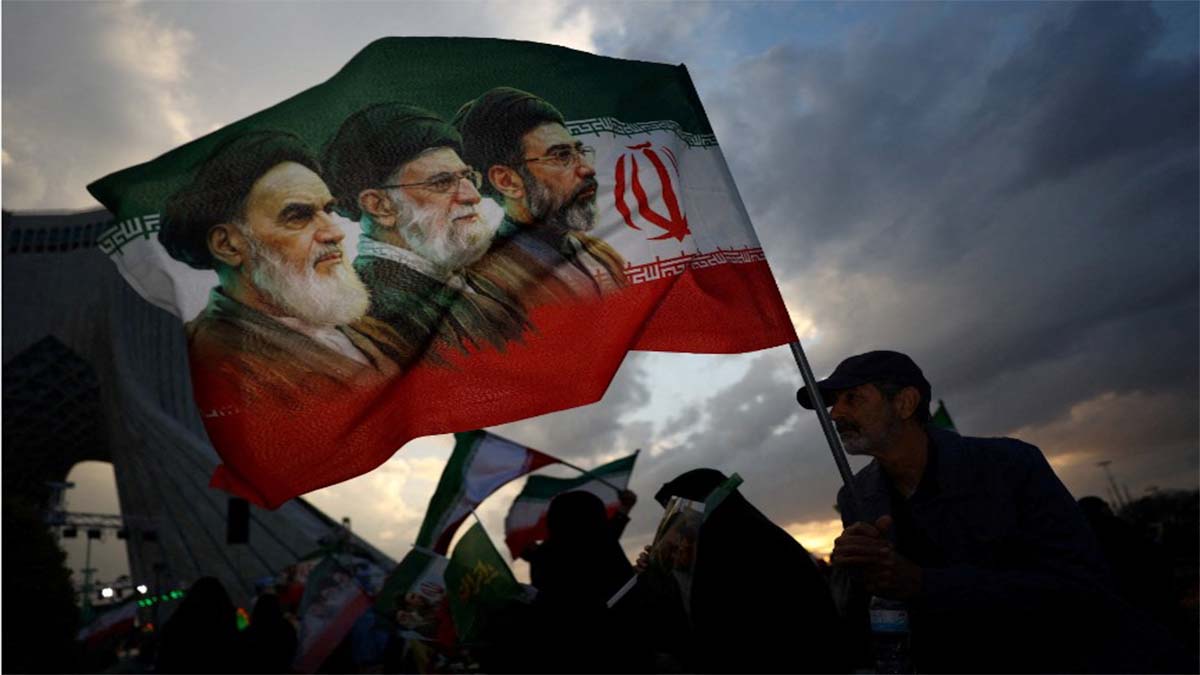
U.S. intelligence agencies have concluded that months of military conflict involving Iran, the United States, and Israel have done little to significantly delay Tehran’s ability to develop a nuclear weapon, according to a Reuters exclusive report.
Despite extensive U.S. strikes on Iranian targets last summer and continued military pressure over the past two months, intelligence assessments indicate that Iran remains roughly one year away from being capable of building a nuclear bomb — a timeline that has remained unchanged.
Officials say the attacks damaged parts of Tehran’s nuclear infrastructure, but the core of its program remains intact. The findings have raised serious questions in Washington over the effectiveness of recent military operations aimed at halting Iran’s nuclear ambitions.
White House reporter Gram Slattery noted that while Iran’s conventional military strength has been weakened, the actual nuclear program itself has seen only limited disruption.
“The impact on the nuclear program has been limited,” he said, adding that some U.S. officials argue that weakening Iran’s military defenses may still make any future attempt at weaponization more difficult.
However, experts suggest that truly setting back Iran’s nuclear ambitions would require more drastic measures — including the destruction or physical seizure of Iran’s stockpile of highly enriched uranium.
Such an option, though highly controversial, is reportedly still under discussion in Washington.
Meanwhile, the fragile ceasefire between the U.S. and Iran is under fresh strain as both sides exchanged new missile and drone attacks while competing for control over the strategically vital Strait of Hormuz.
The narrow waterway remains one of the world’s most important oil transit routes, and renewed tensions have triggered global concern over energy security and rising oil prices.
President Donald Trump has launched a new effort to escort stranded tankers and commercial vessels through the strait after rival blockades threatened international shipping.
The developments come as oil markets react sharply to the instability, with fears growing that prolonged disruption in Hormuz could trigger wider economic consequences.
As diplomatic efforts struggle to hold, the question now facing Washington is whether military pressure alone can stop Iran’s nuclear path — or whether a far riskier direct intervention will become the next option on the table.
Sourced : Reuters