

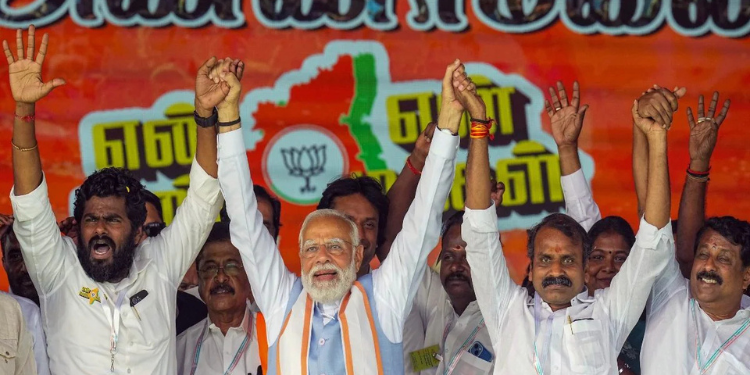
Senior Bharatiya Janata Party (BJP) leader K Annamalai on Saturday clarified that he was not denied a ticket for the upcoming Tamil Nadu assembly elections. He stated that he had personally decided not to contest and would instead focus on campaigning for the party and its allies.
“I had already informed the core committee in writing that I would not be contesting in any constituency. Therefore, it is not that I was denied a ticket; the truth is that I chose not to contest the election,” Annamalai told reporters at Chennai airport.
The clarification comes a day after the BJP released its first list of 27 candidates for the April 23 assembly polls, with Annamalai’s absence drawing attention across political circles.
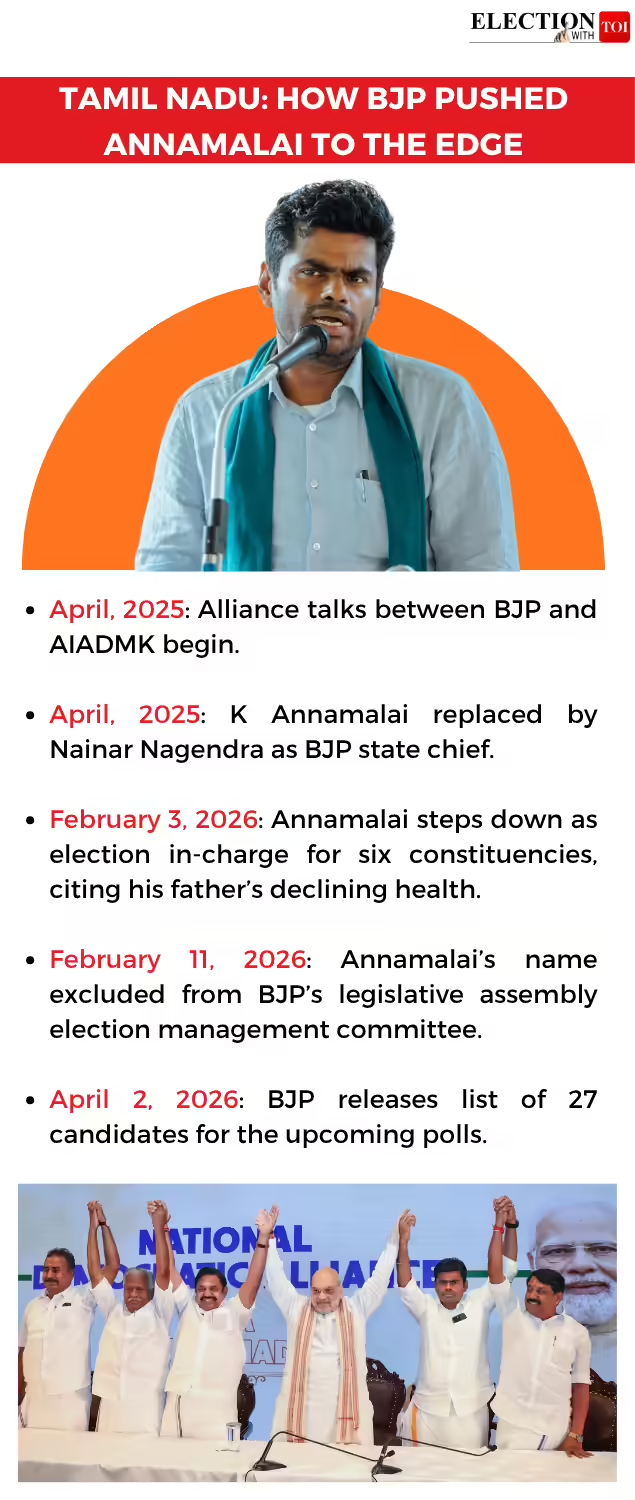
Annamalai said he would take on a broader organisational role during the elections, campaigning for BJP candidates across multiple states.
“In this election, my role is to campaign for candidates across Tamil Nadu. Currently, the party has given me the responsibility to campaign in Puducherry and Kerala until April 7. From the 7th to the 23rd, I will campaign for all BJP and NDA candidates across Tamil Nadu. That is the responsibility given to me by the party, and I will fulfill it,” he said.
He also expressed gratitude to the party leadership for respecting his decision.
“When I did not express any interest in contesting, how could the leadership allocate me a ticket? If I had decided to contest, it wouldn’t have mattered which constituency I could have contested from. I am grateful to the BJP leadership for respecting my decision and giving me the opportunity to campaign in support of the NDA alliance candidates,” Annamalai added.
There were, however, reports that Annamalai had conveyed his “extreme” displeasure to the party’s national leadership regarding the constituencies allocated to the BJP by the AIADMK.
Meanwhile, Tamil Nadu BJP president Nainar Nagendran described Annamalai’s absence from the candidate list as a decision of the party leadership.
“This is a decision from the high command,” Nagendran said, expressing confidence in the party’s candidates. “All the 27 candidates will surely win this time.”
Despite not contesting, Annamalai remains central to the BJP’s election campaign strategy. BJP MP Tejasvi Surya highlighted that Annamalai’s popularity would benefit the party across the state.
“Annamalai is the most popular leader of the BJP, not just in Tamil Nadu, but he commands a large following all over the country. He has been given the responsibility of campaigning for all the candidates in Tamil Nadu. I am extremely confident that Annamalai’s popularity and his campaigning across the state will translate into victory for the BJP candidates,” Surya said.
The BJP’s candidate list includes senior leaders such as Tamilisai Soundararajan from Mylapore, Vanathi Srinivasan from Coimbatore North, and Union minister L Murugan from Avinashi.
Annamalai, a former IPS officer popularly known as “Singham,” had previously served as the Tamil Nadu BJP president before being replaced by Nagendran. He played a key role in expanding the party’s presence in the state and led outreach initiatives such as the “En Mann, En Makkal” yatra.
The BJP is contesting the elections as part of the National Democratic Alliance (NDA), led in the state by the AIADMK. Under the alliance arrangement, the AIADMK will contest 169 of the 234 seats, while the BJP will contest 27 seats alongside other allies.
Tamil Nadu will go to polls in a single phase on April 23, with counting scheduled for May 4. The main contest is expected between the DMK-led Secular Progressive Alliance and the NDA, with actor-turned-politician Vijay also entering the fray.
Why This Move May Work for BJP
By stepping back from constituency-level responsibilities, Annamalai is free to campaign extensively across multiple regions, strengthening BJP’s outreach in Tamil Nadu, Kerala, and Puducherry.
This also helps the BJP maintain a stable alliance with the AIADMK, reducing friction with Edappadi K Palaniswami and enabling smoother coordination.
Annamalai had previously been known for his sharp criticism of both the AIADMK and DMK. Ahead of the elections, EPS had made Annamalai’s ouster from state politics a precondition for alliance talks.
The transition of leadership to Nainar Nagendran signaled a more alliance-friendly and structured approach, allowing the party to project a unified command and avoid internal contradictions during the polls.