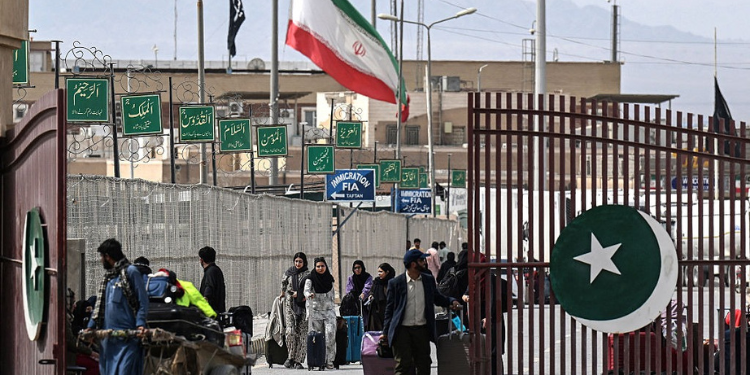
Recent U.S. and Israeli strikes against Iran have once again underscored the fragile geopolitical and sectarian fault lines that run across the Middle East and South Asia. Beyond the immediate military dimension, the escalation has revived attention on the complex interaction between Sunni–Shia rivalry, regional competition, and the broader contest among major global powers. Although Tehran remains the direct focus of these developments, the repercussions extend far beyond Iran, influencing the strategic calculations of countries such as Pakistan and Saudi Arabia, which must navigate an increasingly volatile regional environment without openly aligning with any single camp.
Pakistan, in particular, appears to be pursuing a strategy of calculated ambiguity. While officially maintaining a position of neutrality, reports of logistical facilitation and intelligence cooperation with the United States have reinforced perceptions of a discreet yet significant strategic alignment. At a time when Pakistan faces mounting economic pressures and serious security challenges, closer engagement with Washington and its Gulf partners could offer both financial support and diplomatic leverage. However, this approach carries considerable risks. Greater involvement in tensions involving Iran could destabilize Pakistan’s already sensitive western frontier and complicate Islamabad’s efforts to balance its relationships with Saudi Arabia, China, and its own internal sectarian dynamics.
The Iran–Pakistan border region, especially Balochistan, has for decades remained a shared zone of instability. Armed organizations, ethnic separatist movements, and smuggling networks operate across both sides of the frontier, creating an environment characterized by persistent low-intensity conflict. Periodic cross-border operations and exchanges of fire highlight the continuing fragility of security in the region, despite occasional diplomatic initiatives aimed at easing tensions.
For Islamabad, Balochistan represents not only a security concern but also a critical element of its broader economic strategy, particularly due to its importance to the China–Pakistan Economic Corridor (CPEC). The presence of armed groups operating across both sides of the border has long fueled suspicion toward Tehran. Although both governments officially deny supporting separatist elements, their limited capacity to fully control remote border areas continues to sustain an atmosphere of mutual distrust.
Within this framework, cooperation with the United States functions as a strategic “safety valve” for Pakistan. Despite fluctuations in U.S.–Pakistan relations over the past decade, shared concerns about security in Afghanistan and the prevention of cross-border destabilization have reopened practical channels of cooperation. The possible provision of logistical facilities or intelligence—if confirmed—should therefore be viewed not merely as a political alignment but also as an effort by Islamabad to maintain strategic relevance with Washington during a period of economic difficulty.
Maintaining open channels with the United States also allows Pakistan to send signals to multiple audiences. It signals to Tehran that Islamabad retains alternative strategic partnerships; to Gulf states that it remains a dependable security partner; and to Western capitals that Pakistan continues to play a role in maintaining stability in South Asia. Nevertheless, leveraging border instability as a basis for closer ties with Washington could deepen Tehran’s suspicions and further strain an already delicate bilateral relationship.
At the same time, some analyses of Pakistan’s foreign policy suggest that its position toward the broader Muslim world contains certain contradictions. By entering into defense agreements with countries such as Saudi Arabia and strengthening relations with Turkey, Pakistan often presents itself as a defender of the interests of the Muslim Ummah. However, several analysts argue that in practice Islamabad follows a more pragmatic strategy that includes close cooperation with the United States and other Western partners.
During earlier periods of tension involving the United States, Israel, and Iran, Pakistan was reportedly involved in providing important intelligence and logistical support, including the use of airbases and airspace for U.S. reconnaissance missions. Some analyses also suggest that Pakistan’s policies in the Afghanistan–Pakistan region may involve the instrumental use of non-state actors as tools of influence within broader regional power dynamics.
The relationship between Riyadh and Islamabad has long been one of the most stable pillars of Pakistan’s foreign policy. Since the 1980s, the two countries have maintained close military cooperation, with Pakistani troops having served in Saudi Arabia and regular exchanges of defense expertise continuing over the years. Saudi Arabia has also repeatedly provided economic assistance to Pakistan during periods of financial difficulty, including loans, deposits in Pakistan’s central bank, and favorable arrangements for energy imports. This financial support has strengthened a natural geopolitical convergence, particularly in a context where parts of the Sunni world seek to contain Tehran’s regional influence.
However, strategic proximity to Riyadh does not necessarily translate into an openly anti-Iranian policy. Pakistan is home to a significant Shia minority—estimated to represent approximately 15–20 percent of the population—and has experienced sectarian tensions in the past. A clear alignment in a regional confrontation framed along Sunni–Shia lines could reignite internal divisions and threaten social stability. As a result, Pakistan’s leadership faces a delicate balancing act: maintaining strong ties with Gulf partners while avoiding the perception of direct involvement in a sectarian conflict.
Pakistan’s position must also be viewed within the broader regional balance of power. Despite sanctions and diplomatic isolation from Western countries, Iran remains far from completely isolated in the Middle East. It maintains significant influence in Syria through the Assad government, plays an important role in segments of Iraq’s political and paramilitary landscape, maintains close ties with Hezbollah in Lebanon, and supports the Houthi movement in Yemen. Rather than forming a conventional interstate alliance, this network functions as a flexible system of influence that allows Tehran to project power through asymmetric means.
Meanwhile, the Arab world no longer presents a unified front against Iran. Saudi Arabia has taken steps toward rapprochement with Tehran following Chinese mediation, the United Arab Emirates continues to maintain open communication channels, and several Gulf states appear increasingly focused on regional stability rather than further escalation. Israel remains Iran’s most consistent and outspoken adversary, yet the broader regional environment has gradually shifted from ideological confrontation toward a more pragmatic competition for influence.
The European Union observes these developments largely through the lens of regional stability, energy security, and the potential migration pressures that a wider escalation could generate. However, compared to other international and regional actors, the EU’s influence in the region remains relatively limited.
Pakistan’s decision to join the U.S. President–led “Board of Peace” has also attracted criticism domestically. Critics argue that the initiative primarily advances American and Israeli strategic interests, potentially at the expense of the Palestinian cause that Pakistan has traditionally supported. At the same time, Islamabad’s broader strategy toward the Islamic world has also faced scrutiny. Relations with several Gulf countries—including Qatar, Oman, and the United Arab Emirates—have experienced periods of strain, while other Muslim-majority countries, including Afghanistan and Iran, remain cautious about Pakistan’s efforts to strengthen ties with the United States and Israel for economic and strategic reasons.