

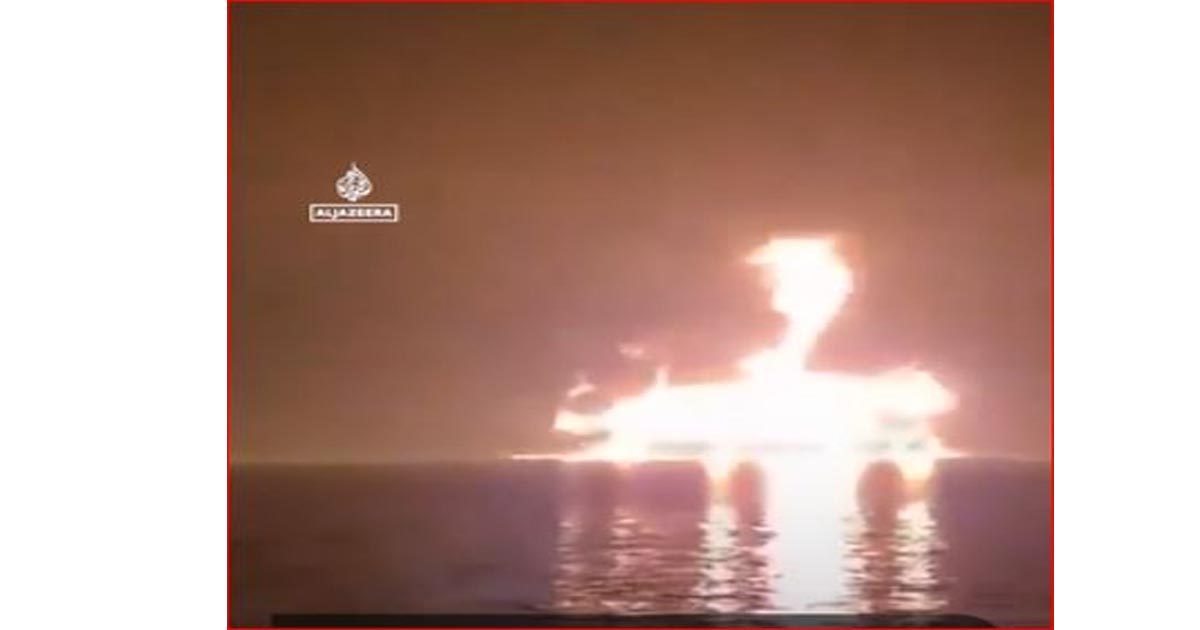
Tensions across the Middle East escalated sharply after two foreign oil tankers were attacked at Iraq’s southern port of al-Faw, raising fears of further disruption to global energy supplies and maritime security in the Gulf.
According to regional reports, the vessels were struck in a suspected drone or missile attack near the strategic port area, though the extent of the damage and any casualties has not yet been officially confirmed. Security forces in Iraq have begun an investigation while naval patrols in the northern Gulf have been placed on high alert.
At the same time, Gulf states including Kuwait, Qatar, the United Arab Emirates, and Saudi Arabia reported intercepting several missiles and drones believed to have been launched by Iran or allied groups as the conflict spreads across the region.
Iranian President Masoud Pezeshkian said Tehran would consider ending the war only if three key conditions are met. These include international recognition of Iran’s “legitimate rights,” compensation for damages caused by the conflict, and binding global guarantees to prevent what he described as future aggression against the Islamic Republic.
Meanwhile, Donald Trump, President of the United States, pledged that American forces would protect commercial shipping passing through the strategic Strait of Hormuz, a critical route for global oil exports. Washington warned that any threat to maritime traffic would trigger a strong response.
Tehran, however, cautioned that continued hostilities could push global crude prices dramatically higher. Iranian officials warned the international community to prepare for oil prices potentially reaching $200 per barrel if the conflict disrupts supplies through the Gulf.
On the battlefield, Iran and the militant group Hezbollah launched coordinated waves of missile and drone attacks on Israel. The strikes came as the Israeli military intensified large-scale air operations targeting positions in Beirut, the capital of Lebanon, further widening the scope of the conflict.
The rapidly expanding confrontation has raised fears of a broader regional war involving multiple states and armed groups, with international powers closely monitoring developments.
Casualty figures from across the region continue to rise as fighting intensifies on several fronts. Authorities and humanitarian agencies are still assessing the full scale of damage and loss of life.
More updates are expected as the situation develops