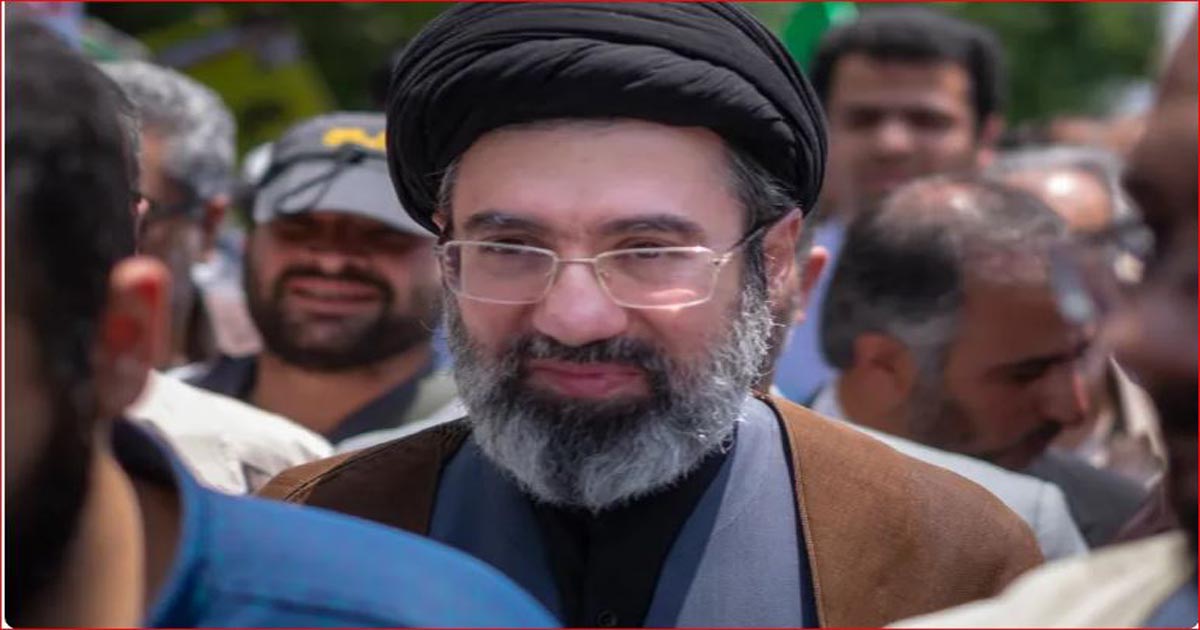
Iran has appointed Mojtaba Khamenei as its new Supreme Leader, just over a week after the assassination of his father, Ayatollah Ali Khamenei, in joint United States–Israeli strikes that have pushed the Middle East into a widening war.
The 56-year-old cleric was formally selected on Sunday by Iran’s powerful Assembly of Experts to succeed his father and lead the Islamic Republic through what is widely seen as the gravest crisis in its 47-year history.
Soon after the announcement, senior political figures, the Islamic Revolutionary Guard Corps (IRGC), and the country’s armed forces pledged their loyalty to the new leader.
Ali Larijani, secretary of Iran’s Supreme National Security Council, urged national unity behind Mojtaba Khamenei as the country faces escalating military pressure. Parliament Speaker Mohammad Bagher Ghalibaf also endorsed the decision, describing allegiance to the new supreme leader as both a “religious and national duty.”
Although Mojtaba Khamenei has never held elected office or faced a public vote, he has long been considered one of the most influential figures within Iran’s ruling establishment. For decades he has operated within the inner circle of the supreme leadership, forging close ties with the IRGC and other powerful institutions.
In recent years, he had increasingly been viewed as a likely successor to his father. Analysts say his appointment may signal that hardline factions remain firmly in control of Iran’s political system and may have little interest in negotiations as the war with Israel and the United States enters its second week.
Al Jazeera correspondent Ali Hashem described Mojtaba Khamenei as his father’s “gatekeeper,” noting that he shares similar positions on both the United States and Israel.
“We are expecting a confrontational leader. We’re not expecting any moderation,” Hashem said. However, he added that if the war eventually subsides and Khamenei consolidates power, there could be opportunities for Iran to explore new political directions.
Rami Khouri, a distinguished fellow at the American University of Beirut, said the appointment represents “continuity” in Iran’s leadership structure. At the same time, he called the move “an act of defiance,” signalling that Tehran will not allow outside powers to reshape its political system.
“Iran is essentially telling the Americans and Israelis: ‘You wanted to get rid of our system? Well, here is someone even more radical than the leader you assassinated,’” Khouri said.
Heidari Alekasir, a member of the Assembly of Experts, said the choice followed the late Ayatollah Khamenei’s advice that Iran’s top leader should be feared by the country’s enemies rather than praised by them.
The appointment is likely to anger Washington. Earlier, US President Donald Trump had warned that Mojtaba Khamenei would be an “unacceptable” choice and suggested that any new leader would need Washington’s approval to remain in power.
Iranian officials have firmly rejected such statements, insisting that only the Iranian people and their institutions have the authority to determine the country’s leadership.
Meanwhile, the war continues to intensify. Israeli air strikes overnight targeted several oil facilities around Tehran, sending thick smoke over the capital. At the same time, Iran’s Revolutionary Guard said it has sufficient resources to sustain missile and drone attacks across the region for up to six months.
IRGC spokesman Ali Mohammad Naini said Iran has so far used only early-generation missiles but could soon deploy more advanced long-range weapons.
With both sides escalating and no clear diplomatic path emerging, analysts warn that the conflict between Iran, Israel, and the United States could drag on for weeks — or even longer — deepening instability across the Middle East.
Source: Al Jazeera