An NGO has condemned what it describes as a false blasphemy accusation against Sarwar Masih, allegedly aimed at illegally seizing a property his family has occupied for more than 70 years. Religious banners have reportedly been displayed at the site to prevent any reconciliation. Naveed Walter, President of Human Rights Focus Pakistan (HRFP), said the case “reflects a disturbing pattern” and called for an impartial investigation and reforms to prevent the abuse of blasphemy laws.
Human Rights Focus Pakistan (HRFP) has expressed grave concern over what it says is a fabricated blasphemy allegation against Sarwar Masih, a Christian resident of Gujranwala, claiming the accusation is being used as a tool to unlawfully take over his home.
The organisation has urgently appealed to the authorities to ensure the protection of Sarwar Masih and his family and to conduct a transparent and impartial investigation, holding those responsible accountable.
An HRFP fact-finding team visited the site of the incident on Tuesday and met with Sarwar Masih and his family, assuring them of all possible support. The team also spoke with neighbours, police officials, and other relevant stakeholders. According to HRFP, evidence gathered during the visit suggests that threats of blasphemy are being used to unlawfully seize the Christian-owned property.
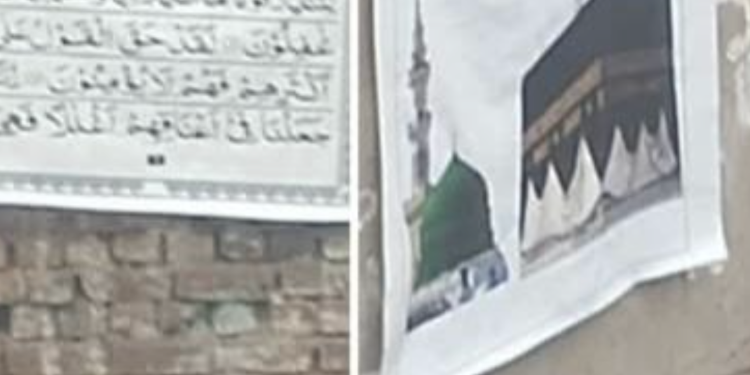
Following what HRFP described as an illegal occupation, individuals allegedly placed religious banners, Quranic verses, and images of Madinah — a city in Saudi Arabia and Islam’s second holiest site after Makkah — on the property, apparently portraying the dispute as a religious matter.
Sarwar Masih, his wife, and his brother informed the HRFP team that they were directly threatened with blasphemy charges if they attempted to reclaim their home. They also expressed fear that removing the religious banners could inflame tensions and endanger not only their family but also the wider Christian community in the area.
Witnesses, including 50-year-old neighbour Muhammad Shahid, told the HRFP team that they had known the Christian family since childhood and confirmed that the property belongs to them.
According to HRFP, the current occupants warned that anyone attempting to remove the religious banners would face blasphemy charges and that homes in the surrounding area would be set on fire. On Monday, a notice was reportedly posted stating that anyone attempting to open the door of the property would be accused of desecrating Islam.
The organisation’s investigation found that Sarwar Masih’s family had resided on the property for over seven decades, with no record of legal disputes or court cases concerning ownership.
The family described the blasphemy allegation as a significant barrier to seeking justice, citing previous incidents in which Christian homes were attacked and burned following similar accusations.
Naveed Walter, President of HRFP, stated that the case illustrates a troubling pattern. He said it is not the first instance in which alleged land grabbers have used threats of blasphemy accusations to intimidate Christian families and pressure them to abandon their homes.
In many such cases, he added, victims are attacked or left isolated and fearful, often forced to relocate instead of pursuing legal remedies.
Walter referred to similar incidents where threats of blasphemy escalated into false accusations and violence arising from personal disputes, property conflicts, or workplace tensions.
He further noted that during the alleged illegal occupation of Sarwar Masih’s property, law enforcement authorities did not intervene and failed to register even a preliminary complaint.
HRFP stated that the climate of fear surrounding blasphemy allegations frequently discourages prompt intervention by authorities and members of the community.
The organisation also highlighted longstanding criticism by human rights advocates of Pakistan’s blasphemy laws — Sections 295-A, 295-B, and 295-C of the Pakistan Penal Code — citing concerns over their misuse and disproportionate impact on religious minorities.
HRFP has called for legal reforms, including safeguards against false accusations, stronger protections for vulnerable communities, and procedural changes to prevent abuse of the law.
The NGO reaffirmed its commitment to defending the rights of marginalised communities and urged civil society organisations, media outlets, and government authorities to ensure justice and equal protection for all citizens, regardless of creed or religion, in line with the vision of Pakistan’s founder, Ali Jinnah.