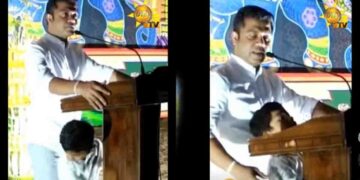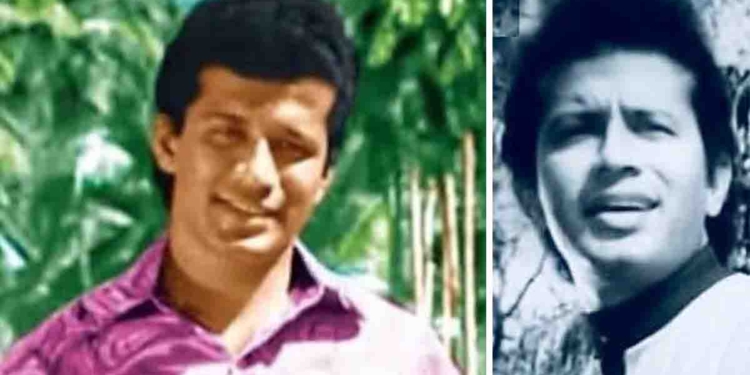
Thirty-eight years have passed since the assassination of Vijaya Kumaratunga, the legendary Sri Lankan actor, humanitarian and politician, whose life and death left an indelible mark on the nation.
On Tuesday, February 16, 1988, at approximately 12:20 p.m., two gunmen believed to be members of the Patriotic People’s Movement (PPM) arrived on a motorcycle and opened fire on him with a T-56 rifle in front of his residence. The gunshot wound to his head was so severe that his head had to be covered. The tragic day has since been remembered in history as “Dark Tuesday.”
Vijaya Kumaratunga, who portrayed lead roles in 114 films, began his acting career with the movie ‘Hantane Katha.’ He went on to capture the hearts of audiences through acclaimed films such as ‘Bambaru Aetha,’ ‘Ganga Addara,’ ‘Beddegama,’ and ‘Kedapataka Chhaya.’
No other actor has surpassed his achievement of winning the Sarasaviya Most Popular Actor Award consecutively from 1983 to 1988. In addition to his success on screen, he was also a gifted playback singer. His humanitarian spirit and commitment to helping others reflected his selfless and non-profit-oriented nature.
In politics, he initially represented the Sri Lanka Freedom Party and later became associated with the Sri Lanka Mahajana Party. During the 1982 presidential election, he was imprisoned on Naxalite-related charges.
In 1986, amid the separatist conflict in the North, he made a bold attempt to foster unity between the people of the South and the North by travelling to Jaffna to meet young leaders of the LTTE. This effort remains a notable milestone in Sri Lanka’s political history.
Vijaya Kumaratunga, the husband of former President Chandrika Bandaranaike Kumaratunga, was accorded a funeral that is reported to have been the first in Sri Lanka’s television history to be broadcast live.
The following is an excerpt from a letter he wrote to his daughter Yashodhara while he was in prison:
“When you were born, I had decided to name you ‘Yashodhara.’ I had thought of hundreds of names for you, but the only name I had was ‘Yashodhara.’ Yashodhara was someone who was born on this earth, enjoyed the pleasures of a king, and later became helpless and alone. Yet she endured everything for the sake of the helpless people of this world.
‘Yashodhara’ represents the ultimate expression of tolerance, understanding, kindness, and goodness. It symbolizes love, compassion, and empathy. If you possess even a small measure of those virtues, you will be a good person. That alone is enough for me. The only thing a person born into this world must protect is humanity. If we safeguard that humanity, we can live happily throughout our lives.”