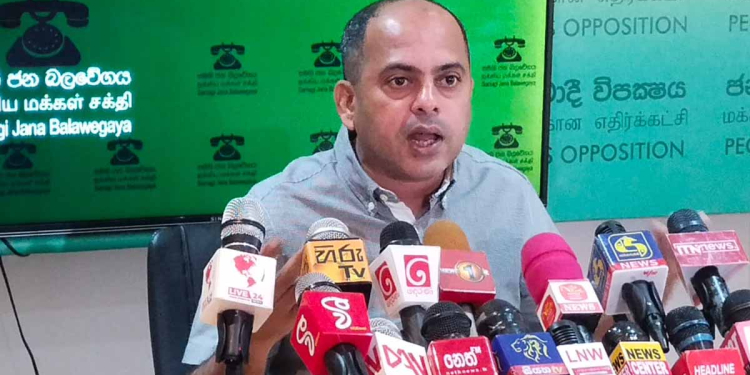
MP S.M. Marikkar, speaking at a media conference held today (28) at the Samagi Jana Balawegaya (SJB) head office, criticized the government’s handling of the Auditor General appointment and related governance issues.
He stated:
“The National People’s Power (NPP) government has still failed to appoint an Auditor General. According to procedure, the President should propose a candidate for the position. However, the President had proposed the names of two individuals close to him. The Constitutional Council rejected both names. Despite this, approximately eight months have passed without appointing an Auditor General. Moreover, if the Acting Auditor General is deemed unsuitable, the government has not provided any explanation.”
MP Marikkar further explained that three representatives from civil society organizations, serving on the Constitutional Council since January, are due to be newly appointed in 2026. He emphasized:
“These three individuals should be appointed with the consent of both the Prime Minister and the Leader of the Opposition. However, the government is attempting to undermine the Leader of the Opposition and appoint individuals favorable to the government, using the Prime Minister’s powers. This is part of a plan to appoint a government-friendly Auditor General.”
He highlighted that this approach could impact the auditing of all corporations, departments, and institutions under government ministers from January 1, 2026. “Significant issues such as the container incident, misuse of funds for the Clean Sri Lanka project, and foreign aid will only be audited after this date. This indicates that the government is preparing to appoint an Auditor General who is aligned with them,” Marikkar said.
He added that no previous head of state had acted in this manner regarding the Auditor General’s appointment and called on the Prime Minister and Leader of the Opposition to appoint qualified, educated, and intelligent individuals rather than government-friendly candidates. “The Auditor General’s role is critical for maintaining the balance of power in the country. Appointing a government-friendly candidate could suppress investigations into corruption and fraud,” he noted.
Marikkar also urged the government to propose a candidate capable of conducting proper audits if there is no corruption or inefficiency within its ranks. “While the current Constitutional Council is functioning properly, the government has failed to fill necessary positions and is dragging this matter out until the Council’s composition changes. Such actions reveal ongoing corruption and fraud,” he added.
On media freedom, MP Marikkar said:
“The government is attempting to suppress the media. While the opposition also has criticisms regarding media institutions and journalists, the right of the press to report must not be infringed. Personal smear campaigns and slander can be addressed through legal action. Complaints about media mistakes should be made to the Ministry of Mass Media, not the Telecommunications Regulatory Commission. The government does not have the capacity to unduly influence media institutions but is trying to favor media outlets aligned with them. They must be reminded not to even consider banning the media. Any attempt to pressure media institutions will result in the SJB mobilizing the public against it.”
Regarding disaster relief, he stated:
“About a month has passed since the recent disaster. The government announced an initial compensation of Rs. 25,000 to affected people, but many have not received it. They also promised Rs. 50,000 after the cleaning of houses and relocation, which has not yet been delivered. The government has failed to implement these measures properly.”
Marikkar concluded by criticizing the current NPP government:
“Before coming to power, the NPP promised to create a law-abiding and dignified country. However, figures such as Mervyn Silva and Lohan Ratwatte are part of the government today. In the future, individuals like Tissa Kuttiarachchi could also be protected by the government, highlighting ongoing concerns about governance and accountability.”