When the 2004 tsunami struck, the President of the United States was George W. Bush. A leading figure of the opposition Democratic Party at the time was former President Bill Clinton. Reflecting on the fate that had befallen many countries around the world due to the tsunami, Bush set aside political rivalries and appointed Bill Clinton as his special envoy to mobilize aid for rebuilding the countries devastated by the disaster. Bush believed Clinton, who had strong international connections, was the most suitable person for the task. Bush was not disturbed by the fact that the credit would go to a leader of the rival party. What mattered to him was getting the job done.
Not only in the United States, but in any country, disasters such as a tsunami are moments that bring together the government and the opposition. It is much like how both friends and foes gather together at a funeral in a village.
Velupillai Prabhakaran harbored a deep hatred toward the Sinhalese and was bent on killing them. By the time the 2004 tsunami occurred, he had withdrawn from peace talks. Despite pressure from international peace envoys, including the Norwegian mediator, Prabhakaran had stopped dealing with the Colombo government, claiming that the Sinhala government could not be trusted. Yet when the tsunami struck, he was shaken. Large numbers of people in both the South and the North lost their lives and property. At that moment, he realized that to provide relief to the affected families, he would have to reach at least a temporary understanding with his sworn enemy, the Colombo government.
Donor countries, together with the Norwegian peace envoy, stated that to provide tsunami relief, a joint mechanism involving the Southern government and the LTTE in the North had to be established. They proposed setting up a Tsunami Relief Council through which aid could be distributed to both the South and the North. A substantial amount of international assistance was expected to flow to Sri Lanka through this mechanism.
At the time, President Chandrika Kumaratunga had formed the 2004 government. This was after opposing the interim administrative unit that had been discussed between Ranil Wickremesinghe’s government, which existed prior to the 2004 general election, with Prabhakaran. The JVP, which contested the 2004 general election in alliance with Chandrika, raised the loudest voice claiming that such an interim administrative unit would divide the country. Chandrika herself also stated that granting an interim administration to the North would be dangerous.
When the tsunami struck, Chandrika had formed a government together with the JVP. Several JVP ministers were part of that government, including the current President, Anura Kumara. When donor countries proposed the establishment of a Tsunami Relief Council through the Norwegian peace process, both Chandrika and Prabhakaran were compelled—thinking of the affected people—to agree to it. Chandrika agreed in order to use those funds to provide relief to the victims and to restore the affected areas. Prabhakaran, too, though reluctantly, had to agree, as not only ordinary civilians in the North but even LTTE members had been rendered helpless by the tsunami. Prabhakaran agreed with Chandrika to establish the Tsunami Relief Council.
The JVP pressured Chandrika not to agree to the establishment of the Tsunami Relief Council with Prabhakaran and threatened to withdraw from the government if she proceeded. Chandrika was faced with a choice: to protect her government or to protect the disaster victims. When Prabhakaran himself agreed to the Tsunami Relief Council, setting aside hostilities, Chandrika could not refuse. She went ahead with it despite JVP opposition. The JVP withdrew from the government. Several powerful ministers supported the JVP’s decision, including Chandrika’s close confidant Mangala Samaraweera. The JVP went to court against the Tsunami Relief Council, and from there, the mechanism came to an end.
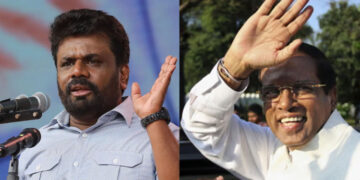
Today, the President of Sri Lanka is the same Anura Kumara who resigned his ministerial post back then in opposition to the Tsunami Relief Council. Whether he remembers this episode or not is unclear. Had the Tsunami Relief Council been established and had the promised international assistance been received, not only the tsunami victims but the entire country could have recovered. Instead, the JVP blocked it.
“So isn’t this the same JVP that is now asking the international community for aid for those affected by Cyclone Dithwa?”
According to the US Ambassador to Sri Lanka, Julie Chung’s, writing on her Twitter account, Anura Kumara called the American Ambassador to India and President Trump’s Special Representative for South Asia to request assistance. The United States initially pledged one million dollars, later increasing it to two million dollars. The damage caused by the disaster exceeds 15 billion US dollars. Two million dollars is a mere pittance—insufficient even to make a dent in losses amounting to billions.
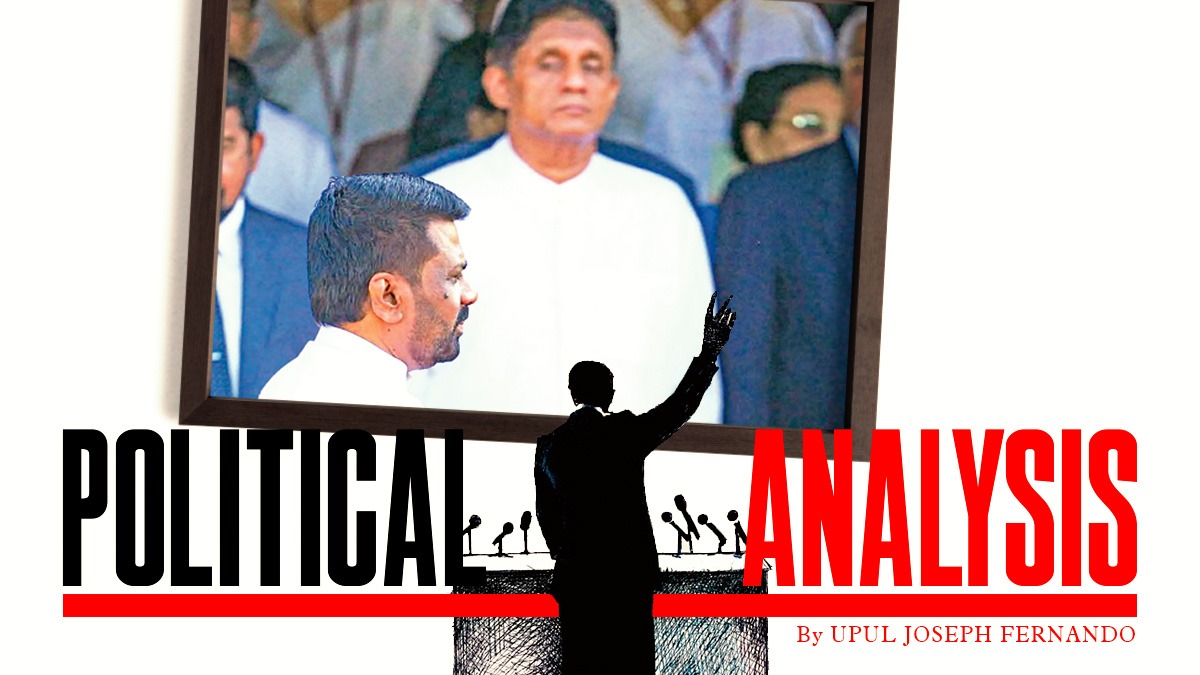
Opposition Leader Sajith Premadasa said he was willing to help renegotiate the agreement with the International Monetary Fund and formulate a new one because he realized that the government had no clear plan to recover from the disaster. He met foreign ambassadors individually to secure the assistance Sri Lanka needs. At that point, the government had not even organized a single meeting with foreign envoys to seek aid.
Yet when Sajith extended a hand of friendship, Anura came to Parliament and declared that Sajith’s help was a “please, no.”
During the tsunami period, Chandrika even invited her sworn enemy Ranil Wickremesinghe to join her in lighting oil lamps for the victims, to send a message to the country that the entire nation—government and opposition alike—stood united in rebuilding after the disaster. She understood that international assistance could be mobilized only through such an approach. Although Ranil was reluctant to stand alongside Chandrika, who had dissolved his government and stripped him of the prime ministership, he could not refuse her invitation. The reason was simple: those affected by the tsunami were not only SLFP supporters in general, but also UNP supporters—people of all parties and colours—without distinction.
Those affected by Cyclone Dithwa are not only those who voted for the Malimawa. Among them are also voters of the Samagi Jana Balawegaya and the Podujana Peramuna. Not only individuals, but the entire country has suffered severe economic damage as a result of this disaster. Therefore, when the opposition comes forward to help, this is not the time to say “please, no,” but to say, “please, come—let us unite.”
If even Cyclone Dithwa fails to give the JVP the right understanding, then the ultimate disaster will be the Malimawa’s own.