Lavish Politico Wedding Amid Calamity Sparks Public Fury
Legality of Rebuilding Sri Lanka Committee Explodes into Debate
Sajith Steps into Danger Zone to Aid Victims as Govt Faces Criticism
National Calamity Widens Rift Between Govt and Opposition
Blessing in Disguise
Natural disasters are a frequent occurrence worldwide. In politics, there is a common belief that such devastation can sometimes become a blessing in disguise, creating an opportunity for a nation to rebuild itself. This is because when a catastrophe strikes, it affects everyone equally—regardless of political party, ideology, religion, or caste. In these moments, governments are often able to unite all sides, including opposition parties, to work collectively toward national recovery. That unity becomes the hidden blessing within the disaster.
Sri Lanka, too, has faced many natural disasters in the past. Yet, successive leaders often used those calamities to advance their own political agendas rather than uniting all parties and rebuilding the nation together. Instead of properly managing the local and foreign aid that flowed into the country, they diverted that support to strengthen their political machinery, abandoning the larger national interest. This time, however, after the recent cyclone, many believed things would be different. The Malama government had repeatedly promised systemic change while in opposition. Given its inexperience in governance and disaster management, there was hope that it would bring all parties together and respond to the crisis in a unified, national manner.
At first, it appeared this hope might be justified. President Anura Kumara Dissanayake took several positive initial steps—actions rarely seen from previous heads of state. Immediately after the cyclone hit, he came to Parliament and invited all opposition leaders and MPs for a special discussion. Nearly all of them, including Opposition Leader Sajith Premadasa, accepted the invitation and participated. Sajith Premadasa’s contribution in particular deserves mention. As a former Housing Minister, he had led major housing initiatives and welfare programs across the country, and he also had extensive experience as Opposition Leader. During the President’s initial meeting, Sajith urged him to appoint authorized committees at provincial and district levels to coordinate rebuilding efforts.
He also advised the President to declare a state of emergency if existing laws were obstructing relief distribution and service delivery. Moreover, he recommended immediately convening the National Disaster Management Council under the 2005 Disaster Management Act. The expectation was that the President would promptly act on these proposals. But despite being the most essential first steps in a crisis of this scale, none were implemented. Government authorities failed to heed Sajith’s recommendations.
The President did convene the National Disaster Management Committee that night, with Sajith and other opposition representatives attending and presenting further proposals. He also called party leaders to the Presidential Secretariat, where Sajith once again offered detailed suggestions. Yet, the government implemented none of them. When Parliament met on Monday, Sajith publicly revealed these delays and again urged the government to impose a state of emergency, activate the disaster management mechanisms, and provide urgent relief to the people.
Who is the Invisible Hand?
Although many political leaders urged the President to declare a state of emergency and accelerate rescue efforts, doubts quickly emerged about whether an unseen force was preventing him from acting. At the meeting of party leaders, prominent figures such as Sajith Premadasa, Rauff Hakeem, and Ravi Karunanayake personally appealed to the President to impose an emergency without delay. Their insistence stemmed from a growing suspicion that some external influence was discouraging the President from taking this essential step.
Why, then, did the President delay the emergency declaration for several days? Who—or what—was holding him back?
Some believe influential business groups were responsible. These groups reportedly warned the President that declaring a state of emergency could harm tourism and advised him against doing so. Ultimately, the President imposed the emergency only about three days after receiving the opposition’s recommendations. Since then, several developments have raised questions about whether the President has shifted from his initial stance of uniting the entire opposition to face the crisis together. Following his address to the nation, behind-the-scenes manoeuvres created suspicion that the Malama government may also be reverting to old political habits: managing the disaster within the confines of its own government, its own party, and its own ministers.
A key concern is the President’s decision to bypass the National Disaster Management Council—required under the Disaster Management Act of 2005—and instead appoint a special committee titled Rebuilding Sri Lanka. The Cabinet approved the establishment of a statutory fund under the Presidential Secretariat to handle storm-related recovery. A management committee, comprising representatives from both government and the private sector, was appointed to oversee it. Minister Anil Jayantha was named Chairman, with Senior Additional Secretary to the President E.M.R.D. Aponsu as Convener.
The committee also included several prominent businessmen and senior officials:
– Finance Ministry Secretary Harshana Suriyapperuma
– Senior Economic Advisor to the President Duminda Hulangamuwa
– Sugeeshwara Gunaratne of the Ministry of Foreign Affairs, Foreign Employment, and Tourism
– Hayleys Group Chairman Mohan Pandithage
– John Keells Chairman Krishan Balendran
– Aitken Spence Vice Chairman/MD Parakrama Dissanayake
– Brandix Group CEO Ashraf Omar
– LOLC Executive Chairman Ishara Nanayakkara
According to the Presidential Media Unit, this committee has the authority to manage the crisis effectively, assess needs, set priorities, allocate funds, and release money for approved recovery work. Several dedicated bank accounts were announced for this purpose.
What Sajith Did
With the President appointing a separate committee composed of senior officials and prominent business leaders, the principle of unified national cooperation began to unravel. The government and opposition found themselves divided once again, and the opposition sensed that the government intended to handle the crisis on its own, without bipartisan collaboration. Despite this setback, Opposition Leader Sajith Premadasa acted with an uncommon sense of responsibility and diplomacy—unlike any opposition leader in recent history. Even after being sidelined, he continued to behave as a true national statesman.
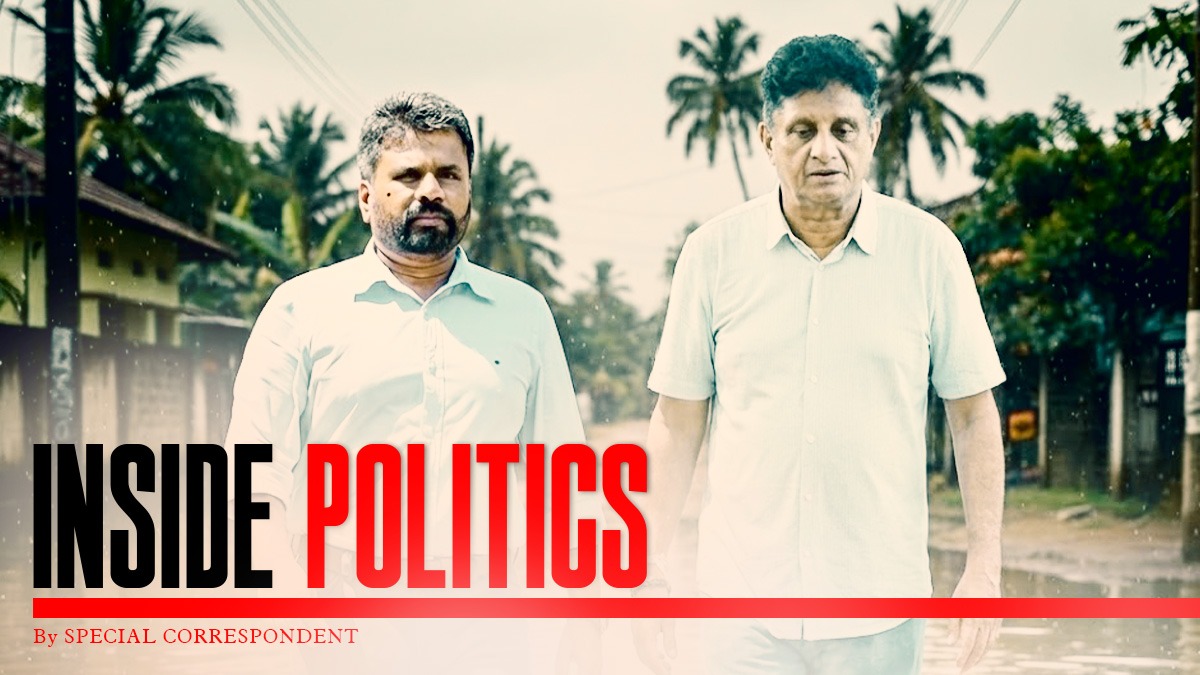
While floodwaters were still rising, Sajith personally visited affected areas and displacement camps to listen to the people’s needs. In parallel, he worked diplomatically by inviting foreign ambassadors to his office and requesting urgent international support. He met with the ambassadors of Japan, Korea, Germany, the European Union, Italy, and the Indian High Commissioner, appealing for immediate assistance. He also toured the devastated Kolonnawa area with SJB MP Marikkar to understand the ground situation. Residents there had one desperate request: many people were still trapped in their homes and urgently needed rescue, but there were not enough boats. Even Minister Bimal Ratnayake had posted on Facebook—two days into the crisis—highlighting the critical shortage of boats.
Responding to the people’s plea, Sajith instructed Marikkar to procure boats immediately. Marikkar managed to arrange several boats on a rental basis. To his astonishment, Sajith insisted on joining the rescue efforts himself. Though it was a risky and dangerous mission, Sajith travelled by boat into the flooded areas to reach stranded families and deliver help—a gesture that resonated deeply with the affected communities.
Parliament Divided
Meanwhile, although there should be mutual understanding and goodwill between the ruling party and the opposition in the event of a national disaster, this unity was officially broken on Monday when Parliament began. This occurred at the party leaders’ meeting held before the commencement of Parliament. Although the opposition requested a one-day debate to discuss the disaster that has affected the people, there was strong opposition from the government. In particular, Mr. Bimal Ratnayake clearly stated that a one-day debate could not be granted based on the budget debate schedule. Bimal’s position was that if necessary, only morning time could be allocated for it.
Generally, since the day the government was formed, such a close rapport between Bimal and the opposition had not been evident. Bimal was the only minister who directly clashed with the opposition within the government. Because of this, there had not been much goodwill between Bimal and the opposition representatives in the past. Even though that rapport should have been built between the two sides in the event of a national disaster, instead of holding a debate on the day requested by the opposition, the government stated that it could only provide time until 12:30 PM and that each speaker could be given three minutes.
The opposition strongly opposed this arrangement, realizing that the government was deliberately limiting the time to cover up its shortcomings. Accordingly, the opposition convened a separate special meeting in Parliament on Monday morning under the leadership of Sajith. Many MPs pointed out that the government did not give the opposition enough time to discuss the disaster to cover up its incompetence and inexperience. Consequently, it was decided that if the government did not allow adequate time to address the people’s problems, they would protest and walk out of Parliament. It was Kabir Hashim, a senior member of the opposition, who announced this decision. As discussed, the government refused to grant a same-day debate, and the opposition walked out of Parliament that day.
Through this action, for the first time, the message that the government and the opposition were divided over this disaster was seen to reach the country and the world. At that time, many in the opposition were of the opinion that although they had decided to work with the government to provide necessary relief to the people, the government commenced that effort from Pelawatte. The opposition members believed that this should not be allowed under any circumstances.
Attack Intensifies
On Tuesday, when Parliament resumed, the division between the government and the opposition deepened further. This was triggered by a strong attack from the opposition on the Rebuilding Sri Lanka committee, established by the President to manage the disaster. SJB MP Mujibur initiated the attack, stating that although Sri Lanka has many credible experts in disaster management, none of them were included in the committee. Instead, the President had appointed individuals close to him and a group of businessmen allied with him.
Mujibur went on to allege that a businessman accused of altering the engine capacity of vehicles imported into Sri Lanka to make illegal profits is also a member of the committee, and that a case regarding this matter is currently pending before the Court of Appeal. He further criticized the absence of female representation in the committee, noting that this was surprising given that the government came to power claiming to uphold equal rights for women.
While Mujibur raised serious concerns about the composition of the Rebuilding Sri Lanka committee, Dr. Harsha de Silva, who spoke next, questioned its legal status. Harsha argued that there was no constitutional basis for establishing such a fund. He emphasized that since Parliament holds complete authority over the country’s financial affairs, any such fund must be established through Parliament; otherwise, it would be illegal. He also insisted that the fund’s activities must be subject to auditing.
Following these criticisms by Mujibur and Harsha, Opposition Leader Sajith Premadasa began his remarks. Sajith strongly condemned the government for failing to allocate time to discuss the hardships faced by the people and presented several proposals. His main point was that the government should immediately revise the budget. Sajith argued that the current budget was entirely unsuitable to address the sudden national disaster. He urged the government to either amend the budget or present a new one to enable recovery. At that time, information indicated that serious issues had arisen among officials regarding the allocation of funds for disaster relief. Reports suggested that despite emergency laws being in place, officials faced practical difficulties in spending the money.
Consequently, Sajith stressed in his speech that a supplementary estimate should be presented immediately to address these problems. He also urged the government to engage with the International Monetary Fund to revise clauses that negatively affect the people, and to convene an international aid conference to secure assistance for Sri Lanka. Sajith further stated that if the government was unable to take these steps, the opposition was ready to intervene and lead the effort. According to sources, after Sajith’s statement on Tuesday, the President recognized the seriousness of the situation. He decided that the current budget could no longer continue and that a new budget was necessary to enable recovery from the disaster.
Some observers speculate that initially, the government had planned to use this money cautiously over the next two years, saving it until about a year before the next election, when it would be spent on development projects to gain public support. However, the sudden disaster overturned this strategy, as speculated by some. Officials, therefore, advised that a supplementary estimate should be presented using these funds to provide temporary relief to the people. Supplementary budget SLR 70 billion released, but now reports indicate that another SLR 500 billion would be released.
Will IMF agree?
With the allocation of an additional 500 billion SLR from the treasury, the pressing question that arose was how the International Monetary Fund (IMF) would respond.A staff-level agreement has already been reached regarding the fifth loan installment to be provided by the IMF to Sri Lanka, with the final decision scheduled to be taken at the IMF Executive Committee meeting in Washington on the 15th.
The government promptly initiated discussions with the IMF regarding the release of the 500 billion. However, some speculate that IMF was not in favour of the government’s proposal during the talks. According to available information, the IMF pointed out that using tax revenue for flood disaster relief could negatively impact the economy and potentially escalate the ongoing economic crisis into a dangerous situation.
As a result, the IMF urged the government to postpone submitting a supplementary estimate until January, pending a proper assessment of the damage and the implementation of relevant measures. At the same time, IMF officials emphasized their readiness to provide a special fund to help Sri Lanka recover from the sudden disaster. They also encouraged the government to convene a support conference by engaging international partners who are assisting Sri Lanka. Furthermore, the IMF assured the government of support in rebuilding destroyed infrastructure such as bridges, roads, and houses.
The government now faces a dilemma: whether to submit the supplementary estimate or refrain from doing so. If the government allocates 500 billion rupees to the people without IMF approval, it risks provoking the IMF’s displeasure. This situation could lead to a disagreement between the two sides. In such a case, the IMF may choose to postpone the fifth loan tranche scheduled for approval at the Executive Committee meeting in Washington on the 15th. On the other hand, if the 500 billion supplementary estimate is not passed, the government risks severe public criticism for keeping funds in the treasury while failing to act in the face of a national disaster.
A telephone conversation between President Anura Kumara Dissanayake and IMF Managing Director Kristalina Georgieva is expected to take place. Nevertheless, the government appears determined to proceed with its plan. The President confirmed the discussion with the IMF, which would take place.
The IMF have postponed the December 15th review which could result the tranche not be released as expected this year. President Dissanayake in his speech in Parliament on Friday mentioned the review was postponed up to February 2026. Meanwhile, reports confirm that the 500 billion SLR allocation is set to be presented and sanctioned at a special parliamentary session convened for December 19th.
Talking to USA
Meanwhile, a special telephone conversation was held between US Special Representative for South and Central Asia Sergio Gore and President Anura Kumara Dissanayake last week. The US Special Representative, who stated that he was closely monitoring the developing disaster situation in Sri Lanka, expressed his deepest condolences to the families who lost loved ones and emphasized that the United States stands with Sri Lanka at this difficult time. This Sergio Gore is a very close associate of US President Donald Trump. When President Anura Kumara Dissanayake went to the US to address the United Nations General Assembly last September, he had a special face-to-face discussion with Gore. Gore had also stated that he could call him at any time and that he could discuss the matter directly with President Trump.
Accordingly, during this discussion, the President had requested Gore to inform Donald Trump of all the information regarding the natural disaster that Sri Lanka is currently facing, and Gore, accepting the request, had asked him to immediately prepare a waiting list regarding the emergency assistance needed by Sri Lanka. President said that highways, railways and bridges have been extensively damaged due to the natural disaster, and urgent assistance is needed to reconstruct all of them and restore the lives of the people.
In response, Gore had informed the President that he would inform President Donald Trump of all this. He also informed the President that the United States would take steps to provide immediate relief and technical assistance to Sri Lanka. As soon as the discussion ended, the United States had decided to provide emergency assistance to Sri Lanka with two huge C-130 aircraft. The United States had also taken steps to send the aircraft carrying this aid to Sri Lanka from the American base of Diego Gracia Island, which is located near Sri Lanka.
Similarly, when former President Ranil Wickremesinghe was in office, the United States had sent a huge C-130 aircraft to Sri Lanka in a highly secretive manner. The US had taken steps to make this trip so secret that the government had even taken steps to close the expressway to bring the group that arrived on this aircraft to Colombo. Also, no disclosure was made by any media about who had arrived. However, at that time, we made an extraordinary disclosure through the ‘inside politics’ column and said that the head of the American intelligence service, the CIA, had secretly come to Sri Lanka and held talks with government authorities.
Today the United States has sent two C-130 aircraft to Sri Lanka to provide the necessary assistance to those affected by the floods. However, if the International Monetary Fund takes a tough decision regarding the loan relief to Sri Lanka on the 15th, there is no risk that the US government will also take a decision on this aid provided by the US.
A Wedding amid the Flood
Typically, when a national disaster strikes a country, people refrain from engaging in politics or attending joyous parties and celebrations. It is part of our culture for everyone to mourn together with the victims. Providing assistance is an integral part of this response. However, there are times when this norm is not observed. A similar incident occurred during the recent national disaster that affected the entire country—the “going away” ceremony of Jeevan Thondaman, a former minister and member of parliament, held at the Hilton Hotel in Colombo.
The wedding had taken place a fortnight earlier in Chennai, India. A group including former President Ranil Wickremesinghe traveled from Sri Lanka to Chennai to attend the event. Following the wedding ceremony in Chennai, the Thondaman couple returned to Sri Lanka for the “going away” ceremony held over the weekend. Jeevan had invited current President Anura Kumara Dissanayake, current and former ministers, former presidents, and opposition leaders, including Sajith Premadasa, to the party at the Hilton Hotel in Colombo.
However, two days before the event, a cyclone struck, and the plantation area represented by Thondaman was almost completely devastated. There were numerous deaths and massive property destruction. Accordingly, many expected that Jeevan’s second celebration would be postponed, but that did not happen. Instead, Jeevan proceeded to hold the event at the Hilton Hotel as planned. Former Presidents Ranil Wickremesinghe and Gotabaya Rajapaksa attended, along with Maithripala Sirisena, Dilith Jayaweera, and Karu Jayasuriya. However, many opposition MPs, President Anura Kumara Dissanayake, Opposition Leader Sajith Premadasa, and numerous others were notably absent.
When news of the situation spread, social media launched a fierce attack on Thondaman, criticizing him for holding his celebration despite the serious destruction in the plantation sector. As a result, no photos of Thondaman’s second celebration were publicly posted anywhere. Not even Thondaman’s Facebook page displayed any related images. We have obtained a photo, but in view of the situation in the country, we have chosen not to publish it at this time. However, there is one thing politicians should not forget: the people took to the streets in 2022 to protest against precisely such political insensitivity.
Ranil Falls again
Just as weddings are sometimes held during national disasters, political agendas too continue to unfold in the country. In particular, whenever a disaster occurs, various groups attempt to seize power through it. Former President Ranil Wickremesinghe is widely regarded as someone who has repeatedly gained power during times of crisis. For example, in 2001, Ranil formed a government by capitalizing on the economic crisis that followed the Katunayake bombing carried out by Tiger leader Prabhakaran’s air force. Later, in 2015, the “Good Governance” government was established amid another economic crisis. Subsequently, in 2022, Ranil became president during the economic collapse that followed the country’s bankruptcy after the struggle. Accordingly, Ranil is seen as waiting for another crisis to emerge at any moment, through which he can maneuver himself into a high-ranking position. It has become his custom to present himself as the nation’s savior in such circumstances.
On many occasions, we have reported on Ranil’s history of shortcut politics.This time, however, when disaster struck, Ranil’s camp published a news item through his family-owned newspapers, claiming that he had called a special discussion to address the matter. It was announced that all opposition party leaders had been invited. Ranil planned to gather opposition members and stage a major media show, complete with photographs portraying him as “fighting” for the country. He entrusted the task of bringing opposition leader Sajith Premadasa to his relative, Ruwan Wijewardene.
Although Ruwan had recently stated that he would temporarily step away from politics to focus on family business affairs, he has now reappeared in politics alongside Ranil. Notably, despite Ruwan’s repeated attempts over the past few days to invite Sajith to the meeting, Sajith did not respond to any of his phone calls. In the end, no parliamentary representative or party leader attended Ranil’s meeting as he had hoped. No leaders from the North or East, nor any Tamil or Muslim MPs, were present. Remarkably, not even a representative from the Pohottuwa attended.
At the beginning of the meeting, two seats were reserved near Ranil. When asked who they were for, Ranil replied that they were intended for former President Maithripala Sirisena. However, Maithripala had made no arrangements to attend. Ultimately, the attendees included figures such as G.L. Peiris, Mahinda Yapa Abeywardena, Nimal Siripala, Lasantha Alagiyawanna, Duminda Dissanayake, and Mahinda Amaraweera.
Why did the Pohottuwa, which at least participated in the meeting held in Nugegoda on the 21st, refuse to join Ranil’s discussion? According to the information we have, following that meeting, the UNP received a message from the Pohottuwa side stating that the UNP would not be included in the alliance being built under Namal’s leadership. It is also said that the Pohottuwa now intends to embark on a political journey leaning heavily to the left, a culture in which the UNP does not fit.