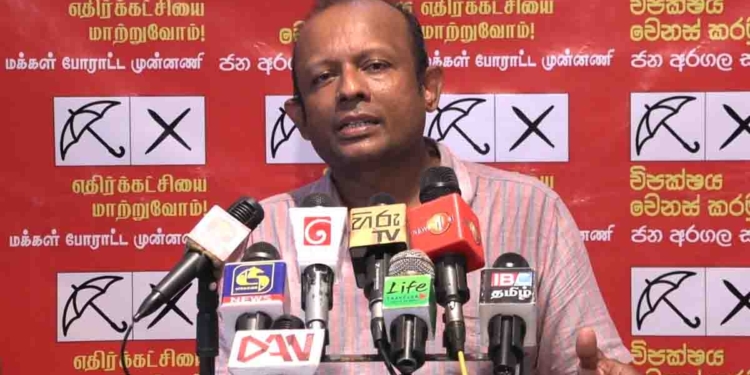
The Frontline Socialist Party (FSP) has alleged that awarding the tender for the import of coal required for power generation in Sri Lanka to an unqualified company has opened the door to serious corruption.
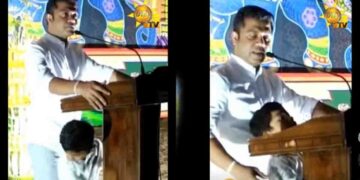
Speaking at a seminar titled “Uttaraya Api” held yesterday (28) at the Suja Hotel Hall in Bendiwewa, Polonnaruwa, FSP Education Secretary Pubudu Jayagoda raised concerns regarding the procurement process.
He stated:
“On September 15, the tender for coal supply for power generation was opened and awarded to a company named Trident Chemphar, which submitted the lowest bid. However, this raises several serious questions. There is a suspicion that procurement guidelines were violated in order to award the tender to this company.”
According to Jayagoda, the 2021 Sri Lanka Coal Registration Document required companies to possess a minimum coal reserve of 1,000,000 metric tons with a Gross Calorific Value (GCV) of 5900 kCal/kg. In contrast, the 2025 registration document reduced the minimum qualification criterion to 100,000 metric tons—representing a 90% reduction. He stressed that Trident Chemphar had been registered under the 1 million metric ton criterion, making this sudden change highly suspicious.
He also recalled past allegations against the company. Citing the Auditor General’s report (20/09/2016, page 168) presented to the Public Enterprises Committee, Jayagoda noted that Trident Chemphar was accused of violating government procurement guidelines when supplying 30,000 metric tons of rice to Sathosa in 2014.
Further concerns were raised over the individuals linked to the company.
Sarath Chandra Reddy, one of Trident Chemphar’s owners, was arrested in New Delhi in 2022 for alleged money laundering connected to an excise duty scam.
Sarath Bandara Jayasundara, the company’s local representative, has also faced accusations of corruption. Formerly a cricket talent analyst, he was suspended from seven years of matches by the International Cricket Council (ICC) in 2019 over match-fixing charges.
Jayagoda alleged that procurement guidelines had been altered under the current government, enabling a company already associated with corruption to secure the coal tender. He described fraud and corruption in Sri Lanka as the result of a network involving three groups: politicians, high-ranking officials, and racketeering businesses.
He pointed out that while public attention has often been directed only at politicians, the corrupt network now functions even without their involvement.
Jayagoda further criticized the government’s double standards regarding electricity supply:
“When Ceylon Electricity Board employees opposed the meat-and-sell act, the President issued a gazette declaring electricity an essential service. Yet when the coal import tender—usually called in March—was delayed until July, it was forgotten that electricity is essential.
Procurement guidelines require companies to maintain a coal safety reserve of at least 90%. When power cuts occurred, it was not remembered that electricity is essential.
When decisions were taken to discourage rooftop solar panels, which contribute to the national grid, it was not remembered that electricity is essential.
When electricity tariffs are increased continuously, making life unbearable for the public, it is forgotten that electricity is essential.”
Concluding his remarks, Jayagoda said:
“This tender scam alone is enough to question who this government is really standing for.”