Sri Lanka is open to obtaining technical assistance through the Office of the United Nations High Commissioner for Human Rights (OHCHR), including support from forensic experts, to expedite investigations into past crimes in the country, a senior government source said yesterday.
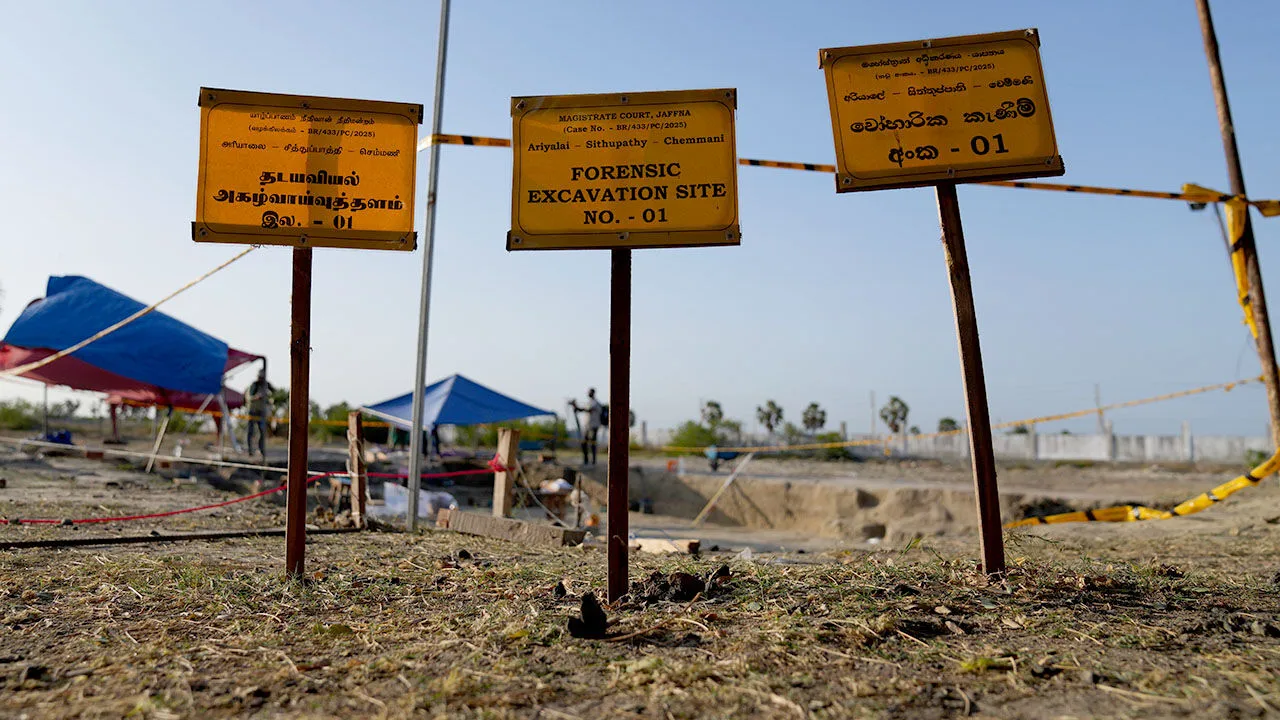
Foreign Minister Vijitha Herath said such cooperation would include assistance in identifying victims from mass graves currently being exhumed in several parts of the country.
He told the Sunday Times that obtaining such assistance would depend on directives issued by the judicial officials under whose purview the mass graves are being excavated.
Meanwhile, no date has yet been fixed for the vote on the new resolution on Sri Lanka. However, amendments to the draft resolution must be submitted by September 25. Minister Herath noted that no major changes to the draft resolution are expected and confirmed that Sri Lanka will remain under OHCHR monitoring for the next two years.
The draft resolution to extend the OHCHR’s mandate on Sri Lanka was submitted to the United Nations Human Rights Council (UNHRC) last week by its main sponsors: the United Kingdom, Canada, Malawi, Montenegro, and North Macedonia.
Minister Herath said he held discussions with representatives from the UK and Canada in Geneva and requested additional time for Sri Lanka’s domestic accountability mechanism to deliver justice.
The resolution highlights the identification of multiple mass grave sites in Sri Lanka, emphasizing the need to provide adequate resources for ongoing work and to ensure the independent and effective functioning of the Office on Missing Persons.
It also urges the Sri Lankan government to proactively seek international support to secure sufficient financial, human, and technical resources for exhumations conducted in line with international standards. Additionally, it calls for international assistance to strengthen the country’s capacity to investigate and prosecute emblematic cases of human rights violations, including those linked to the 2019 Easter Sunday bombings.
With the extension of the OHCHR mandate, the term of the OHCHR’s Sri Lanka Accountability Project (OSLap) will also be extended.
“We have opposed the external investigation mechanism, including the OHCHR’s Sri Lanka Accountability Project. There is no change in that,” Minister Herath said.
The OSLap is an evidence-gathering mechanism designed to develop strategies for future accountability processes related to gross human rights violations or serious breaches of international humanitarian law in Sri Lanka. It also supports relevant judicial and other proceedings, including those in member states with competent jurisdiction.
Minister Herath further stated that the Prevention of Terrorism Act (PTA) will be repealed within this year. The draft Anti-Terrorism Bill, which will replace the PTA, is now in its final stage. “We should be able to table it in Parliament this year,” he said.