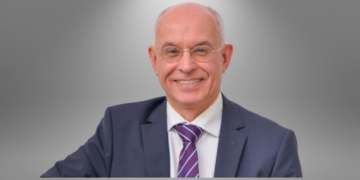

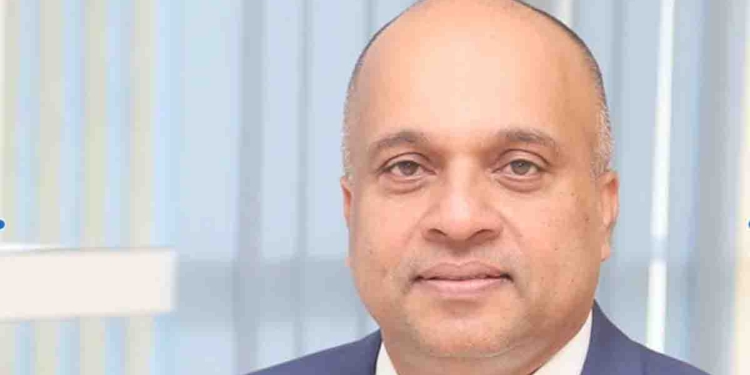
In recent months, several individuals appointed to prominent positions under the current government have resigned. The latest to do so is Professor Saman Senaweera, a renowned academic who has held several significant posts, including Chairman of the National Science Foundation, Director of the National Institute of Nanotechnology, and Interim CEO of the same institute.
The Media Secretary of the Ministry of Science and Technology confirmed that Professor Senaweera tendered his resignation earlier this week.
Professor Saman Senaweera Speaks to BBC Sinhala
Speaking to BBC Sinhala Service about his resignation, Professor Senaweera cited political interference as the primary reason for his decision.
“I came to Sri Lanka after working in several universities in Australia with the intention of contributing to the country. However, during my tenure, I witnessed increasing political interference. Matters within my scope of work were being decided without my knowledge, and I received very little support to continue my initiatives.”
He further explained that he took charge of the National Institute of Nanotechnology at a time when the institution was in decline.
“I worked tirelessly to revive the institute but received no meaningful backing. I eventually learned that the minister was planning to remove me, which made me question the purpose of staying. That is when I decided to step down.”
Professor Senaweera had returned to Sri Lanka a year and a half ago, leaving behind his life in Australia, to assume the position of Chairman of the National Science Foundation.
“I first came to work at the University of Ruhuna, where I was later invited to take up this role. But, as many Sri Lankans who return from abroad experience, I faced harassment and obstacles. The opportunity to take these institutions in the right direction was lost — and that is why I left.”
Lack of Institutional Support
Professor Senaweera criticized the lack of support for professionals invited to serve the country.
“People like me are asked to come back, but once we are here, we get no support. There is no system in place to resolve issues or even communicate decisions effectively. I felt that some people were still operating at a very primitive level, and in science and technology, this attitude is detrimental. Instead of building capacity, we are digging a hole for the future.”
Despite his resignation, Professor Senaweera expressed his desire to remain in Sri Lanka and continue contributing in other ways.
“I am not planning to return to Australia anytime soon. I have had discussions with several institutions here, and I am eager to serve the country at a different level if the opportunity arises.”
Why He Returned to Sri Lanka
Professor Senaweera, who previously served as a senior lecturer at the University of Melbourne and the University of Southern Queensland, explained that his decision to return to Sri Lanka was driven by hope for change.
“I came back because I saw a small change in this government and wanted to support it. That is why I joined the University of Ruhuna, where I completed my undergraduate studies. I believed that real change could only come from working within the country, not shouting from abroad. That is why I left everything behind and accepted the National Science Foundation’s invitation.”
Profile of Professor Saman Senaweera
Professor Senaweera was educated at Royal College, Polonnaruwa, and Kekirawa Central College before obtaining his first degree from the University of Ruhuna. He later earned his PhD in Plant Physiology from the University of Western Sydney, Australia, and lectured in plant biology there for 10 years.
He also served as a senior lecturer at Tohoku University in Japan and worked at the University of Illinois in the United States before returning to Australia to take up a position at the University of Southern Queensland.
In Sri Lanka, he held numerous leadership roles including:
Chairman of the National Science Foundation
Director and Interim CEO of the National Institute of Nanotechnology
Board member of several other national institutions
He noted that during his tenure, many important projects were launched.
“We started initiatives that had never been attempted before. Unfortunately, I had to leave abruptly while leading a major program. This is not a political attack — my decision is meant to send a message and encourage change.”
Attempts to obtain a response from the Minister of Science and Technology, Professor Krishantha Abeysena, were unsuccessful.
However, the Media Secretary of the Ministry of Science and Technology, Nithya de Silva, stated that there were no issues as described by Professor Senaweera.
Source: BBC Sandeshaya