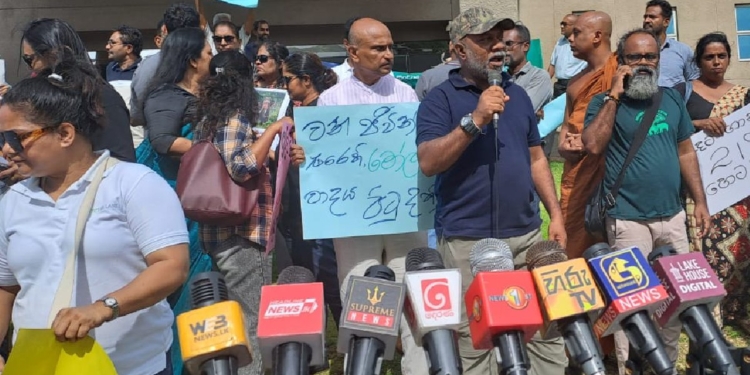
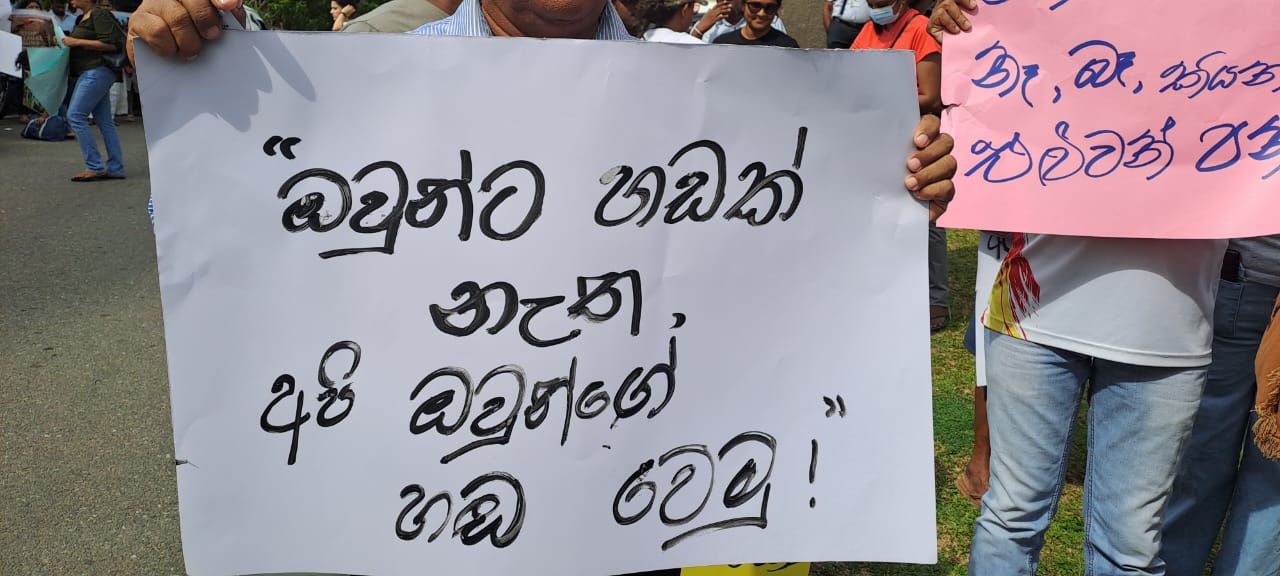
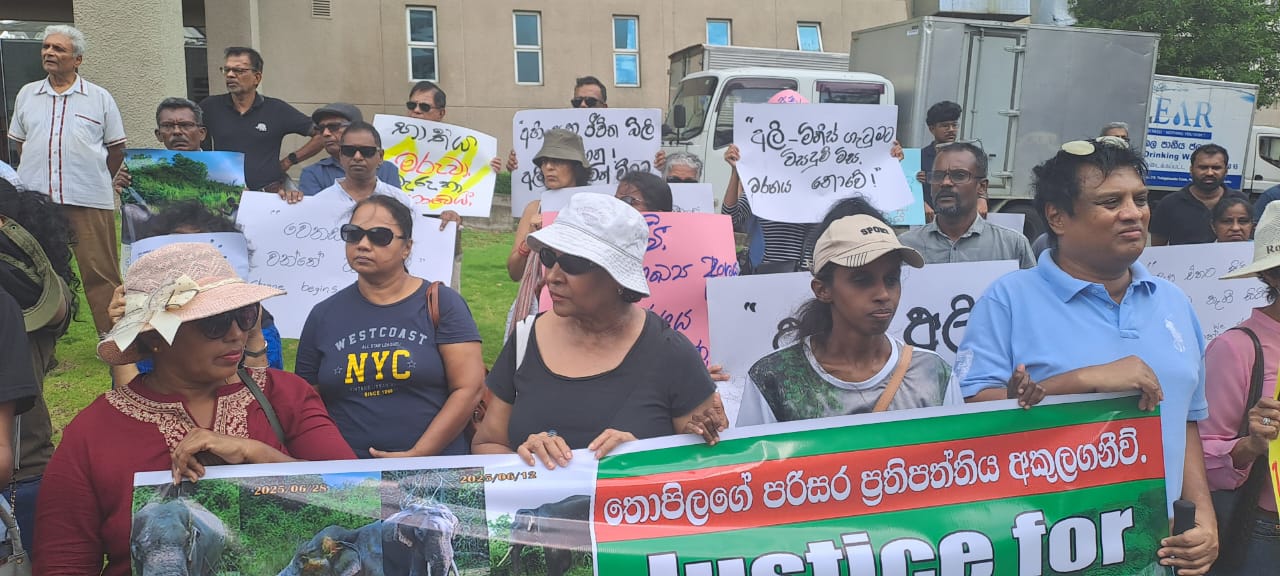
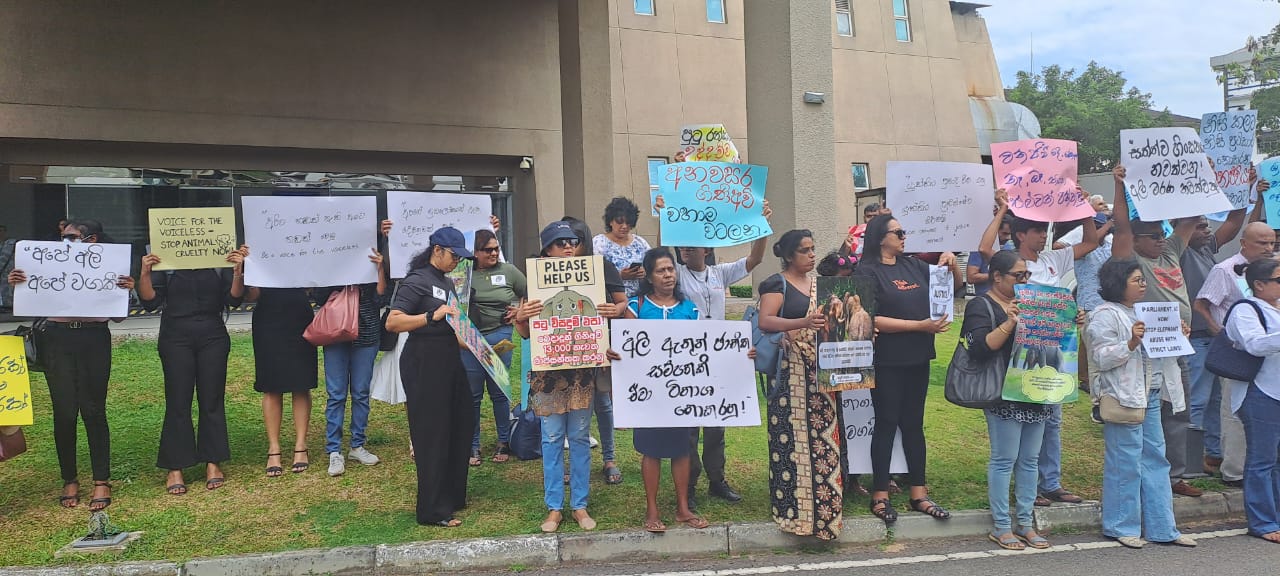
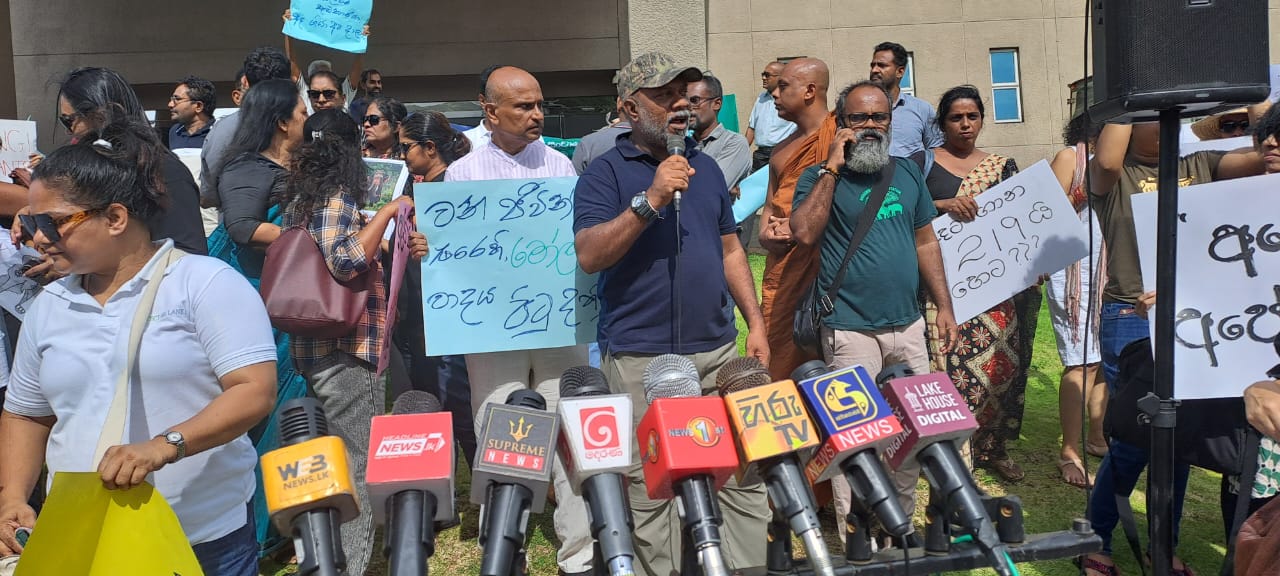
On the 17th of this month, citizens gathered in front of the Environment Ministry in Battaramulla to hold a silent, peaceful protest, urging authorities and officials to deliver justice for the death of Bhathiya. As of now, elephant deaths have climbed to 221 within just the first seven-and-a-half months of this year. At this rate, it’s unimaginable how many elephants will perish by the year’s end. Thus, the public’s collective action against elephant killings and other wildlife crimes is a positive and necessary trend. When authorities remain inactive, inefficient, or negligent, it becomes the responsibility of the awakened public to pressure them into providing effective solutions.

As we reported in our previous article in the “Kale Kolama” (Forest Column) last week, Bhathiya survived this long only because of public outcry against officials’ negligence and abandonment. The general public believes that if Bhathiya had received timely and proper treatment, this tragedy could have been avoided.
The public firmly believes Bhathiya’s death was not natural—it was murder. This conviction drove citizens to protest in front of the Environment Ministry in Battaramulla, demanding accountability. We at “Kale Kolama” sincerely hope that authorities will heed these appeals. Below are thoughts shared by an environmental enthusiast who joined the peaceful protest:
“We know our country’s elephants are our most special asset. Foreigners visit this country to see our forests and wildlife, especially our elephants—not ordinary people like us. Today, our elephant population is being destroyed daily. Bhathiya was a beautiful elephant, around 35 years old, who could have lived many more years. He suffered for months with bullet wounds. We believe authorities failed miserably to provide him with necessary care due to their inefficiency. Because of this incompetence, Bhathiya faced an unfortunate death. People must rise now to protect our wildlife and forests. We need to form a wall of people. We have no political agenda, no political party differences—we’re here solely to protect these animals, especially our dying elephants.”
Elephants continue to be killed every day without pause. It seems this trend has become unstoppable. Isn’t it plausible there’s an organized group behind these killings?
“Absolutely. Elephants are dying at a rate never seen before in our history. Even today, an elephant was shot. Yesterday another was shot. Elephants are shot daily, and right now at least 6 wounded elephants are fighting for their lives. We’ve never experienced anything like this. We strongly suspect a conspiracy aimed at eradicating our elephants. We don’t know if the government, the responsible authorities, or security forces are aware of this, but clearly, there’s an ongoing conspiracy to destroy our elephant population.”
Despite having a Department of Wildlife Conservation, doesn’t it feel like conservation itself is missing?
“Exactly. They build these institutions and appoint officials using our tax money specifically to protect wildlife. Yet these officials remain arrogant and unwilling to adopt any new ideas. Many individuals proposed solutions for Bhathiya’s recovery, including financial help and constructing supportive frames, but authorities rejected every proposal. Had they acted appropriately, Bhathiya would still be alive. Bhathiya died prematurely because none of these essential measures were implemented. Clearly, our inefficient wildlife institutions must change—they must undergo reform.”
Do you believe there’s a mafia or a bureaucratic structure deliberately preventing proper action?
“Yes. They have created their own closed world, preventing anyone from intervening. Initially, the Sri Lanka Army’s medical division was ready to assist Bhathiya, but the Health Director of the Wildlife Department refused their involvement, claiming they could manage it themselves. He rejected constructing supportive frames, arguing that Bhathiya would still die regardless. He rejected everything, claiming full capability, but ultimately, they deliberately allowed a treatable elephant to die.”
To prevent Bhathiya’s fate from befalling future elephants, what action should be taken?
“We must build a wall of people. These elephants don’t belong to any minister or politician—they are the country’s common resource. It’s our right and duty to protect these common resources. We must unite as people without political motives. All those who care about wildlife must come together to build this wall of public resistance to stop this madness carried out by the government.”
Saman Halloluwa