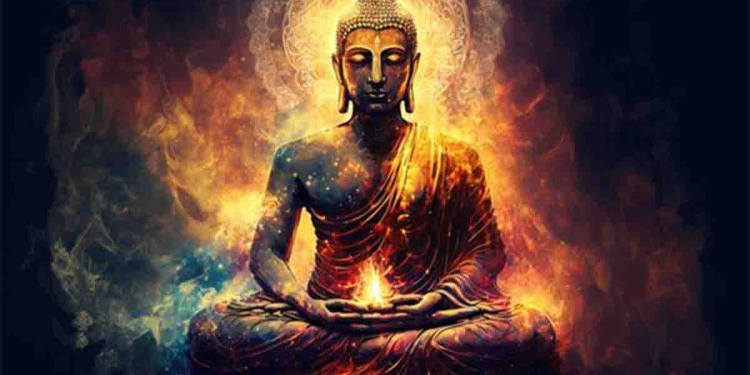
The Government of India is preparing to publicly exhibit sacred relics of Gautama Buddha, originally discovered in a stupa built by Emperor Ashoka, marking a historic first.
Among the relics are a crystal casket and four additional caskets, believed to be over 2,300 years old. These were unearthed in 1898 during excavations at Piprahwa in Uttar Pradesh—an area identified as ancient Kapilavastu, the childhood home of Lord Buddha.
One of the caskets, measuring approximately 5 cm by 10 cm, contained precious gems and a gold leaf mounted on a fish-shaped button. Another casket, discovered inside a stone container buried 18 feet underground, bore an inscription in Brahmi script. The inscription, translated, states: “The casket containing the relics of the Buddha was donated by the Sukirti brothers and their sisters, sons, and wives of the Sakya clan.” This significant finding confirms that the relics indeed belong to Gautama Buddha.
For over 127 years, these revered items—including five caskets, a sandstone casket, and 221 gems and jewels dating back to the 3rd century BCE—have been preserved in secure vaults at the Indian Museum in Kolkata. Until now, they have never been displayed to the public.
According to The Indian Express, this marks the first occasion that these sacred Buddhist relics will be unveiled for public viewing.