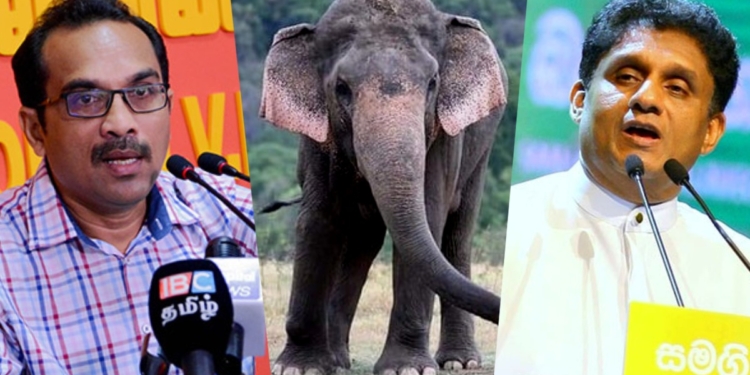
A herd of elephants traveling from the Kaudulla Reserve to Batticaloa via the Colombo-Battika main railway line collided with a Meenagaya express train on the night of the 20th. Six wild elephants were killed and several more were seriously injured in the incident. With the number of elephant fatalities from train collisions on the rise, the issue was taken up in Parliament. During the discussions, Minister Bimal Ratnayake proposed a measure to prevent elephant-train collisions, followed by a detailed explanation from Opposition Leader Sajith Premadasa on how various countries around the world are addressing this same challenge.
Below are the statements made by Minister Bimal Ratnayake and Opposition Leader Sajith Premadasa:
Minister Bimal Ratnayake
“I am not someone with special expertise on elephants. But after assuming my duties, on December 9, December 30, and January 3, we met with the Railway Department to discuss the deaths of elephants being hit by trains. We have identified certain areas where trains often collide with wild elephants crossing the railway line, and have submitted proposals accordingly.
It would be very expensive to build large flyovers, so we suggested initially involving local communities. There are about 10 villages where these collisions occur, and both the Ministry of Environment and the Railway Department have the details of those villages. For instance, in Gal Oya, between mileposts 133 and 141, it is clearly recorded where elephants are being struck. During our three meetings, we proposed assigning these 10 villages to the Railway Department. A large volunteer force exists in the local councils of our National People’s Power, and these volunteers—together with villagers and community elders—can contact the station master if elephants are near the tracks, who would then alert the train drivers. This isn’t highly advanced technology. I feel genuine sorrow about this tragedy, especially since we have been working on finding a solution.”
Opposition Leader Sajith Premadasa
“There are many instances where human-elephant conflicts on railway lines have been resolved successfully. In particular, I want to highlight the ‘Gajaraj’ alert system, which the Indian Railways developed in partnership with the Wildlife Institute of India. It uses thermal cameras and sensors, also known as the ‘Kavak system.’ I suggest we look at it in detail.
I am not certain if this proposal fits our country exactly. In places like Kenya, they have suggested elevated railway lines and underpasses as a solution. Whether this works for us depends on our geographical context. Meanwhile, in Assam, India, they are managing the bee population, taking advantage of the sounds bees make. Japan, on the other hand, has introduced an LED light system. There are many potential solutions. Therefore, I propose that your ministry and the ministry representing the wildlife sector collaborate on a comprehensive program, possibly through a standing committee that includes experts, state officials, and relevant political authorities. If you can allocate a bit of time during the budget session to gather parliamentary views, it would help greatly. This is not a political issue; we just need a solution, and we stand ready to offer our ideas.”