
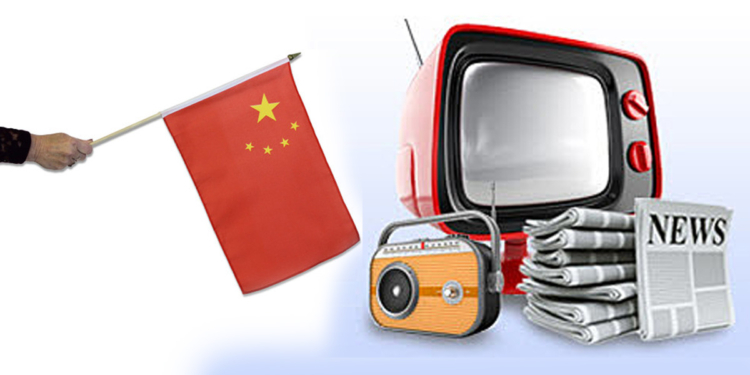
The media landscape in the People’s Republic of China primarily comprises television, newspapers, radio, and magazines. Since the early 21st century, the Internet has also become a crucial media platform. However, all media outlets in China operate under the direct supervision and control of the Chinese Communist Party (CCP) and the government. The CCP exercises strict control and censorship over media content, ensuring alignment with state policies. The primary authority overseeing media operations is the Central Propaganda Department of the Communist Party of China. Major media organizations, including China Media Group, People’s Daily, and Xinhua News Agency, are all under the control of the CCP. This forms the foundation of China’s current media policy.
What is the significant story emerging from China regarding its media sector? A chapter from ‘Wikipedia’ on the Internet sheds light on this matter, offering a global perspective on China’s media structure. Reading through it, one might perceive it as an analysis of China’s media regulatory framework—a system that has evolved over the years. To gain deeper insight, let us examine additional details from the same chapter.
According to historical records, from the establishment of the People’s Republic of China in 1949 until the late 20th century (the 1980s and 1990s), nearly all media outlets in mainland China were state-controlled. Although China’s economic reforms led to the emergence of privately owned media outlets, state-owned entities have continued to dominate the industry. Regardless of ownership, all media organizations must adhere to regulations set by the Central Propaganda Department of the CCP. Additionally, journalists are required to study ‘Xi Jinping Thought’—the ideological framework set by China’s current President, Xi Jinping—to maintain their professional credentials. Notably, China consistently ranks low in the annual World Press Freedom Index published by the international media watchdog ‘Reporters Without Borders,’ reflecting its stringent media control policies.
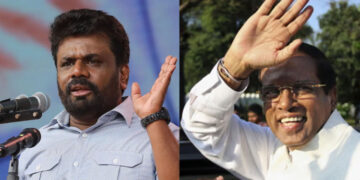
With this understanding, one might wonder what prompted this discussion. A significant event that took place recently serves as the catalyst for this narrative. The incident is linked to the official visit of President Anura Kumara Dissanayake to China. During his visit, several Memorandums of Understanding (MoUs) were signed between the two nations. Among them, one particular agreement stood out, drawing attention to the evolving diplomatic and media-related engagements between the two countries.