

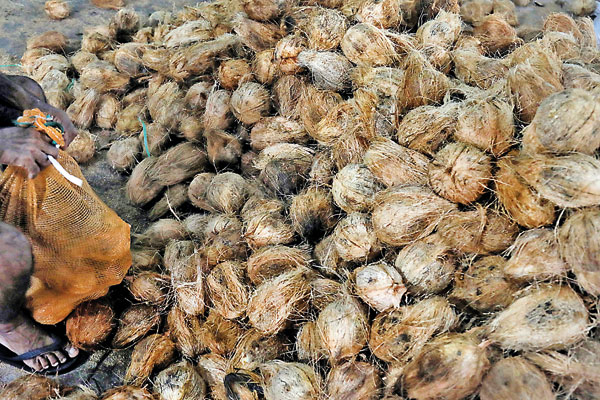
Sri Lankan exporters have achieved coconut and coconut-based product exports valued at USD 782.32 million (LKR 228.84 billion) during the first 11 months of the year, despite facing a severe domestic shortage, a significant decline in production, and escalating retail prices for coconuts and coconut oil.
Data from the Export Development Board indicate a robust double-digit growth in export earnings from coconut and related products between January and November.
In November alone, key products such as coconut oil, desiccated coconut, coconut milk powder, coconut cream, liquid coconut milk, coco peat, and activated carbon recorded substantial double-digit growth in export revenue. Notably, coco peat, fiber pith, and molded fiber products contributed USD 13.56 million (LKR 3.96 billion) in earnings, marking them as the largest contributors to this category.
However, while export revenues soar, Sri Lankan consumers face soaring prices, with coconuts retailing at up to LKR 170 each due to a persistent and predictable supply shortage that recurs annually.
According to the Central Bank of Sri Lanka’s agricultural bulletin for November, citing data from the Coconut Development Authority and other sources, coconut production in September experienced a 17.8% year-on-year decline. Monthly production has plummeted from a peak of 280 million nuts in March to 220 million in September.
From January to September, total yield dropped to 2.28 billion nuts, representing a 4% decline compared to the same period in the previous year. Coconut oil production also fell sharply, down 33.2% year-on-year to 23,789 metric tonnes. As a result, domestically produced 500ml bottles of “white” coconut oil now sell for up to LKR 850 at retail outlets.
A Recurring Crisis in Coconut Production
The downward trend in coconut production is not new. In 2023, monthly production declined from a high of nearly 280 million nuts in February-March to below 260 million in December. Similarly, in 2022, production fell below 280 million nuts in December after peaking at 380 million in June.
In 2019, then-Minister of Coconut Development, Arundika Fernando, attempted to address the issue by climbing a coconut tree in Dankotuwa using a mechanical device costing LKR 19,000. While suspended mid-air, he pledged to revitalize the coconut industry, citing plans to cultivate fallow land and position coconuts as the country’s leading export commodity.
Despite these promises, the situation has worsened. In 2019, coconuts were sold based on their size, with larger nuts (over 13 inches in circumference) priced at LKR 70, while smaller nuts fetched LKR 60. By September 2023, the average retail price of a coconut had soared to LKR 120, marking a staggering 100% increase in just three years.
Challenges Ahead
Experts warn that the persistent drop in coconut production and rising retail prices could have long-term repercussions for both domestic consumers and the export market. Urgent measures are required to address supply chain inefficiencies, enhance cultivation practices, and stabilize prices to ensure the sustainability of this vital industry.