
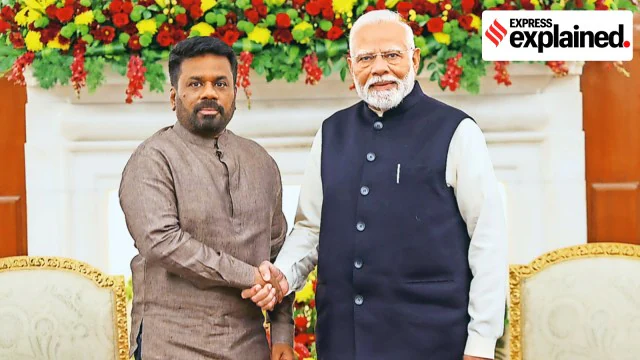
Sri Lanka’s President Anura Kumara Dissanayake embarked on his first international visit to India this week, marking a significant moment in his tenure. The visit featured strategic diplomatic engagements characterized by mutual concessions and affirmations.
Popularly referred to as AKD, President Dissanayake assured Indian Prime Minister Narendra Modi that Sri Lanka would not permit its territory to be used for activities harmful to India’s interests. “I have given an assurance to the Prime Minister that we will not allow our land to be used in any manner detrimental to the interests of India,” he stated during a press briefing following bilateral discussions on Monday.
The joint statement issued emphasized Sri Lanka’s firm stance on this matter, reiterating its commitment to ensuring its territory would not serve purposes inimical to India’s security or regional stability. This assurance is seen as a clear signal to China, whose research vessels—frequently docking in Sri Lanka—have raised concerns in New Delhi. The explicit position taken by the President, often viewed as having pro-China leanings, has been a source of relief for Indian officials.
However, on the sensitive issue of Tamil minority rights, President Dissanayake did not align with India’s preferred narrative. Notably absent was any explicit commitment to implementing the 13th Amendment to the Sri Lankan Constitution, which seeks to devolve powers to the Tamil minority. This long-standing demand from India remains a contentious point, as AKD has publicly opposed the amendment and resisted calls for investigations into alleged war crimes during the final stages of the civil war between the Sri Lankan military and the Liberation Tigers of Tamil Eelam (LTTE).
Prime Minister Modi, during his remarks, expressed hope that Sri Lanka would adhere to its constitutional commitments and proceed with holding provincial council elections. He highlighted the importance of reconciliation and reconstruction efforts. Meanwhile, President Dissanayake emphasized unity, social protection, and sustainable development, describing “diversity” as the “cornerstone of democracy.”
A Confident Leader
The joint statement reflected Sri Lanka’s confidence in framing its position under the new administration. Just two months earlier, following a meeting between Indian External Affairs Minister S. Jaishankar and AKD in Colombo, India’s official communication emphasized support for the aspirations of all Sri Lankan communities, including Tamils, and called for the full implementation of the 13th Amendment. However, bolstered by a historic parliamentary majority secured in the November election, President Dissanayake has since displayed a more assertive approach in engaging with global powers, including India and China.
This newfound confidence extends to domestic matters as well. President Dissanayake has demonstrated a firm commitment to the anti-corruption principles of his “Clean Sri Lanka” campaign, which played a pivotal role in his electoral success. A recent controversy surrounding the academic qualifications of Speaker Asoka Ranwala, a senior member of AKD’s Janatha Vimukthi Peramuna (JVP), underscores this resolve. Ranwala stepped down after the President’s implicit warning against any semblance of impropriety within his administration.
Focus on Rebuilding Sri Lanka
The incident involving Ranwala underscored the President’s intent to eliminate distractions as he tackles the arduous task of rebuilding Sri Lanka’s social and economic fabric after years of crisis. This focus was evident in the India-Sri Lanka discussions, where both leaders prioritized mutual benefits and regional stability.
As President Dissanayake navigates the complex landscape of international diplomacy and domestic governance, his inaugural visit to India underscores a pragmatic approach aimed at balancing relations with major powers while addressing Sri Lanka’s pressing internal challenges.