In the villages, there is a saying that people throw an iron piece to ward off lightning during rain. When the country was devastated by the Central Bank robbery and the Easter attacks, then-Prime Minister Ranil was seeking such an “iron piece” to prevent the UNP from sinking in the 2019 Presidential election. Though he was inclined to contest the election, he also harboured fears. Despite calls to nominate Sajith Premadasa as the UNP candidate, Ranil was unwilling to lose his leadership by putting forward another candidate from the party.
At that time, Dhammika Perera, Sri Lanka’s top billionaire businessman was a vocal critic of the economic policies of the Maithri-Ranil government, gaining popularity among the public who were frustrated with the government’s handling of the economy. Ranil realized that Dhammika Perera was the best “iron” to throw out and shield from the crises affecting both the party and the government. By that point, he understood that Dhammika was the most popular figure outside the party who could challenge the Rajapaksas as a common candidate. He approached Dhammika through a third party with this proposal.
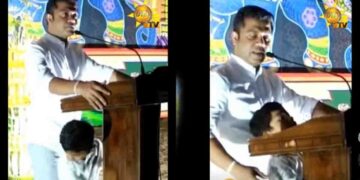
Despite being aware of the risks, Dhammika agreed and first tackled minor issues like the human-elephant conflict in Sri Lanka, working up to major economic problems. He presented solutions rather than just a vision and even authored a book containing his solutions.
The agreement between Ranil and Dhammika unsettled both Ranil’s opposition within the UNP and the Rajapaksa faction within the SLPP. Mangala, a prominent critic of Ranil within the UNP, publicly attacked Dhammika, while the Rajapaksas used the media to criticize him. Feeling abandoned, Ranil ultimately withdrew his support, and Dhammika remained silent. Gotabaya Rajapaksa became President, while UNP candidate Sajith lost.
After becoming President in 2019, Gotabaya offered advisory roles and top government positions to prominent businessmen in Sri Lanka, though Dhammika Perera, the country’s top billionaire, was not given any such role. Later, during the protests that led to the resignation of Prime Minister Mahinda and his cabinet, Ranil was appointed as Prime Minister. While Basil orchestrated Ranil’s path to the presidency, Mahinda, Namal, Shiranthi, and other members of Mahinda’s family were also instrumental, with Yoshitha playing a major role.
As the protests made it difficult for a Rajapaksa to run in the 2024 Presidential election, Basil saw the advantage of importing a common candidate, just as Ranil had previously done with the UNP in 2019. Basil feared that Ranil’s concerns in 2019 about saving the party and government were now his own concerns for the 2024 election.
Basil also realized that Dhammika Perera, Ranil’s original “iron” against the crises in 2019, would be an ideal candidate to use against the current turmoil. He wanted to bring Dhammika into Parliament through the national list and make him the Finance Minister, hoping to stabilize the economy and groom him as the 2024 Presidential candidate. However, Ranil blocked this move, and Gotabaya, wary of Ranil, later forced Dhammika out of the ministerial position he had given him when he resigned amid the growing protests.
During Gotabaya’s presidency, Dhammika launched DP Education, an initiative to provide free online education to children affected by the disruption of schooling during the COVID-19 pandemic. There was no online education system in Sri Lanka at the time, so by the time the protests ended and Ranil became President, DP Education had become the country’s first free online education network. Dhammika even hosted an educational summit in Colombo. He claimed that he could turn bankrupt companies in Sri Lanka into profitable ones and believed he could do the same for the entire country.
This worried Ranil. As the 2024 Presidential election drew near, he suggested that Dhammika accept the Finance Minister post to both leverage his popularity and absorb the Rajapaksa faction into his presidential bid. Ranil even offered Dhammika the Prime Minister post, but Dhammika declined. Being a skilled businessman, he calculated the standing of the SLPP in a presidential election. Although Basil saw Dhammika as a strong contender, the Rajapaksa family delayed announcing him as a candidate, fearing Ranil’s influence. In the end, Dhammika withdrew from the presidential race.
Ranil’s proposal for Dhammika to contest the 2019 presidential election was accepted in light of Donald Trump, a top U.S. businessman, becoming President in 2017. Unlike the Sri Lankan political system, where a candidate needs the leader’s approval, Trump became the Republican nominee after a competitive race.
There are two prominent businessmen globally who attempted to change their systems and were ultimately cast out: Thaksin Shinawatra, the Thai billionaire, and Donald Trump in the U.S. While Trump faced lawsuits and Thaksin was banned from entering Thailand, today Thaksin’s daughter serves as Thailand’s Prime Minister. People continue to support businessmen over traditional politicians, believing they bring about change. Currently, America’s top businessman, Elon Musk is similarly eyeing politics from afar.
“In Sri Lanka, there’s no system to change things. First, we need to build a system…” Dhammika Perera stated wherever he went. However, he lacks the clout of a Trump or Musk, as politicians in Sri Lanka are inclined to go along with businessmen rather than letting them lead the way.