
Sri Lanka’s newly appointed political leadership is poised to engage with the International Monetary Fund (IMF) to ensure the continuation of its current financial program. The government is also expediting discussions for debt relief with foreign creditors to bolster the nation’s fragile economic recovery, according to sources within the Finance Ministry.
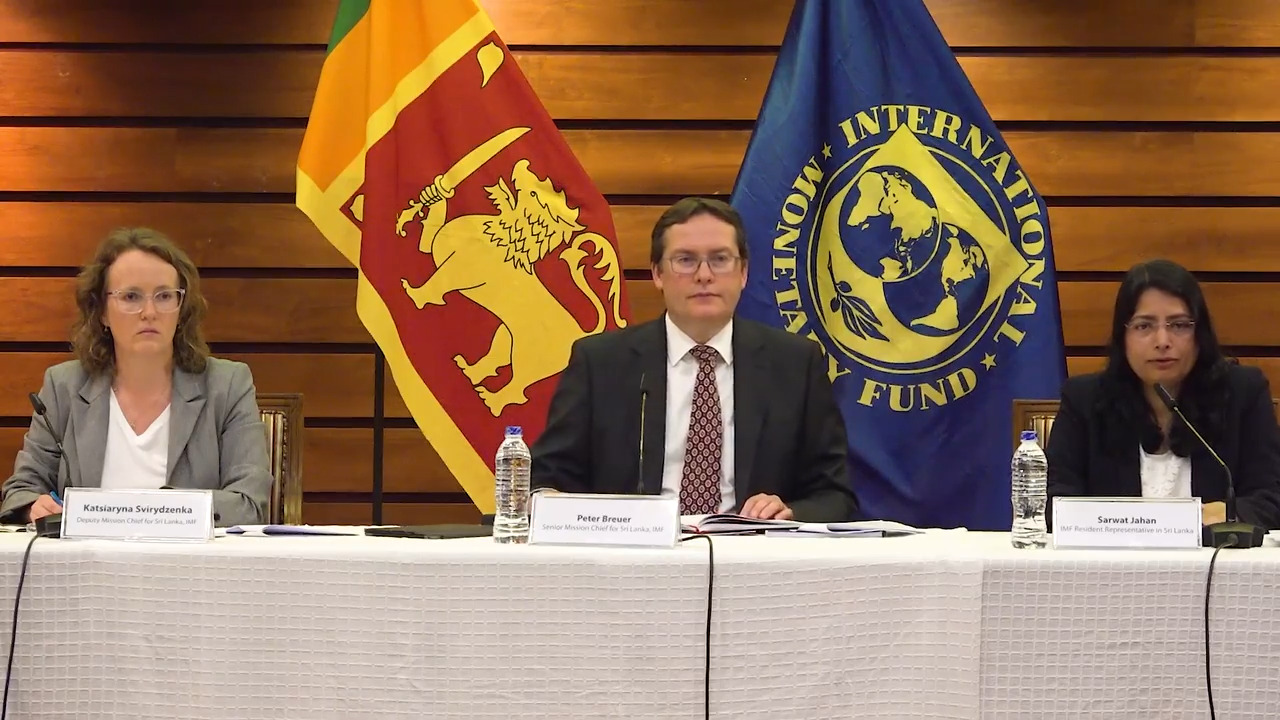
An IMF team is set to visit Sri Lanka on Tuesday, October 2, to evaluate the country’s economic progress, recognizing the urgent need for key economic reforms.
Julie Kozack, Chief of Communications at the IMF, announced that the Fund’s third review of Sri Lanka’s $2.9 billion Extended Fund Facility is scheduled for mid-October. The exact timeline will be coordinated with the newly elected government.
In his inaugural televised address, President Anura Kumara Dissanayake reaffirmed his commitment to promptly resume discussions with the IMF, highlighting the critical nature of these talks for the nation’s recovery from one of its most severe economic crises.
The upcoming visit by the IMF staff aims to assess Sri Lanka’s progress and will play a crucial role in determining the disbursement of the next financial tranche, anticipated in November.
Meanwhile, Central Bank Governor Nandalal Weerasinghe revealed that Sri Lanka’s debt restructuring is nearing completion, with a bond exchange expected within six to eight weeks, contingent on the government’s adherence to the current Debt Sustainability Analysis (DSA).
Although the Central Bank is not involved in the DSA decision-making process, it is the Finance Ministry’s responsibility to decide whether to renegotiate or uphold the existing DSA framework.
Remaining steps in the restructuring process include finalizing agreements with both international and local bondholders, as well as the Asian Development Bank (ADB). Once the comparability of debt relief measures—such as interest reductions and maturity extensions—is assessed, a bond exchange can move forward as planned.
If all conditions are met, the bond exchange could occur within the projected timeframe of six to eight weeks. Dr. Weerasinghe emphasized that completing the debt restructuring is vital for Sri Lanka’s financial stability.
Despite recent advancements, IMF officials have cautioned that the country remains in a vulnerable state, stressing the importance of sustaining current gains for a lasting recovery.
There are hopes that this 17th IMF program will tackle the underlying issues of corruption and poor governance. However, the lack of significant progress in these areas raises concerns that the IMF may not prioritize adherence to governance commitments in the renewal of the program.