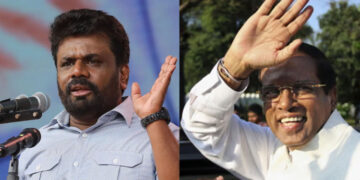
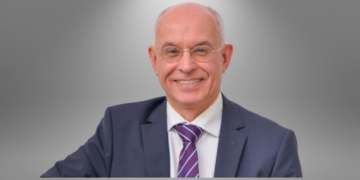
At the media briefing held at the Samagi Jana Sandhana office, Members of Parliament Kabir Hashim, Eran Wickramaratne, and Dr. Harsha de Silva participated.
Kabir Hashim:
“We expect to discuss the country’s economy at today’s media discussion. We plan to revisit the IMF agreement, intending to amend certain aspects within the IMF framework. For example, while the state’s revenue as a percentage of GDP is set to be 15.4% by 2029, we do not plan to change that figure. However, how and from whom this revenue is generated is our internal matter, and we’ve made it clear to the IMF. For instance, the government has committed to achieving an economic growth rate of around 3% per annum with the IMF. However, we believe that 3% is insufficient for debt repayment and meeting the country’s needs. We believe that the growth rate should be increased beyond 3%. The Samagi Jana Balavegaya firmly believes that the necessary stimulus should be provided for this. Therefore, the economic growth rate should be 8-10%. If necessary, certain amendments should be made within the IMF framework.
As a result, many people are under pressure, especially the middle and lower-middle classes and the poorest segments of society. We believe that the burden on them should be reduced. Our opponents are creating a myth, suggesting that by canceling the IMF agreement, the third tranche from the IMF will not be received, leading to a significant economic crisis. This is nothing but an attempt to tarnish our image.
We haven’t made any promises to do things that are impossible just to gain popularity. We are well aware that the country is in a precarious situation, and we are discussing what can be reformed within this framework. The SJB will not speak irresponsibly.
In 2019, when Gotabaya Rajapaksa changed the tax policy and began providing tax reliefs, we warned in Parliament that the country would go bankrupt. The Chairman of the Chamber of Commerce even published advertisements wishing success. We also suggested going to the IMF in 2020. It’s clearly mentioned in the Hansard of the 2021 budget speech. We made predictions that were ignored. What did the government do instead? They tried to cure COVID-19 with a “Dhammika syrup,” and now they’re trying to save the economy with another concoction instead of going to the IMF, with Basil, Nivard Cabraal, and P.B. Jayasundara creating this ‘potion.’ The result was bankruptcy.
Harsha, Eran Wickramaratne, and I are not like fortune-tellers. We believe in economics, and our decisions are based on economic science. We are committed to making evidence-based decisions, not selling policies like snake oil.
In 1989, when an economic crisis hit Malaysia, Mahathir Mohamad adopted the IMF framework but didn’t implement everything the IMF recommended. He made decisions based on what was unique to his country. That’s the kind of government we hope to establish.
Harsha de Silva will analyze some ideas regarding state revenue generation. We intend to reform the tax slab. A large number of people in both the public and private sectors who bear a heavy burden when earning should be given relief.
If the Department of Inland Revenue is digitized and strengthened, if this is done in an organized manner, we believe that we can provide relief to the people while meeting IMF targets. We believe that we can win the country’s trust and establish a fair system.”
Eran Wickramaratne:
“As a party, we have understood the importance of public service. For two and a half years, we’ve developed this policy framework not just to win elections but by bringing together hundreds of experts and professionals across 27 broad disciplines. After forming a government, how it should function is determined scientifically.
Whether it’s obtaining a birth certificate, a passport, or a driver’s license, the public faces numerous challenges today. Corruption is rampant, and we are committed to eradicating it completely. There should be no need to come to Colombo for any certification; services should be accessible from one’s district. We plan to elevate the level of service through technology. This will benefit the citizens and restore the dignity of public service. When making promotions in the public service, merit must be an essential criterion. Investments should be made in training the public service.
The Samagi Jana Balavegaya aims to prioritize the development of human resources. Technology is evolving, and international systems are changing. Our public service should be able to adapt to these changes. We will minimize political interference, ensuring that no politician’s family member is appointed to public service.
The greatest asset of our country is our teachers. We will take steps to provide free public transportation for teachers. I must also mention the military. High-ranking officials remain in service for life, but ordinary soldiers retire after 20 years. If they retire after 40 years, we must offer them new careers. With government intervention, they can work for another 20-30 years. As a government, we will intervene in this. The Navy hasn’t received proper recognition. We have significant natural resources in the sea, and we will provide the necessary technology to the Navy to protect our country’s resources. The Navy has a huge responsibility, and we have a plan to rebuild the public service.”
Harsha de Silva:
“We are undertaking this task with the utmost responsibility. A commission was appointed by the Cabinet to look into government service salaries, and an interim report has been submitted. We haven’t received it yet, but we believe that those distinguished professionals have done a thorough job. We don’t intend to deviate from the interim report. That’s why Sajith Premadasa mentioned yesterday that we aim to increase salaries by at least 24%. We are basing this on the committee’s report. If some individuals possess exceptional qualifications and experience, they can receive up to 50%. Not just 50%, but even 100% in some cases. It was under my leadership that the decision to increase salaries was made. We saw that there’s a system in place to pay a Deputy Governor of the Central Bank Rs. 1.8 million per month. This is a specialized position. There are similar professionals in fields like medicine and engineering. We argue that if a Deputy Governor can be paid Rs. 1.8 million, then highly experienced medical consultants and those at the top of their fields should also be paid Rs. 1.8 million. Based on the minimum 24% increase, we have a method in place. The 4.5% cannot be changed. Otherwise, this will create a chaotic system, changing salaries at different levels, and we hope to attract some of the outstanding public servants back to Sri Lanka. We will invite those who are highly skilled in technology, medical research, and even NASA-level expertise, back to work in the government.”