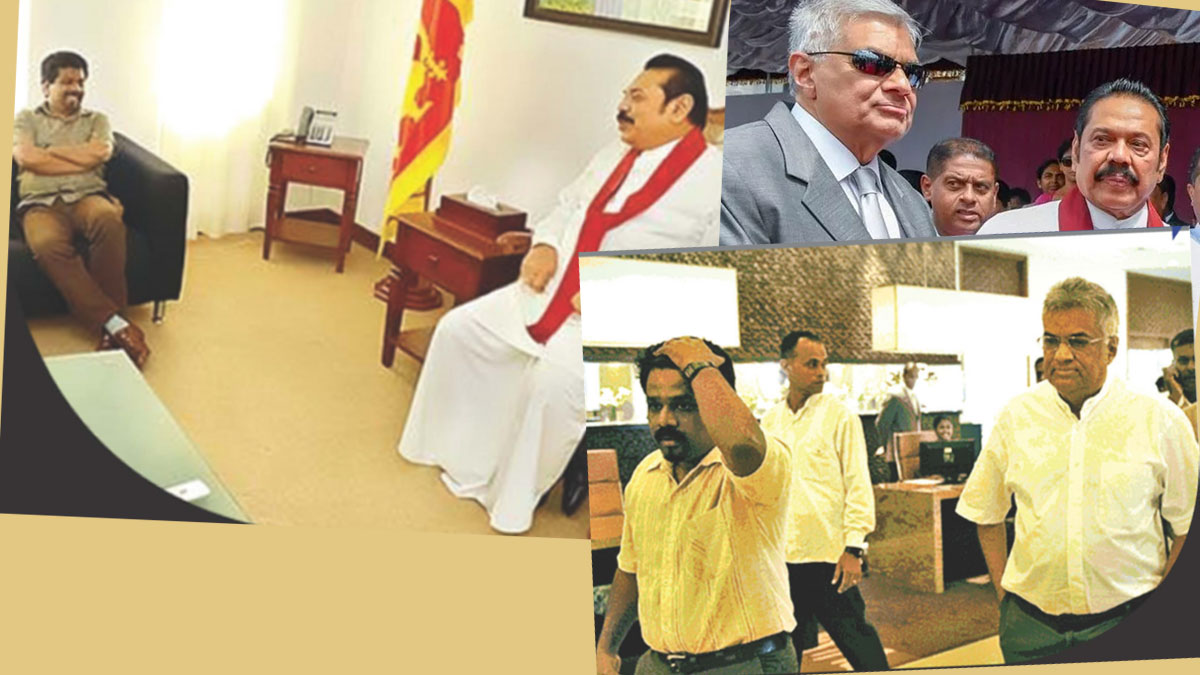
Political parties have fragmented under Mahinda Rajapaksa’s strategic influence, much like someone who plots against himself. Mahinda’s political maneuvers have left a lasting impact, particularly contrasting Ranil’s tactics. Mahinda, known for his sharp political acumen, often outplays his opponents, while Ranil’s strategies frequently falter.
Anura recently shared a story in Parliament about Ranil’s unsuccessful attempts to delay the presidential election. Despite Ranil’s efforts, including introducing the 22nd amendment, his plans fell through as the government decided not to present the amendment to Parliament.
Anura also highlighted the success of Mahinda’s strategies compared to Ranil’s failures. Mahinda’s adept political moves have consistently kept him ahead, starting from his early days when he was perceived as Anura Bandaranaike’s follower. Mahinda’s Pada Yatra was not just a display of support for Anura but a strategic move to establish his own influence within the party.
During Chandrika Kumaratunga’s government, Mahinda continued to assert his dominance, even confronting Chandrika openly. His strategic shift to the Ministry of Fisheries allowed him to implement significant projects, gaining public support and media attention.
In the lead-up to the 2005 presidential election, Mahinda ensured he secured the SLFP candidacy by leveraging his relationship with the JVP. His ability to break the alliance between Chandrika and the JVP was a critical factor in his political ascent. Mahinda’s strategic leaks to the media and public support for the JVP helped him build a strong alliance, ultimately securing the presidential candidacy.
Mahinda’s political game continued as he navigated the 2005 presidential race, outmaneuvering Ranil Wickremesinghe despite being initially behind in the polls. His strategic alliance with the LTTE, although controversial, ensured his victory. Mahinda’s ability to handle both internal and external challenges, including his approach to the Northern conflict, solidified his position as a decisive leader.
Mahinda’s tenure saw significant accomplishments, including the appointment of key figures like his brother Gotabaya as Defense Secretary and Sarath Fonseka as Army Commander. His leadership culminated in the defeat of the LTTE and the end of the 30-year civil war.
In contrast, Ranil’s political journey has been marked by a series of setbacks. Despite initial successes, Ranil struggled to maintain party unity and leadership. His leadership saw multiple defections to the government, weakening the UNP. Internal rebellions from key figures like Gamini Athukorala, Karu Jayasuriya, and Milinda Moragoda further destabilized his position.
The most significant challenge to Ranil’s leadership came from Sajith Premadasa, who split from the UNP and formed the Samagi Jana Balawegaya (SJB), winning 54 seats in the 2020 parliamentary elections. This move left the UNP without a single seat, marking a historic low for the party under Ranil’s leadership.
Despite these challenges, Ranil managed to become President through a series of political maneuvers, although his tenure has faced significant criticism and internal strife within the government. Anura’s critique in Parliament underscores the contrast between Ranil’s faltering strategies and Mahinda’s successful political gamesmanship.
As Anura aptly noted, the real political strategist remains Mahinda Rajapaksa, whose legacy of political maneuvering and strategic victories continues to influence Sri Lankan politics.