
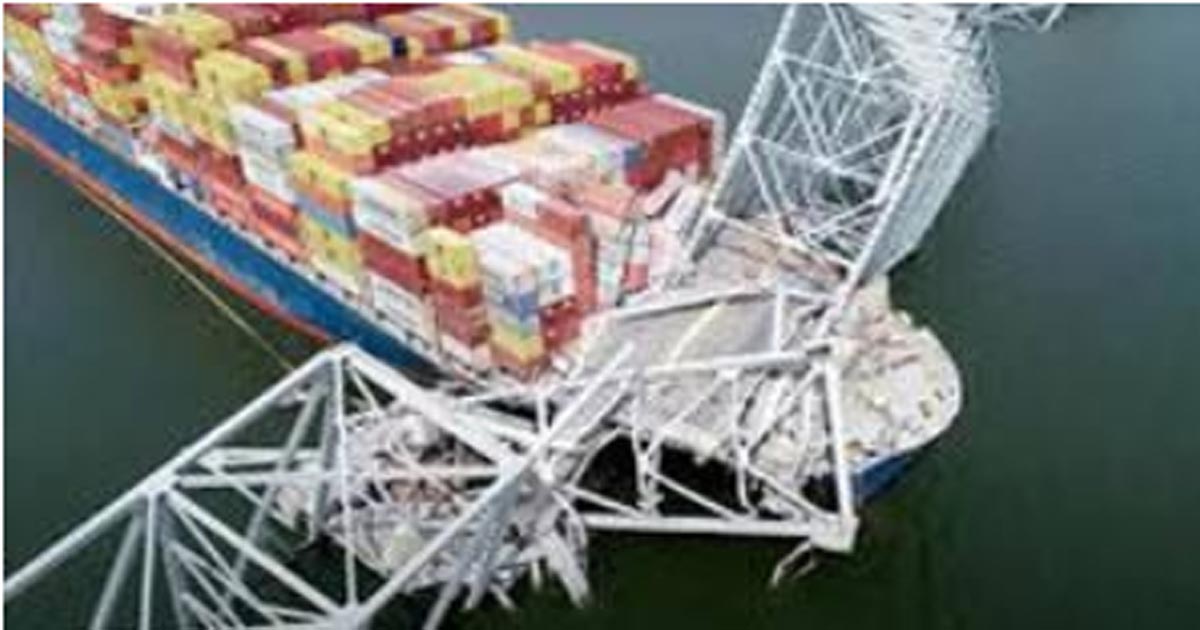
According to an official, Sri Lanka is currently unaware of the type of hazardous materials that were on board the Singapore cargo ship Dali, which Maersk had chartered. The ship crashed into a bridge in Baltimore, US on March 26 while carrying 764 tonnes of hazardous materials, as reported by US media.
Based on the available data, the International Maritime Dangerous Goods Code can classify 57 containers containing hazardous materials.
The waste included mostly corrosives, flammables, miscellaneous hazardous materials, and Class-9 hazardous materials, including explosives & lithium-ion batteries – in 56 containers. So says the US National Transportation Safety Board, still ‘analyzing the ship’s manifest to determine what was onboard’ in its other 4,644 containers.
The Dali made stops in Norfolk, Virginia, home of the biggest naval base in the world, and New York before arriving in Baltimore. Its next scheduled call was to be in Colombo, taking 27 days to travel around the Cape of Good Hope in South Africa and landing shortly after New Year’s Day. According to the US National Transportation Safety Board, the ship was transporting 56 containers containing 764 tonnes of explosives and other hazardous materials to SL.
Chairman of the Sri Lanka Ports Authority (SLPA), Keith Bernard, responded to a question about this matter by saying that the ship should only declare its container contents 72 hours prior to docking in the Colombo port.
“The ship is supposed to arrive here on April 21, 2024. It means they are supposed to inform us by April 17 or so. There is enough time. If there are containers with hazardous items as declared by them, we will isolate such containers in accordance with protocols. As a major transshipment hub, we have a procedure set in place to deal with such containers. Most likely, these containers are meant for transshipment,” he said.
Asked about the procedure if the containers are meant to be allowed into the country, he said the clearance of the Defence Ministry and others would be sought.
However, Deputy Director of the Central Environment Authority (CEA) Ajith Wijesundara said it is not yet clear whether the ship was carrying containers with hazardous wastes or toxic substances. According to the Basel Convention, he said such wastes would not be allowed into the country.
The text of the Basel Convention on the Control of Transboundary Movements of Hazardous Wastes and their Disposal was adopted on March 22, 1989 and entered into force on the ninetieth day after the date of deposit of the twentieth instrument of ratification, acceptance, formal confirmation, approval or accession, on May 5, 1992. The text has been subject to various amendments since its adoption.
He added that toxic substances are imported as raw materials and guidelines are applied.
Source: Daily Mirror