
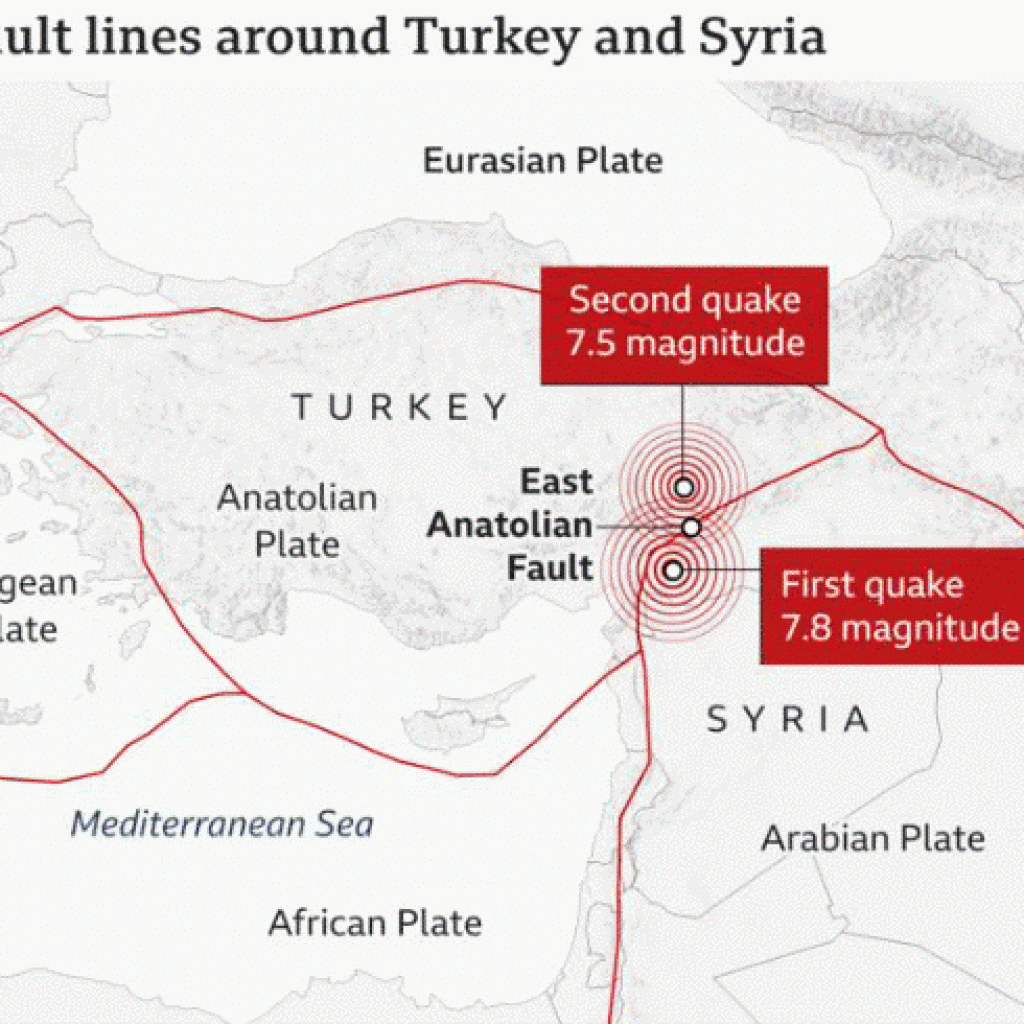
The “sheer magnitude” of the initial 7.8-magnitude quake today is larger than has been seen in Turkey for “hundreds of years”, according to a professor of geophysics who studies seismic activity in the Middle East.
Speaking to Radio 5 Live’s Naga Munchetty Martin Mai from the King Abdullah University in Saudi Arabia says there is currently “no way” to predict earthquakes.
“There was in the scientific community a hope and effort in the 1970s and 80s to say earthquakes can be predicted, all these theories ideas did not hold,” he says, adding countries can’t “predict” or “prevent” earthquakes – only “prepare”.
Mai adds that the second earthquake on a separate fault line today was likely triggered by the first.
“This tectonic plate has been loaded over the last decades, or centuries, and probably it was ready to go and the earthquake this morning pushed it over the edge,” he says.
Fires along gas pipelines apparently triggered by quake
Videos have emerged showing large fires bursting into the air in southern Turkey, with people claiming the earthquake has caused gas pipelines to burst and burn out of control.
Turkey’s energy minister Fatih Donmez said this morning that there had been serious damage to the country’s energy infrastructure, including gas pipelines near the epicentre, but he did not specifically mention explosions.
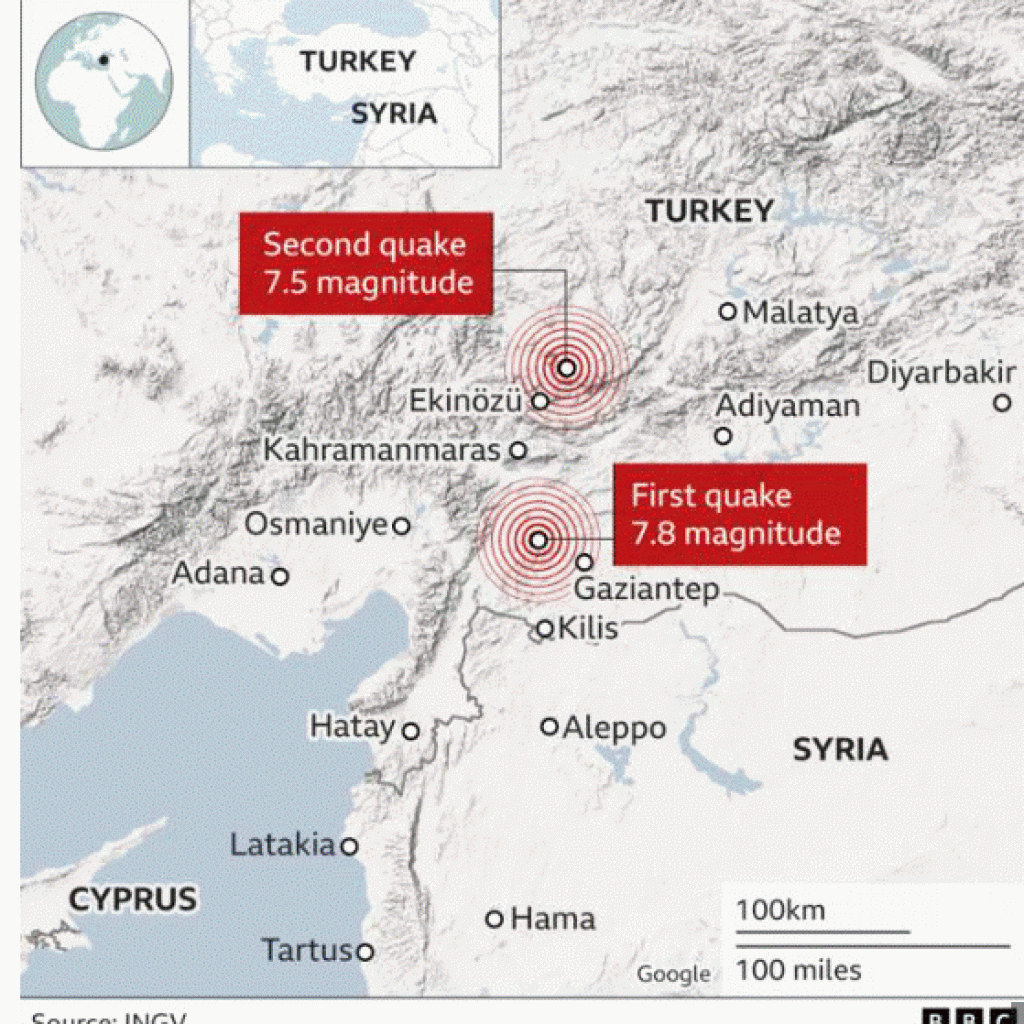
The BBC has verified one of the videos as being on the outskirts of the city of Hatay, 170km (105 miles) south-west of Gaziantep, where the earthquake struck.
In the video the tree lines and buildings match satellite images of the Amik valley near Hatay.
Death toll exceeds 1,700 as second quake strikes Turkey
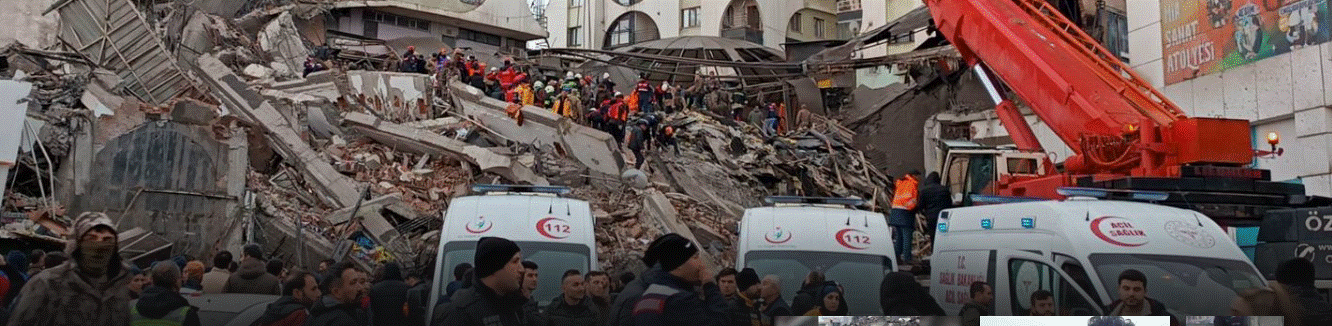
At least 1,700 people are believed to have died after two earthquakes struck Turkey and Syria.
The confirmed death toll from this morning’s earthquake in Turkey has now risen to 1,014, the head of the country’s Disaster and Emergency Management Authority has said.
The death toll in Syria now stands at 783, according to the AFP news agency, which has been combining figures from authorities in government-held areas with those from rescue group The White Helmets in rebel-held areas.
The figures bring the combined total to at least 1,797.
Information is still emerging about the impact of a second quake that hit Turkey’s Kahramanmaras province just hours after the first struck near the city of Gaziantep, around 80 miles south.
At least 70 people had already been confirmed as killed in Kahramanmaras before the second quake hit. The current death tolls are expected to rise as recovery efforts continue.
Syria death toll jumps to 783 – report
The number of people in Syria who have died as a result of this morning’s earthquake has risen to 783, according to figures cited by the AFP news agency.
This marks a significant jump and pushes the overall death toll in Syria and Turkey nearer to 2,000.
Turkey’s death toll has also risen in the last hour to more than 1,000.
Both figures are likely to continue rising, we’ll keep you updated as and when we find out more.
World leaders pledge support
The leaders of countries around the world have pledged to send support to help rescue efforts in Turkey and Syria.
UK Prime Minister Rishi Sunak said in a statement: “My thoughts are with the people of Türkiye and Syria this morning, particularly with those first responders working so valiantly to save those trapped by the earthquake. The UK stands ready to help in whatever way we can.”
French President Emmanuel Macron described the images coming from both countries as “terrible” and said France “stands ready to provide emergency aid”, while German Chancellor Olaf Scholz said his country mourned with the relatives of those killed and “will of course send help”.
Israeli PM Benjamin Netanyahu sent his condolences to the citizens of Turkey and said he had instructed “all authorities to prepare immediately to provide medical, rescue and rescue assistance”.
The Indian government said that 100 disaster response personnel as well as specially-trained dog squads were ready to be flown to the areas affected, and that medical teams and supplies were also being prepared.
Nato Secretary-General Jens Stoltenberg said he was in touch with Turkey’s President Erdogan and was “mobilising support”.
Source : international agencies