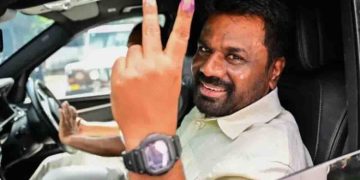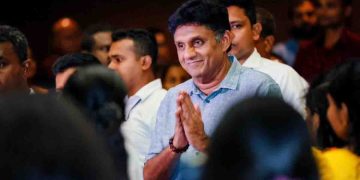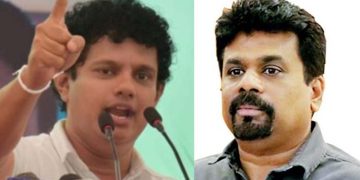


COLOMBO (Reuters) – Anura Kumara Dissanayake, despite lacking the political heritage of some of his competitors, has emerged as a key contender in Sri Lanka’s upcoming presidential election, thanks to his leftist policies focused on alleviating poverty and his powerful public speeches.
Dissanayake, 55, leads the Janatha Vimukthi Peremuna (JVP), a party that holds just three seats in parliament. Nevertheless, his candidacy has gained significant traction due to his promises to combat corruption and expand welfare programs. His platform has resonated with many voters, positioning him as a frontrunner in the race.
A recent opinion poll placed Dissanayake, popularly referred to as AKD, at the top of voter preferences with 36%. He is followed by the main opposition leader Sajith Premadasa, with incumbent President Ranil Wickremesinghe trailing in third place.
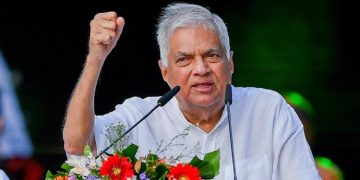
Premadasa, the son of former President Ranasinghe Premadasa, who was assassinated while in office, comes from a prominent political family. Wickremesinghe is the nephew of J. R. Jayewardene, a former president and prime minister. Namal Rajapaksa, the eldest son of two-time president Mahinda Rajapaksa, is also among the presidential hopefuls.
Speaking at his final rally on Wednesday, Dissanayake stated, “There are those who believe that family, financial, media, and state power will decide this election. But on September 21, the power of the people will prevail.”
Dissanayake is running as the candidate for the National People’s Power (NPP) alliance, which includes the JVP, a party traditionally advocating for stronger state control and more protectionist economic policies.
His campaign has drawn large crowds, appealing to Sri Lankans still reeling from the severe economic crisis that led to mass protests and the ousting of President Gotabaya Rajapaksa in 2022. The crisis pushed millions into hardship, triggering widespread discontent with the political establishment.
Historically, the JVP led two failed insurrections in 1971 and 1988 against democratically elected governments, resulting in the deaths of thousands. However, the party has since transitioned to mainstream politics. While Dissanayake was not in a leadership role during those uprisings, he has avoided discussing the events in recent years.
Some of Dissanayake’s economic proposals, such as renegotiating the debt restructuring plan linked to the International Monetary Fund’s $2.9 billion bailout and cutting taxes—potentially undermining fiscal targets—have raised concerns among investors. However, he has taken a more conciliatory tone during his campaign, assuring that any changes would be made in consultation with the IMF and reaffirming his commitment to repaying the nation’s debt.
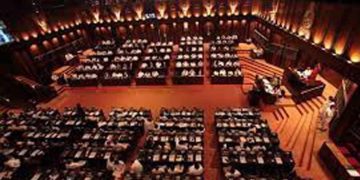
Portraying himself as a candidate for change, Dissanayake has pledged to dissolve parliament within 45 days of assuming office and call for general elections to secure a fresh mandate for his policies.
“He is not a political novice; he has been around for a while and knows how to speak to the public’s concerns,” said Bhavani Fonseka, a senior researcher at the Centre for Policy Alternatives in Colombo. “He represents a fresh alternative to voters seeking something different.”
A total of 38 candidates are contesting in this election. Under Sri Lanka’s voting system, voters can select three preferred candidates. To win outright, a candidate must secure more than 50% of the votes in the first round. If no one achieves this, the preferential votes of the top two candidates are counted to determine the final winner.