
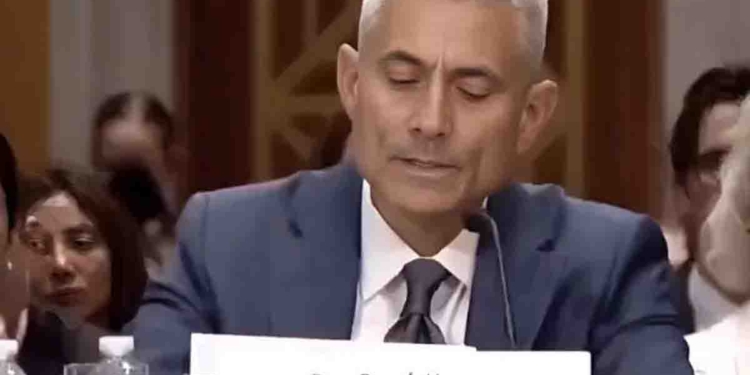
On February 22, through the “Rajya Rahas” column, we revealed a significant development concerning remarks made by Mr. Pole Kapur, Assistant Secretary for South and Central Asian Affairs, during a meeting of the U.S. Senate Foreign Relations Committee. According to that report, Kapur had made notable observations regarding efforts to draw Sri Lanka away from China’s sphere of influence.
The disclosure published at the time stated:
“A meeting of the U.S. Senate Foreign Relations Committee was held last week, attended by Assistant Secretary for South and Central Asian Affairs Pole Kapur. The discussion focused on the implementation of U.S. foreign policy in South Asia and the strategies associated with it.
During the discussion, Kapur made several significant remarks regarding Sri Lanka that drew considerable attention. When questioned about future plans for the Indian Ocean region, he highlighted Sri Lanka’s strategic importance.
Kapur noted that Sri Lanka has become one of the most important maritime locations in both the Indian Ocean and South Asia. Not only do Middle Eastern oil shipments pass near Sri Lanka, but many major international trade routes also run close to the island.
He stated that while Sri Lanka and its surrounding waters may not have previously received significant attention in Washington, the current geopolitical situation no longer allows Sri Lanka to be viewed as just another South Asian country.
According to Kapur, China appears to have recognized Sri Lanka’s strategic importance early and has made substantial efforts to expand its influence in the country. He pointed to China’s control of the Hambantota Port and described the 2022 visit of a Chinese research vessel to Sri Lanka as a significant signal that raised concerns.
Kapur emphasized that both the United States and India would need to closely monitor developments related to Sri Lanka in the future.”
He further stated that the United States should pay close attention to tensions emerging in the Indo-Pacific region, particularly those linked to China.
What Should Be Done?
Committee members then questioned Kapur about what measures should be taken to strengthen Sri Lanka’s ties with the United States.
In response, Kapur reportedly said:
“Sri Lanka is gradually emerging from a major economic crisis. However, the country still lacks a comprehensive economic plan to address its challenges. We should assist Sri Lanka in developing such a plan and support it through the International Monetary Fund.
Sri Lanka is also dealing with debt restructuring issues and difficulties in attracting foreign investment. Therefore, we should help Sri Lanka strengthen its relationship with India.
At present, Sri Lanka remains heavily influenced by China due to substantial borrowing and infrastructure-related debt. Although some debt burdens have been reduced, the country remains tied to Chinese financing.”
Kapur also proposed strengthening military cooperation between the United States and Sri Lanka.
“Rather than establishing a U.S. military base in Sri Lanka, I believe the United States should work together with India on maritime security operations. Sri Lanka should also be provided with the military equipment necessary for such cooperation.”
His comments suggested that Washington should expand military training programs, intelligence cooperation, and defense agreements with Sri Lanka instead of pursuing a permanent military base on the island.
Kapur also reportedly highlighted the need for mechanisms to monitor drug trafficking activities in the Indian Ocean region.
Viewed in this context, his remarks appeared to present opportunities for Sri Lanka, particularly in terms of attracting investment and obtaining support for economic recovery efforts.
— Rajya Rahas, February 22, 2026
Planned Visit to Sri Lanka
The reason for revisiting Kapur’s remarks today is that he is scheduled to visit Sri Lanka on the 22nd and 23rd of this month.
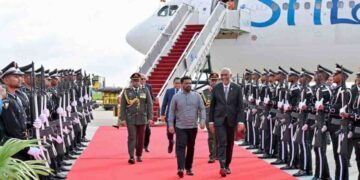
Kapur is expected to attend the official ceremony for the handover of eight life-saving helicopters provided by the United States government to Sri Lanka for disaster response purposes. The helicopters are scheduled to be formally received by the President at Ratmalana Airport.
Last month, a similar event was held for the handover of a U.S.-supplied coast guard vessel. Sergio Gor, who was expected to attend as a special representative of U.S. President Donald Trump, ultimately did not participate.
According to previous reports published in the “Rajya Rahas” column, Gor’s absence was linked to Sri Lanka’s refusal to sign a U.S.-backed proposal against Iran that had been presented before the Security Council. Although Sri Lanka did not support the proposal, it was approved with the backing of a majority of member states. In response, Gor reportedly chose not to attend the ceremony in Sri Lanka.
Colombo Port Inspection Planned
Following the helicopter handover ceremony, Kapur is expected to undertake an inspection tour of the Port of Colombo.
Many observers believe the visit is intended to assess and reinforce the strategic concerns and priorities he previously outlined before the U.S. Senate regarding Sri Lanka’s role in the Indian Ocean region.
Similarly, when Sergio Gor visited Sri Lanka on a previous occasion, he toured the Port of Colombo and reviewed progress related to the commencement of construction work at the Western Container Terminal.
Accordingly, reports suggest that Kapur’s upcoming visit will also include discussions regarding the future development of the terminal and related port infrastructure projects.