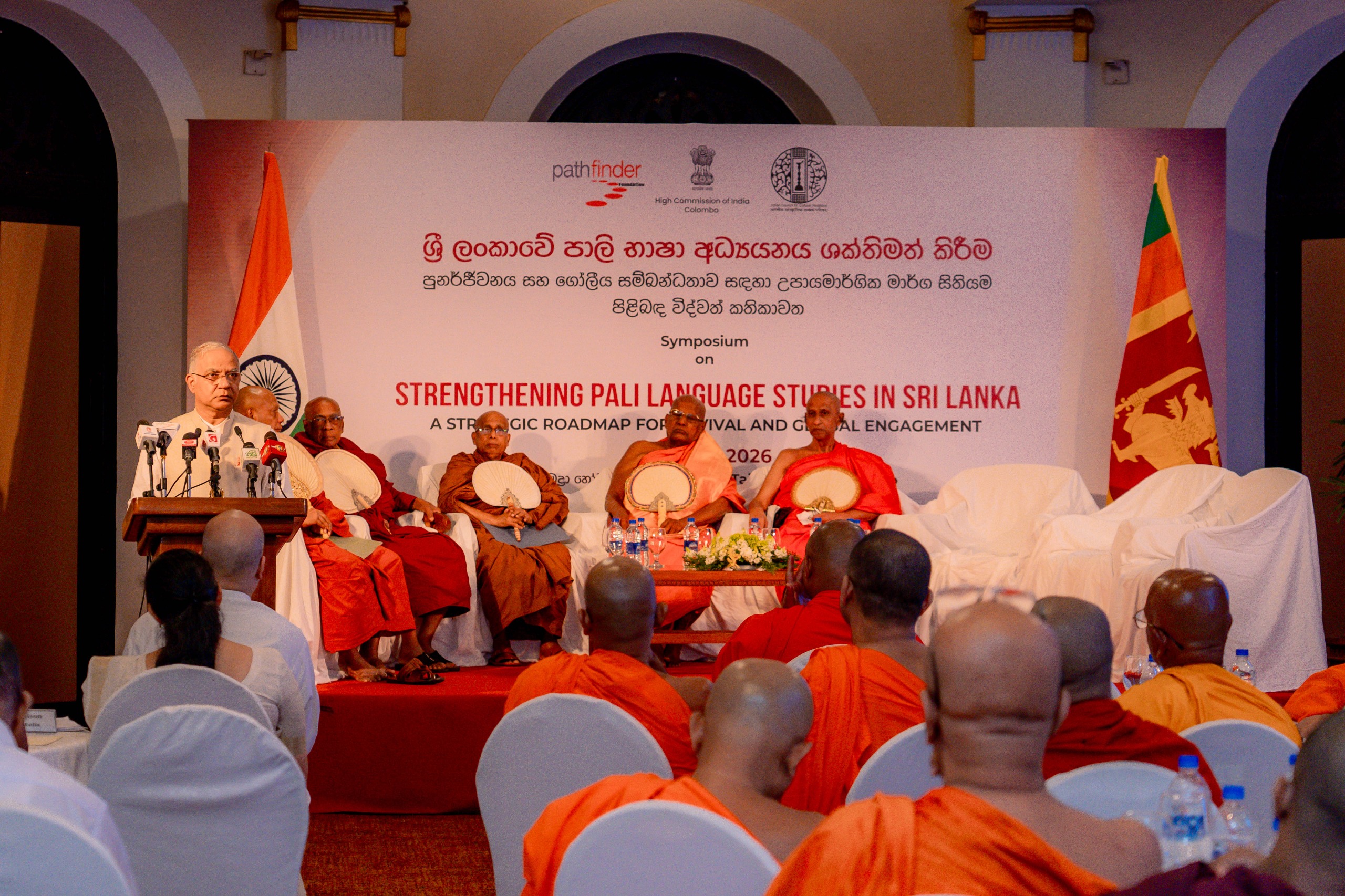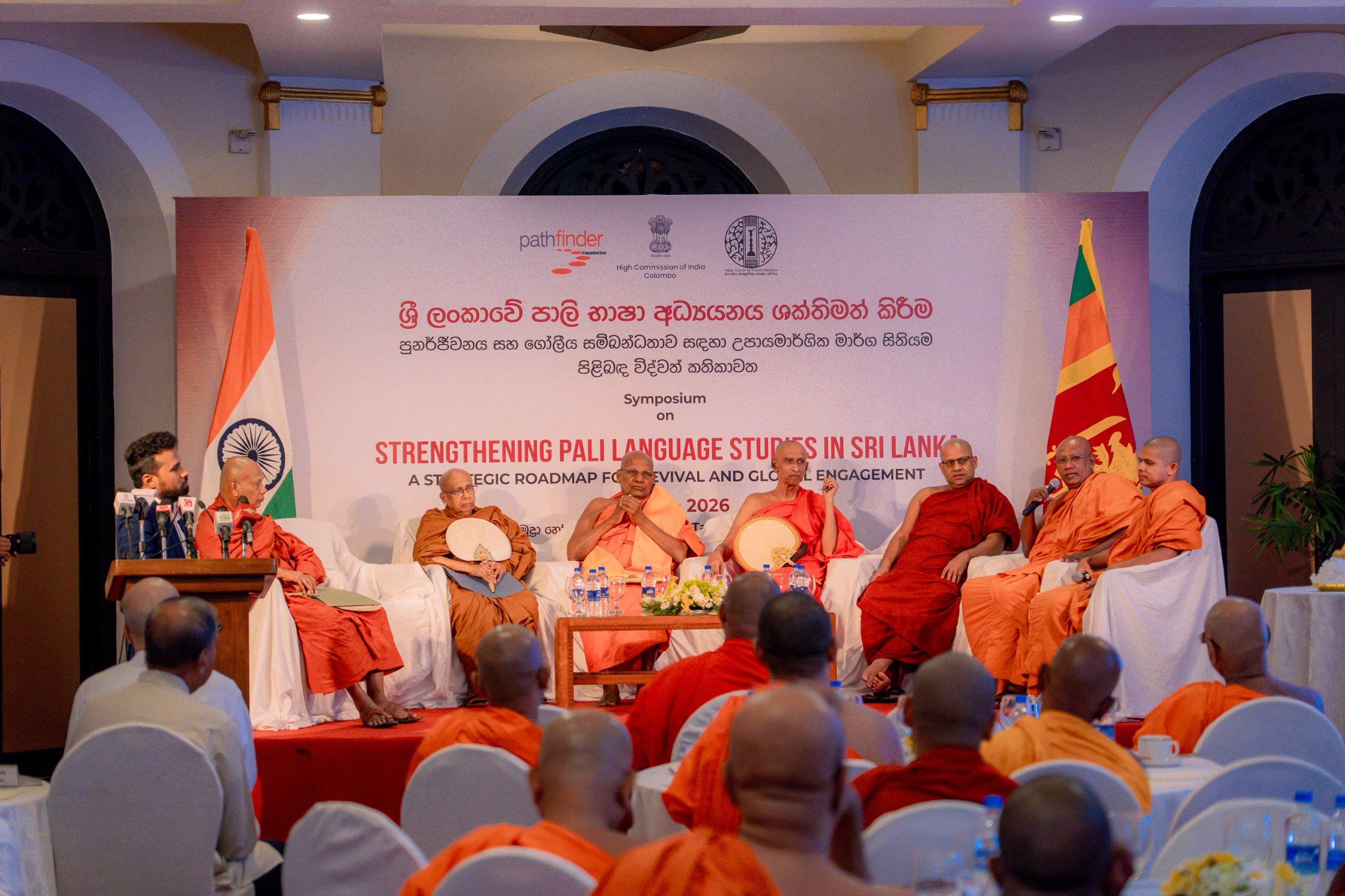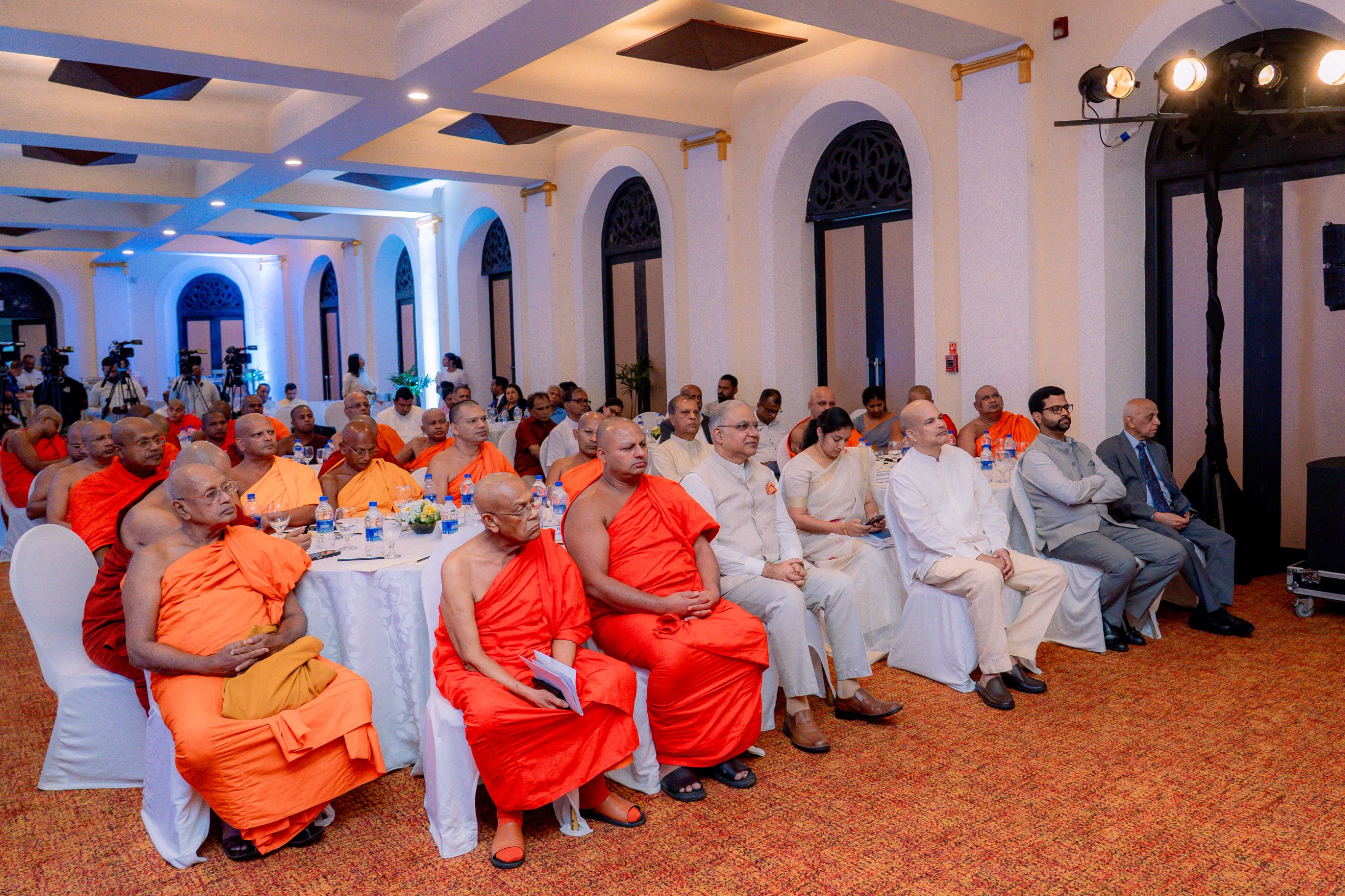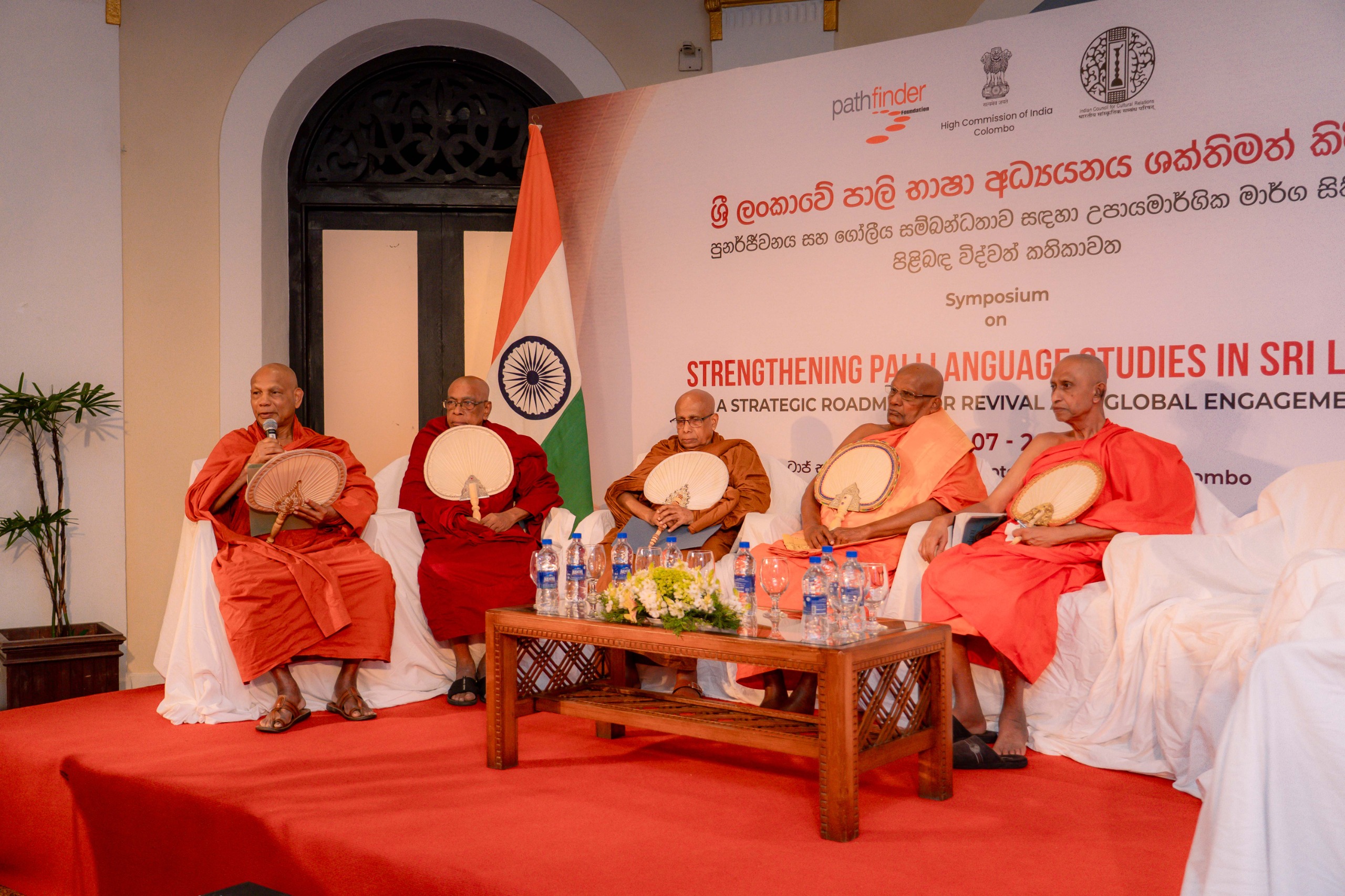

India has reaffirmed its commitment to preserving Buddhist heritage and strengthening Pali language studies in Sri Lanka, describing the two countries as “civilisational twins” bound by an inseparable relationship rooted in Dhamma.
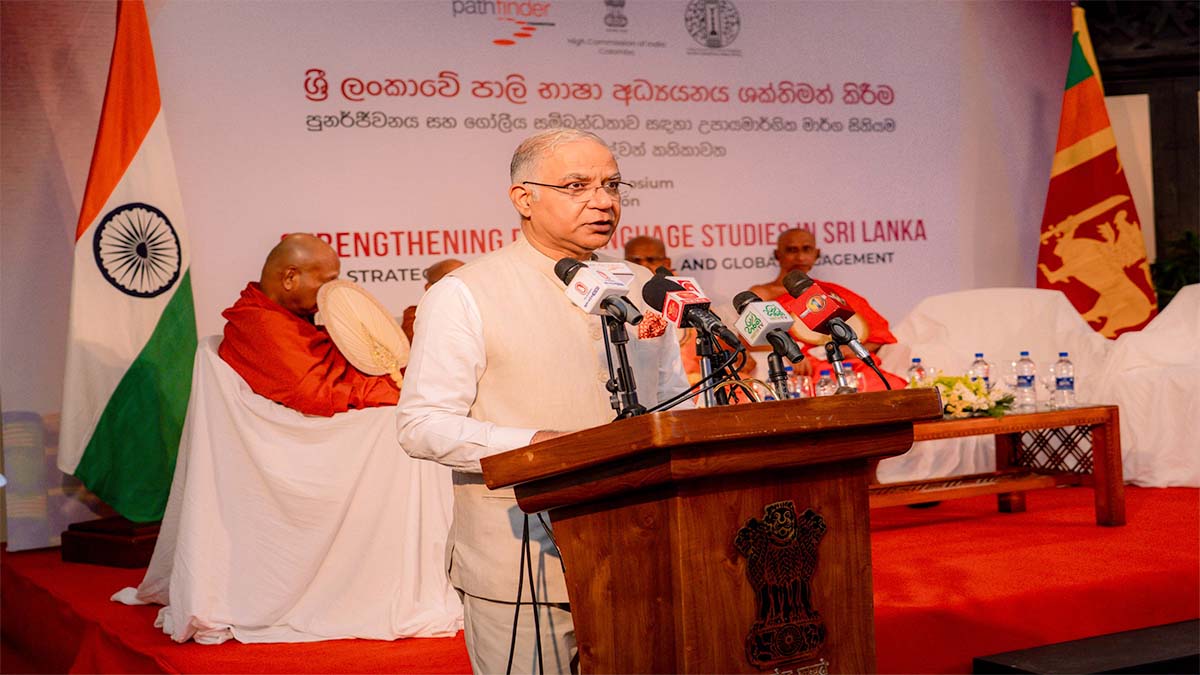
Addressing the Symposium on Strengthening Pali Language Studies in Sri Lanka: A Strategic Roadmap for Revival and Global Engagement at the Taj Samudra in Colombo, Indian High Commissioner Santosh Jha said the relationship between India and Sri Lanka was unlike any other, as it was founded on shared spiritual and civilisational values.
Quoting Indian Prime Minister Narendra Modi, Jha said the two nations were “Civilisational Twins,” adding that the arrival of Arahant Mahinda Thera in Sri Lanka established a civilisational partnership that continues to shape bilateral ties.
He said India and Sri Lanka were united by Dhamma in a bond that could never be broken.
“For anybody to create differences between our two countries, they would have to break this link of Dhamma—which is beyond the realm of possibility. We are inseparable and intertwined,” he said.
Jha also shared his personal connection to Buddhism, noting that he was born and raised in Patna, the ancient city of Pataliputra in Bihar, close to the sacred sites associated with the life of the Buddha. He said promoting Buddhism and preserving the Pali language was not merely a diplomatic responsibility but a personal privilege.
Highlighting India’s support for Buddhist institutions in Sri Lanka, Jha said Prime Minister Modi had announced a USD 15 million grant in 2020 to promote Buddhism between the two countries. One of the largest projects under this initiative is the provision of free solar electricity to nearly 10,000 Buddhist temples and pirivenas, while a further USD 5 million remains available for future projects identified by the Sri Lankan government.
He added that, under Indian credit assistance, rooftop solar systems have already been installed at around 5,000 temples and religious institutions across all 25 districts of Sri Lanka.
Jha also referred to India’s assistance for the development of the Anuradhapura Sacred City Complex, announced during Prime Minister Modi’s 2025 visit, saying the project aims to improve facilities for millions of pilgrims and tourists.
He noted that India had organised the first-ever international exposition of the Holy Devnimori Relics in Colombo earlier this year, attracting more than one million devotees, following previous exhibitions of the Kapilavastu and Sarnath relics in Sri Lanka.
The High Commissioner said India was also promoting Buddhist heritage among younger generations through the Indian Gallery at the International Buddhist Museum in Kandy, mobile exhibitions on the life of the Buddha, and the distribution of Sinhala translations of the Jataka Tales to Dhamma schools.
Turning to the importance of the Pali language, Jha recalled that the Government of India had granted Pali the status of a Classical Language in October 2024. He said preserving Pali was essential to preserving the Buddha’s teachings in their original form.
“Pali is the language of the Tripitaka and the earliest Buddhist texts. In a world afflicted by conflict, Dhamma offers the path to peace. Preserving Pali will help spread the message of the Buddha,” he said.
He also praised Sri Lanka for being the first country to hold a seminar on the significance of Pali as a Classical Language following India’s decision and said New Delhi had since supported the reprinting of important Pali grammar texts, including Namamala and Balawatharo.
Jha said India was actively promoting Buddhist heritage globally through international exhibitions of the Buddha’s relics in countries including Bhutan, Mongolia, Russia, Thailand and Vietnam, as well as by securing the return of the Piprahwa relics to India.
On broader bilateral relations, Jha said India remained Sri Lanka’s closest maritime neighbour, largest trade and investment partner, and principal development partner.
He said India had consistently stood by Sri Lanka during the COVID-19 pandemic, the economic crisis and, most recently, in rescue and reconstruction efforts following Cyclone Ditwah.
“Our support has been timely, quick and unconditional. This demonstrates that India is a dependable partner and a reliable friend,” he said.
According to Jha, India’s total assistance to Sri Lanka now exceeds USD 7.5 billion, including more than USD 850 million in grants. He said Indian-funded projects span infrastructure, housing, healthcare, education, agriculture, renewable energy, railways, livelihoods and industrial development across all 25 districts.
Concluding his address, Jha said India remained committed to deepening cooperation with Sri Lanka “from Dhamma to Development” by expanding connectivity, trade, investment, tourism, education and people-to-people exchanges for a shared future.