A new leader has been appointed to assume office following the assassination of Iran’s Supreme Leader, Ayatollah Ali Khamenei.
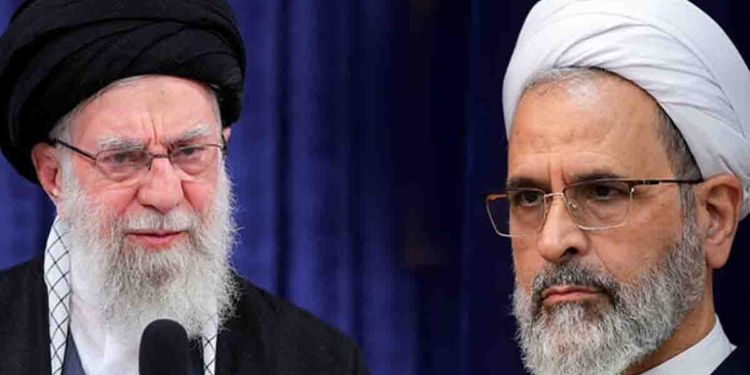
According to foreign media reports, Shia fundamentalist leader Alireza Arafi has been appointed as the new head of the council. Other members of the council include Iranian President Hassan Rouhani.
Iran’s Supreme Leader, Ayatollah Ali Khamenei, was killed in an attack allegedly carried out by Israel in collaboration with the United States. Iranian media reported that the attack targeted his office in Tehran, and that his lifeless body was later recovered from the rubble.
In response to his death, Iran has declared a 40-day period of national mourning.
The 86-year-old Khamenei had ruled Iran for more than three decades, assuming leadership in 1989. He served as the country’s Supreme Leader, head of state, and commander-in-chief of the military, including the Iranian Revolutionary Guard Corps.
Ruhollah Khomeini came to power in Iran in 1979 after overthrowing the then US-backed Shah, and was later succeeded by Ayatollah Ali Khamenei. Under their leadership, Iran was governed according to strict Islamic fundamentalist principles.
Following Khamenei’s death, Iran launched a series of retaliatory attacks targeting US military bases and sites in several Middle Eastern countries, escalating tensions and drawing much of the region into conflict.
US President Donald Trump warned that Iran would face a strong response if it carried out further attacks in Middle Eastern countries, raising fears of a broader war in the Arab region.
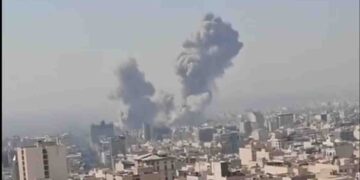
The United States and Israel have been engaged in a long-standing conflict with Iran over its nuclear programme. That conflict escalated yesterday (28), when the United States, together with the Israeli military, launched a series of large-scale missile strikes on Iran.
The attacks targeted the cities of Tehran, Isfahan, Qom, Karaj and Kermanshah.
In retaliation, Iran initially launched missile strikes on Israel. However, Israel reportedly intercepted most of the incoming missiles using its Iron Dome air defence system.
Subsequently, Iran launched further attacks on US military bases and targets in neighbouring countries, intensifying the regional conflict.
Accordingly, Iran carried out attacks in the United Arab Emirates, Bahrain, Qatar, Saudi Arabia, Kuwait, Jordan and several locations in Iraq.
The Israeli operation, reportedly fully supported by the United States, was named “Operation Roaring Lion.”
In the aftermath of the assassination, some Iranians gathered in streets and at religious shrines to mourn their leader. Others, however, reacted differently and reportedly took to the streets in celebration.
More than 40 Iranian military leaders were reported killed in the Israeli attacks. Among them were Iranian Defence Minister Aziz Nasserzadeh, Chief of Staff of the Defence Forces Abdulrahim Mousavi, the head of the Islamic Revolutionary Guard Corps, and the Secretary of the Iranian Security Council.
Reports also indicate that Khamenei’s daughter, son-in-law and grandson were among those killed in the attacks.
Iran’s Red Crescent confirmed that more than 200 people have been killed in the attacks so far. Of those, 108 deaths were reported in yesterday’s strike on a girls’ school.
Following the death of Ayatollah Ali Khamenei, President Massoud Peskov, along with the head of the judiciary and a panel of judges, has been appointed to lead the country’s interim government.
The 88-member “Assembly of Leaders” is reportedly expected to appoint Iran’s next spiritual leader as soon as possible.
Meanwhile, Iranian attacks continued throughout the day across several countries in the region.
A major shopping mall in the emirate of Sharjah was set on fire in an attack this afternoon.
In addition, a container ship sailing under the flag of Palau was reportedly involved in an attack in waters near Oman.
Iran has maintained that it will take revenge against Israel and the United States for the assassination of its leader.
In a statement, Iranian President Masoud Peskov said that Iran has both the legal right and the responsibility to carry out such retaliation.