
Sri Lanka Rises as the Strategic Nerve Centre of the Indian Ocean Power Game
US Moves to Shape Sri Lanka’s Economic Blueprint
Fresh Plot to Derail SJB–UNP Unity Comes to Light
Internal Rifts Surface as SJB Faces Growing Political Turbulence
Sri Lanka Under Washington’s Strategic Spotlight Amid Geopolitical Tensions
Decisive Discussions
In this column, we have repeatedly reported on the geopolitical manoeuvring of China, India and the United States around Sri Lanka. At different times, each of these powers has attempted to expand its influence within the island. There were moments when China surged ahead, overtaking India and the United States. At other times, India and America pushed back, limiting Beijing’s advance.
We previously highlighted how China leveraged projects such as the Hambantota Port and the proposed Hambantota Refinery to deepen its footprint in Sri Lanka. We also reported how pressure mounted over Chinese research vessels entering Sri Lankan waters, a development that appeared to push China onto the defensive. Last week, we revealed that construction of the Hambantota Refinery has been temporarily halted over issues linked to such vessels, and that promised Chinese funding for the Central Expressway has also been suspended.
Against that backdrop, another critical development has emerged in the triangular contest between China, India and the United States over Sri Lanka.
Washington’s Strategic Shift
Last week, the US Senate Foreign Relations Committee held discussions on American foreign policy in South Asia. Present at the meeting was Assistant Secretary for South and Central Asia, Samir Paul Kapur.
During the discussion, Kapur made a striking observation about Sri Lanka.
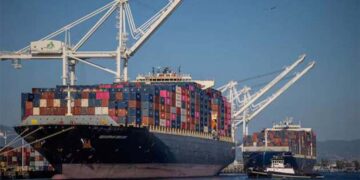
He stated that Sri Lanka has now become the most important maritime location in the Indian Ocean and South Asia. Major Middle Eastern oil shipments and vital global trade routes pass close to the island. Although Washington had not paid sufficient attention to Sri Lanka in recent years, Kapur stressed that the country can no longer be treated as just another South Asian state.
He noted that China appeared to have recognised this reality earlier and was actively consolidating influence in Sri Lanka. Referring to China’s control of the Hambantota Port and the 2022 visit of a Chinese research vessel, Kapur described these developments as significant warning signals. He argued that the United States and India must closely monitor the situation and the broader Indo-Pacific tensions linked to China’s rise.
What Should Be Done?
When asked how Sri Lanka could be drawn closer to the United States, Kapur offered a detailed strategy.
He pointed out that Sri Lanka is still recovering from a severe economic crisis and lacks a coherent economic plan. According to him, the United States should assist in formulating such a plan, including support through the IMF. He also emphasised Sri Lanka’s ongoing debt restructuring challenges and difficulties in attracting investment.
Kapur suggested that Sri Lanka should be encouraged to strengthen ties with India and reduce its dependence on China, particularly in infrastructure borrowing.
On the security front, he recommended expanding military cooperation not by establishing a US base in Sri Lanka, but by enhancing naval collaboration, intelligence-sharing, training programmes, and equipment support, with India playing a central role in maritime security. He also stressed the need to strengthen monitoring systems against drug trafficking in the Indian Ocean.
His remarks create both opportunity and risk for Sri Lanka. On one hand, they open doors for investment and economic support. On the other, they underline the reality that Sri Lanka has become a major strategic target in great-power competition. How China will respond to any closer US engagement and how India will react to increased American proximity remains uncertain.
Sri Lanka’s foreign policy choices in the coming months will therefore require exceptional caution.
A Powerful Visitor
Just days after Kapur’s remarks, another significant event unfolded: a visit to Sri Lanka by Admiral Steve Keller, Commander of the US Pacific Fleet.
Keller’s three-day visit focused on maritime security cooperation, regional stability and military interoperability. Since assuming command on April 4, 2024, he first visited Sri Lanka on October 10, 2024, shortly after President Anura Kumara Dissanayake took office. This latest trip marked his second visit.
Notably, Keller arrived less than 24 hours after the Pentagon informed President Donald Trump that US forces were prepared for potential action against Iran. Trump subsequently stated that Iran would be given 10 to 15 days to pursue a peace agreement, failing which military action remained an option.
Given this backdrop, Keller’s sudden arrival in Colombo drew considerable attention.
Meanwhile, President Dissanayake, during a visit to Delhi for the AI Summit, met with Sergio Gore, Trump’s Special Representative for South and Central Asia and US Ambassador to India. The two had previously met during the UN General Assembly in New York, where Gore assured Sri Lanka of continued American support.
Last week, Sri Lanka was clearly under Washington’s spotlight.
What Happened to Harsha?
In our Inside Politics column, we have consistently exposed those working behind the scenes to undermine the SJB–UNP alliance, both within and outside the parties. We have revealed the secretive “Colombo 7 elite house coups,” carried out both openly and discreetly.
As part of this effort, we also uncovered attempts to oust Sajith Premadasa from the leadership. While in the past we only hinted at the identities of the groups involved, this time we are prepared to name them directly—revealing who they are and who leads them. The reason is that just last week, another round of operations was launched to remove Sajith from the SJB leadership and seize control of the party.
Sajith Factor
After repeated electoral defeats under Ranil Wickremesinghe, who led the UNP for over 32 years and reduced it to near collapse, Sajith Premadasa and a group of supporters broke away to form the Samagi Jana Balawegaya (SJB) following the 2019 Presidential Election. In the first general election after its formation, the SJB secured more than 2.5 million votes. Many interpreted this as a vote driven largely by Sajith himself—the “Sajith factor.”
Since then, Ranil Wickremesinghe has repeatedly tried to split the SJB and lure MPs back to the UNP. However, because Sajith commanded a strong popular base, most MPs who maintained quiet ties with Ranil did not rejoin the UNP.
A clear example came after Ranil became President through the Parliament in 2022 with the support of Pohottuwa MPs. He made a major effort to fracture the SJB by offering perks and privileges to its MPs. Selected SJB members received large sums from the decentralized fund, liquor licenses, even liquor production licenses. Some were offered ministerial positions to entice them into government.
Three or four SJB MPs accepted ministerial posts and joined Ranil’s government. Others, despite receiving privileges, chose to remain in the SJB. The reason was simple: Ranil, even as President, lacked a voter base, while Sajith and the SJB retained strong public support.
This was proven in the next general election, when every SJB MP who had joined Ranil’s government lost their seat. Meanwhile, those who had accepted privileges but stayed loyal to the SJB were re-elected, thanks to the enduring voter base that Sajith and the party had built.
The ‘Blue Print’
However, during these election defeats, many even within the SJB placed the responsibility for the defeat on the shoulders of party leader Sajith Premadasa.
For months, this column has exposed tensions within the opposition particularly efforts to weaken ties between the Samagi Jana Balawegaya (SJB) and the UNP, and attempts to challenge Opposition Leader Sajith Premadasa’s leadership.
After leading the UNP for over three decades and suffering repeated electoral defeats, Ranil Wickremesinghe saw Sajith and a breakaway group form the SJB following the 2019 Presidential Election. The SJB secured over 2.5 million votes in its first general election widely attributed to Sajith’s personal appeal.
Subsequently, Ranil attempted multiple times to lure SJB MPs back to the UNP, offering positions, privileges and funds. A few crossed over, but most stayed largely because Sajith retained the voter base. This was confirmed when defectors lost their seats at the next general election, while loyalists survived.
The ‘Blueprint’ Debate
Within the SJB, however, responsibility for electoral defeats increasingly fell on Sajith.
Economic policy had been entrusted to Dr. Harsha de Silva, Kabir Hashim and Iran Wickramaratne. Together, they produced an economic framework branded as the “Blueprint”, launching it in Colombo’s leading hotels and issuing multiple interim versions.
The problem, critics argue, was accessibility. While business elites understood the policy, grassroots supporters and even many SJB MPs struggled to explain it to voters. The result was that the SJB lost the presidential election. They also issued interim reports called ‘Blueprint 1, 2, 3’ by adding amendments to it from time to time. They also took steps to launch it in the country with the Colombo 07.
However, due to the inability of the SJB economic stalwarts to provide the people with proper information about the ‘blueprint’ economic policy, the SJB was ultimately forced to stop at the 4.7 million vote threshold in the last presidential election. In the presidential election, Ranil secured over 2.2 million votes on the strength of his reform narrative. Anura Kumara Dissanayake secured 5.6 million votes with a simplified economic message. Sajith polled 4.7 million. Critics within the party argue that the “Blueprint” failed to resonate with ordinary voters. Yet its architects, they say, avoided responsibility.
Discussions to Oust Sajith
The group did not stop with their initial efforts. After the presidential election defeat, Harsha, Kavinda Jayawardena, Hirunika Premachandra, and several others gathered at a hotel in Ward Place, Colombo, to hear the results. The following morning, they went to the party office and insisted that Sajith should step down as SJB leader and hand over leadership to Harsha immediately.
We reported this incident in the Inside Politics column without naming names. At that time, Harsha was determined to remove Sajith and take control of the party. However, the attempt failed because, apart from two or three MPs close to Ranil, no other SJB members supported Harsha.
Embarrassed the party and Sajith
Afterward, Harsha launched several operations within the SJB that embarrassed both the party and Sajith. During Ranil’s government and later under Anura’s government Harsha, despite being regarded as the SJB’s economic expert, did not use his position to educate the public about the government’s economic missteps. Instead, he issued statements that benefited the ruling governments and weakened the opposition.
For example, during Ranil’s government, when serious economic problems arose and poor decisions were made, Harsha did not strengthen the SJB’s position. Instead, as Chairman of the Finance Committee, he justified Ranil’s policies. Despite this, Sajith never removed Harsha from his posts. In fact, when Ranil’s government attempted to replace Harsha with Pohottuwa MP Rohitha Abeygunawardena as Finance Committee Chairman, Sajith personally intervened to reinstate Harsha.
Similarly, during Anura’s government, Harsha repeatedly defended the administration. On one occasion, when the opposition was preparing a strong attack over a major issue, Harsha stood up in Parliament and declared that the treasury had “overflowed” under Anura’s leadership. His statement immediately undermined the opposition’s efforts, leaving SJB MPs and other opposition members unable to continue their attack. Since then, Harsha has issued statements that consistently weakened opposition unity, raising suspicions of secret deals with the government.
Charith Fires Back
Despite repeated complaints from MPs, organizers, and party members about Harsha’s double-dealing, Sajith never took action against him. Sajith’s trust in Harsha was so strong that during the last presidential election, he publicly announced Harsha de Silva as his future Finance Minister.
From the founding of the SJB, Sajith also appointed Harsha as Treasurer—the fourth highest position in the party. Yet, in six years, Harsha has not contributed a single cent to party funds. Despite five massive election campaigns costing billions of rupees, Harsha has not provided financial support. Nor has he participated in protests, marches, conferences, or May Day rallies in his role as Treasurer.
Charith Abeysinghe, an SJB organizer, openly criticized Harsha’s claim about the treasury “overflowing” in a YouTube discussion. He argued that Harsha was sabotaging the opposition whenever it tried to rise, causing frustration not only among SJB members but also across the wider opposition.
Although Charith’s attack reflected the feelings of grassroots members, some senior SJB figures dismissed his criticism and defended Harsha. What is striking is that certain seniors who had previously slandered Sajith remained silent in the face of Harsha’s actions, even though Charith’s words echoed the true sentiments of the party base
Surrounded
This time, we decided to reveal Harsha’s actions in the Inside Politics column because he once again made disparaging remarks about Sajith during a YouTube discussion last week. It was evident that his comments undermined Sajith and the SJB while benefiting Ranil and Namal. At the SJB parliamentary group meeting held soon after, Harsha faced strong criticism. Even Sajith himself had not expected such direct condemnation until that moment.
The first to speak was King Nelson. Naming Harsha directly, King said that Harsha had made several statements insulting the party leader, which was completely unacceptable. He declared firmly that anyone unwilling to accept Sajith’s leadership should leave the party.
“There are people within our party who insult the leader. Now MP Harsha has given an interview, making such statements. This cannot continue. Sajith Premadasa is the leader of this party. If anyone cannot accept his leadership, leave immediately. Sajith is also our next presidential candidate. How can we campaign in villages when senior members themselves are undermining him? If anyone, regardless of rank, speaks against the leadership, strict action must be taken. We cannot move forward otherwise.”
Sajith then added his own response:
“I too saw this video. If someone cannot accept my leadership, please go to someone who can. Do not remain inside the party and act in ways that embarrass us.”
Harsha was present at the meeting but chose not to respond publicly. Instead, he sent a text message to King Nelson’s phone, asking: “Why are you so angry? What did I do wrong?”
Sujeewa Shocks the Meeting
After this, MP Sujeewa Senasinghe shifted the discussion and heated the atmosphere further. He strongly criticized the SJB’s role in the Constituent Assembly, targeting Sajith and Ajith P. Perera, who represent the party there. Sujeewa argued that the SJB had set a dangerous precedent by approving the appointment of Ms Jayaratne, a Deputy Auditor General, as Auditor General—despite her name having been rejected previously.
Mujibur Rahman supported Sujeewa, questioning how such decisions were made without transparency and consistency. Sajith defended the decision, saying it was necessary to maintain balance. Sujeewa rejected this explanation, insisting that wrong decisions cannot be justified as “balance.” He pointed to delays and inconsistencies in Auditor General reports as further evidence of bias.
Sajith responded again, noting that the decisive power in the Constituent Assembly lies with the three civil society representatives. Sujeewa countered that it was the responsibility of SJB representatives to persuade those members to reach the right decision. This led to a heated exchange between Sujeewa and Ajith P. Perera, which Sajith had to personally intervene to calm. Sajith promised that future Constituent Assembly matters would be shared with the parliamentary group to ensure transparency.
Opinion Polls and NGO Influence
Sujeewa then turned to another hot topic: a recent opinion poll by Verity Research, which claimed the President still had 65% popularity. Government ministers had cited this poll in Parliament. Sujeewa launched a strong attack on Verity Research and its head, Dr. Nishan de Mel, accusing them of siding with whichever government was in power. Other MPs nodded in agreement with Sujeewa’s criticism.
Harsha Confronted Again
After the meeting ended, Harsha called King Nelson to ask why he had attacked him so strongly. King responded firmly:
“What you are doing is completely wrong. Sajith trusted you so much—he entrusted you with the party’s economic policy, publicly named you as Finance Minister during the campaign, and gave you the Treasurer’s post. What more could Sajith have done for you? And how did you repay him? Don’t act this way. Learn to treat others with respect.”
Ravi Gets a Push from the Government
Last week, MP Ravi Karunanayake—who entered Parliament through the National List—presented another private member’s motion. This time, he proposed appointing a parliamentary select committee to review the electoral systems used in all four types of elections: presidential, parliamentary, local government, and provincial council. The motion also carried the names of Rohitha Abeygunawardena, Chamara Sampath Dassanayake, and Faizer Mustafa, and it was said that Ravi had handed the motion to Faizer Mustafa for confirmation.
The Tamil Arasu Katchi Party reacted immediately. Their concern was that the government had already appointed a select committee to examine the provincial council election system, with instructions to submit a report within three months. The opposition had nominated four members, and the government had just appointed its eight members. But Ravi’s proposal extended the reporting period to one year, covering all four elections. The Tamil Arasu Katchi suspected this was a tactic to delay provincial council elections by a year. They met Ravi directly to raise their concerns, but he refused to amend his proposal.
Rasamanikkam Opposes
With Ravi holding firm, Tamil Arasu Katchi MPs, including Shanakyan Rasamanikkam, approached the other MPs named in the motion. Rohitha Abeygunawardena agreed with their concerns and promised to speak to Ravi. When they met Faizer Mustafa and Chamara Sampath, both admitted they hadn’t even known about Ravi’s proposal. After hearing the explanation, Faizer said the provincial council election clause should be removed and warned he would not confirm the motion otherwise.
Rasamanikkam then met Opposition Leader Sajith Premadasa, who made it clear that the SJB’s position was to hold provincial council elections as soon as possible. Sajith strongly opposed Ravi’s proposal. Rasamanikkam also accused Ravi of repeatedly bringing motions that benefited the government—such as removing pensions and banning parties with ethnic names—while ignoring opposition requests for inquiries into issues like Cyclone Ditva and Container 323.
The government, however, moved quickly to support Ravi’s motion, even suspending standing orders to debate it—something usually reserved for matters of national importance. On Wednesday, Ravi presented the motion in Parliament, receiving strong backing from the government. While Bimal supported it, Rasamanikkam and Faizer Mustafa demanded amendments to remove the provincial council elections. After a lengthy debate, Ravi verbally agreed to drop that part. The government then immediately appointed its eight members to the existing select committee on provincial council elections.
Condom Case
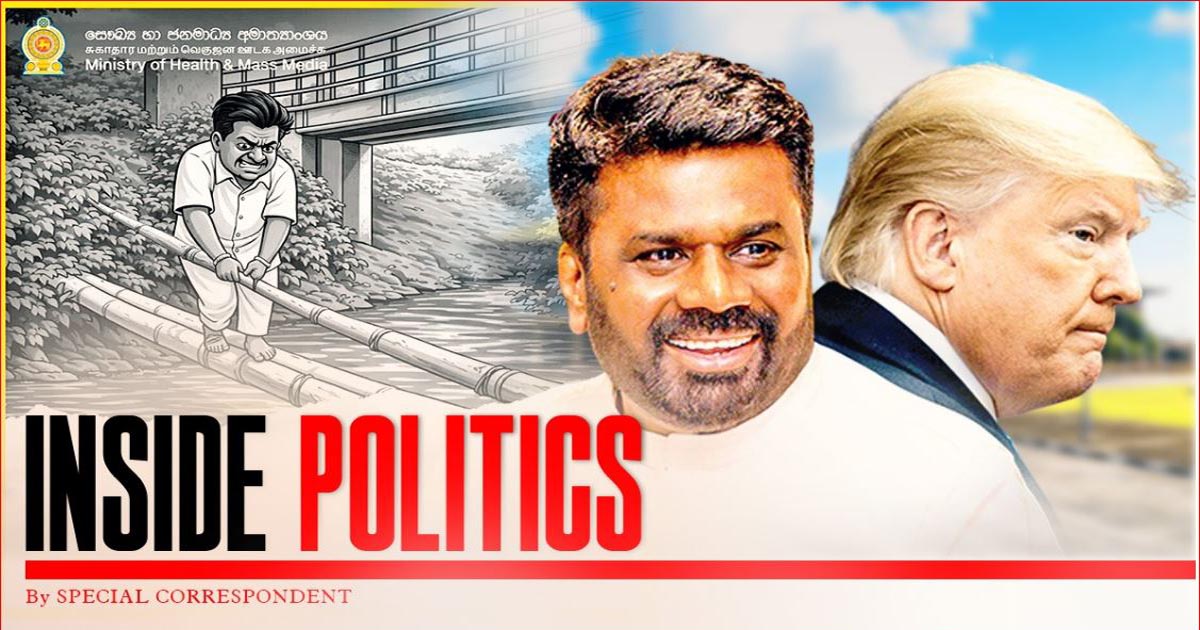
Meanwhile, controversy erupted last week when the Health Ministry’s official Facebook page posted a cartoon of Opposition Leader Sajith Premadasa, alongside a message promoting condoms over birth control pills. The post claimed condoms were healthier, prevented unwanted pregnancies, and reduced the risk of sexually transmitted diseases.
Social media backlash was swift. Critics, including Compass party members, condemned the post as unethical and contrary to past JVP practices, questioning how a ministry could publish derogatory content about another party leader. Within hours, the Health Ministry removed Sajith’s image from the post.
Three Informants
At the same time, SJB MPs discussed suspicions about three opposition MPs originally from other parties, who were allegedly leaking information to the ruling party. These MPs had reportedly tipped off the government about a planned opposition protest in Parliament, allowing the ruling party to prepare in advance.