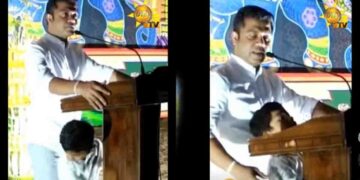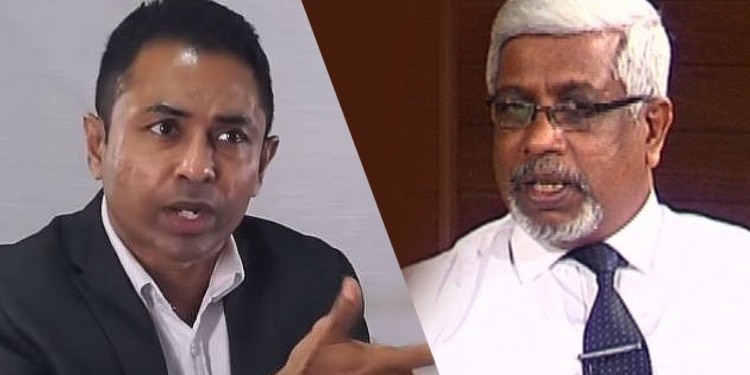
Former Elections Commission Commissioner General Saman Sri Ratnayake has, for the first time, publicly revealed that serious threats were made to him during the period when the 2022 Local Government Elections were scheduled to be held, including threats that he would be killed if the election was conducted.
In a special interview with journalist Chamuditha Samarawickrama, Mr. Ratnayake disclosed these details.
He also stated that although he secretly lodged a complaint with the head of the Criminal Investigation Department (CID), the investigation was not conducted properly.
Furthermore, he explained that the then-President Ranil Wickremesinghe publicly announced that there were no funds to hold the election, and that certain government officials also supported the President’s position not to hold the election.
He specifically pointed out that Gangani Kalpani, who was the Chairperson of the Government Printing Department at the time, had spent 1.5 billion rupees to print postal ballot papers, yet those printed ballots were never handed over to the Elections Commission.
The full details of the interview are as follows:
Interviewer:
Mr. Saman Sri Ratnayake, in your lifetime, what is the most difficult decision you ever had to make?
Saman Sri Ratnayake:
The most difficult decision—the one I was truly not comfortable with—was deciding not to hold the 2023 election.
That is the Local Government Election.
Interviewer:
There were postal ballots worth 1.5 billion rupees printed under Gangani. You tried to obtain them from her, but she did not give them to you?
Ratnayake:
Yes. Under the mandate of the Government Printing Department, their second main responsibility is printing the necessary materials for government elections. That is their duty.
Interviewer:
So they printed them?
Ratnayake:
They “said” they printed them, but if they printed them, we must receive the goods.
Interviewer:
But they didn’t give them?
Ratnayake:
Without receiving the goods, we cannot make any payment. Then later they say, “We printed it.”
But we will not pay even one cent, because in the public sector, for any payment we need to physically receive the relevant goods into our warehouse.
Interviewer:
If they had given the ballots, were you prepared to conduct the postal vote?
Ratnayake:
We didn’t need much. If we received the 800,000 postal ballot papers required, we would have issued the postal vote on the 10th.
Interviewer:
So all of them were printed?
Ratnayake:
Yes, all were supposed to be printed. They should have been printed.
Interviewer:
So where are they now?
Ratnayake:
Not in our custody.
Interviewer:
Where is the money?
Ratnayake:
We didn’t pay anything for it.
Interviewer:
Even though you didn’t pay, the Printing Department incurred the cost?
Ratnayake:
That’s an issue that relevant authorities must formally address.
Interviewer:
Isn’t the file regarding the cost of printing these 800,000 postal ballots for the 2023 Local Government Election with Ranga Dissanayake?
Ratnayake:
Before that, there was a government. During that entire period, everyone had a general responsibility.
Interviewer:
But that group never investigated it.
Would the people who stopped the election investigate it themselves?
Ratnayake:
Did everyone stop it? I don’t believe the entire set was in one place.
Political parties and various political influences—we clearly understood their behavior.
Interviewer:
Who stopped it? Only Ranil?
Ratnayake:
He clearly said there was no money and therefore no election.
Interviewer:
So was that solely Ranil’s desire?
Ratnayake:
That is not the question. The problem is with the officials who fulfilled that desire.
Interviewer:
Meaning the group that obeyed Ranil?
Ratnayake:
If we received the printed ballots from the Government Printer, we would have issued the postal vote.
Interviewer:
Did Gangani refuse on her own?
Or did Ranil instruct her not to give them?
Ratnayake:
Only Gangani knows that.
Interviewer:
What do you think?
Ratnayake:
I can’t speculate. As an official, I only do my duty…
Interviewer:
Did you directly ask Gangani for the ballots?
Ratnayake:
Yes, not only me—our entire Commission asked repeatedly, morning to evening… They kept saying “Soon… soon… soon.”
Our Commission members can testify to this.
Interviewer:
But they never gave them?
Ratnayake:
No, they never arrived.
Interviewer:
From whom did you receive death threats?
Ratnayake:
Those threats first went to Mr. Mohammed, Mr. Diwaratne, and Mr. Pathirana before they came to me.
Interviewer:
They came via phone?
Ratnayake:
Yes, by telephone.
Interviewer:
Who called?
Ratnayake:
I received the call while traveling to visit my father. Someone called and said,
“Machan, don’t you remember me? Don’t you recognize my voice?”
I said I didn’t.
Interviewer:
So it wasn’t someone saved in your contact list?
Ratnayake:
No, not anyone in my contacts.
I then put the phone on speaker.
My driver and coordinating secretary were listening.
The caller threatened me.
Interviewer:
What exactly did they say?
Ratnayake:
They directly said, “We will kill you.”
They asked, “Why are you trying so hard to hold this election?”
Interviewer:
This was about the Local Government Election?
Ratnayake:
Yes.
Interviewer:
During the same period you were pressuring Gangani for the ballot papers?
Ratnayake:
Yes, at that time.
Interviewer:
What did you tell them?
Ratnayake:
I said, “You can only kill me once. That is not a problem. But I will not stop doing my job.”
I told them that clearly.
Interviewer:
They explicitly said they would kill you?
Ratnayake:
Yes, yes.
Interviewer:
From a mobile phone?
Ratnayake:
Yes.
I honestly did nothing at that moment.
Interviewer:
You went to the CID?
Ratnayake:
No one knew I went to the CID.
Interviewer:
You went secretly?
You hid this?
Ratnayake:
I didn’t hide it.
If I told the media, they would sensationalize it.
Media only broadcasts things—they don’t investigate.
Even today there has been no outcome.
Interviewer:
People only heard about this after you retired and went to Polonnaruwa.
We never knew the truth.
Why did you hide it?
Ratnayake:
I didn’t want to tell the media.
I told the police. That is enough.
They can’t investigate through the media.
So I personally told the CID Director and filed a complaint,
and asked them to investigate.
I said I don’t want publicity.
Interviewer:
Are you satisfied with the investigation?
Ratnayake:
It is impossible to find out who it was.
Interviewer:
Did they find anything?
Ratnayake:
No.
Interviewer:
If you had told the media, the pressure might have forced the CID to investigate?
Ratnayake:
How many things have been “investigated” due to media pressure?
If that pressure worked, then those other three officials should have been investigated too.
Interviewer:
Which three?
Ratnayake:
Mr. Mohammed, Mr. Diwaratne, and Mr. Pathirana.
Interviewer:
So the same group threatened all of you?
Ratnayake:
Yes, the same group.
Interviewer:
And you still don’t know who called?
Ratnayake:
No.
But I knew they would not actually kill me.
Interviewer:
How could you be so sure?
Ratnayake:
I have never knowingly or unknowingly wronged anyone.
Interviewer:
The call came from Rambukkana area.
The caller was said to be an Army Captain?
Ratnayake:
Not a captain—he was a deserter.
I am the one who found that out.
Interviewer:
You retired afterward.
But during your service you hid that the independent Election Commissioner General was threatened.
What else did you hide?
Ratnayake:
I performed all required duties to the best of my ability.
Interviewer:
You say he was a deserter—something you discovered.
And CID did nothing?
Ratnayake:
They also acted within their limits.
I did what I could personally.
The real problem is that during election periods, public sentiment and political influence can create dangerous alternative narratives that push the country into a bad place.
Interviewer:
You have a 30-year honorable public service history.
You retired with high recognition.
Do you accept that it was a serious fault not to reveal this threat earlier?
Ratnayake:
No.
Interviewer:
Wasn’t it a serious mistake to hide a death threat to the Commissioner General?
Ratnayake:
I don’t accept that.
The threat was to Saman Ratnayake, not to the Commissioner General.
Interviewer:
How can that be?
If Chamuditha Samarawickrama sat in that chair, he would get the same call.
If Mahinda Deshapriya sat there, he would get the same call.
Ratnayake:
I did inform the relevant authorities.
I did not remain silent.
Interviewer:
During that same time, a certain Colonel Wijesundara went to court about the election.
He died shortly after.
You know the story?
Ratnayake:
Yes.
Interviewer:
He was also from Rambukkana.
A colonel.
You received a call from a deserter from the same area.
When you connect these dots—the demands from Gangani, the President saying no money for elections, the threats to you, the colonel from Rambukkana going to court about elections—all of this forms a picture, doesn’t it?
Ratnayake:
(Interview ends with this rhetorical question.)
Jagath Perera