

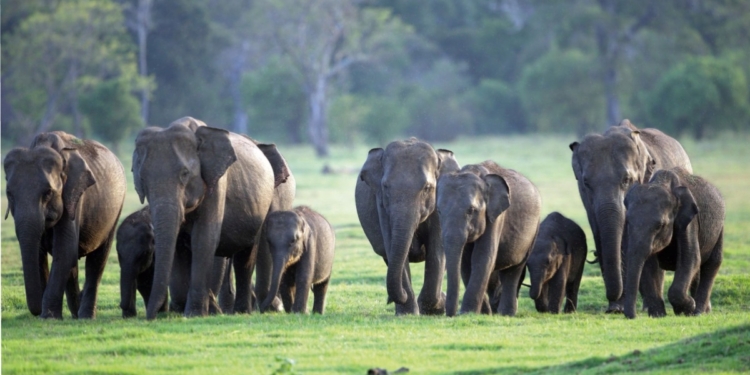
The Kalawewa ecosystem, long recognized as a vital habitat for elephants in the Rajarata region, has been facing severe environmental threats over the past decade. These challenges stem from both human activity and natural causes. Among them, the rapid spread of the invasive Japanese knotweed plant has emerged as a major concern.
This invasive species has severely disrupted the formation of grasslands during the dry season, depriving elephants of their primary food source. As a result, hundreds of elephants that traditionally inhabit and migrate through Kalawewa National Park have been forced to invade nearby villages in groups. The escalating human-elephant conflict has now reached a critical level, leading to the tragic loss of nearly all tusked elephants in the Kalawewa area.
In response, a large-scale project has been organized to completely remove this invasive plant from the Kalawewa ecosystem, with the aim of restoring the natural environment. The initiative seeks to ensure that future generations will once again be able to witness herds of wild elephants, including well-known subspecies such as Walagamba, Revatha, Barana, Deegha 1, Deegha 2, and Neela, roaming freely in the region.
Permission, support, and cooperation have already been secured from civil organizations as well as all relevant government institutions. The project is scheduled to take place on September 5, 6, and 7, with the direct involvement of the following institutions and organizations:
- Kakabe Wildlife Sanctuary Office
- Department of Wildlife Conservation
- Mahaweli Authority
- Tri-Forces
- Usaka Omniri Wildlife Sanctuary
- Regional Local Government Institutions
Importantly, the removal of the Japanese knotweed plants will be carried out strictly in line with the conservation guidelines of the Department of Wildlife Conservation. The process will rely entirely on manual human labor, without the use of machinery, to minimize any further damage to the ecosystem.
Organizers are calling on all citizens who care for the environment and cherish the heritage of Sri Lanka’s elephants to extend their support to this crucial conservation effort.

Saman Halloluwa