
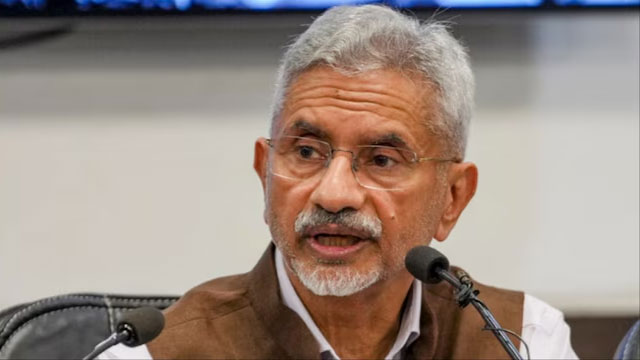
Indian External Affairs Minister S. Jaishankar on Friday attributed the continued arrests of Indian fishermen by Sri Lankan authorities to an agreement signed during India’s Emergency period, which, he said, led to the forfeiture of fishing rights in certain maritime zones.
Speaking at an event organised by the BJP Yuva Morcha to mark 50 years since the imposition of Emergency, Jaishankar criticized the undemocratic nature of that time, noting that such crucial agreements were made without proper parliamentary debate.
“We often hear about our fishermen being arrested by Sri Lanka. The reason lies in an agreement entered into during the Emergency under which Indian fishermen’s rights to fish in some Sri Lankan sea waters were abandoned,” Jaishankar said, as reported by news agency PTI.
He further stated that the agreement would not have come to pass had Parliament functioned properly during that time. “Big decisions were sometimes taken without any parliamentary debate during the time,” he noted, highlighting the absence of democratic processes under the Emergency.
Jaishankar added that the consequences of this decision are still being felt today, particularly in Tamil Nadu. “If the Parliament had functioned genuinely, the matter would have been debated and such a decision would not have been accepted,” he said.
Reflecting on the wider impact of the Emergency, Jaishankar said India’s global image as a vibrant democracy had been damaged. “I heard from my seniors in the foreign service how difficult it was to defend India after the murder of the Constitution and democracy by the imposition of Emergency,” he remarked.
He also shared personal memories from the period, recalling police raids at Jawaharlal Nehru University (JNU) hostels and his family’s close ties with anti-Emergency leaders like George Fernandes.
In a veiled criticism of the Congress leadership, Jaishankar said the Emergency stemmed from a desire to protect familial power at the cost of national interest. “An Emergency situation arises when the ‘family’ is kept ahead of the country,” he said. Taking an apparent swipe at Congress leader Rahul Gandhi, he added, “Some people keep the copy of the Constitution in their pockets but have other feelings in their hearts.”
The Minister concluded by underlining the importance of an informed and empowered citizenry in preventing the recurrence of such an authoritarian phase. “An empowered public would never let it happen,” he asserted.