

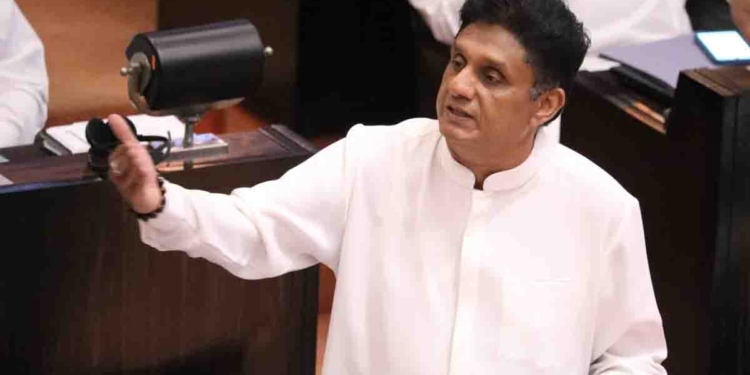
Opposition Leader Sajith Premadasa has strongly criticized the current government’s energy policy, accusing it of failing to uphold its promises of reform and instead strengthening the very fuel energy mafia it pledged to dismantle.
Speaking in a special statement today, Premadasa said that despite pledges made by the JVP-led government to promote renewable energy and transform the corrupt fuel-based energy system, these commitments have remained largely rhetorical. He warned that the government’s recent decision to slash rooftop solar tariffs by 45% — from Rs. 37 to Rs. 20 — will significantly undermine the growth of the solar energy sector.
“This move doesn’t encourage renewable energy adoption; it will discourage individuals and entrepreneurs who are transitioning to sustainable energy. It strengthens the grip of the fuel energy mafia instead of challenging it,” he said.
Adverse Impact on Entrepreneurs and Workers
Premadasa emphasized that the tariff reduction has had a devastating effect on the solar industry, affecting over 1,000 businesses and putting more than 40,000 jobs at risk. He said small- and medium-scale entrepreneurs who invested in solar power are now facing major setbacks due to this abrupt policy change.
“Rather than supporting those who have embraced solar power, the government has left them vulnerable. This is not the change people demanded—it is a betrayal of their expectations,” he added.
Threat to Energy Independence and Environmental Sustainability
Highlighting the importance of renewable energy amid the country’s ongoing energy crisis, the Opposition Leader noted that by 2024, Sri Lanka’s solar sector was contributing 500 megawatts to the national grid. While the government claims to aim for 70% renewable energy, its actions, according to Premadasa, contradict that goal.
“This policy reversal threatens to destroy progress made in renewable energy. Instead of transformation, we’re witnessing the continuation—and even reinforcement—of the fuel mafia,” he said.
Long-Term Economic and Environmental Costs
Premadasa further explained that solar energy offers significant long-term benefits for the country. “Solar power ensures energy security, stabilizes finances, and avoids the volatility of fossil fuel prices. Unlike fuel, solar energy does not harm the environment and is based on local investment, not foreign currency,” he stated.
He also pointed out that costs in the natural gas sector have risen sharply and that reliance on thermal power plants places a heavy dollar burden on the economy. In contrast, solar energy only requires local expenditure, making it a more sustainable solution.
Opposition to Fuel Mafia and Call for Policy Reconsideration
Premadasa urged the government to reconsider its decision and to promote renewable energy instead of enabling those profiting from fossil fuels. “The global energy market is volatile, and the rupee continues to depreciate. Solar energy is key to minimizing foreign exchange outflows. Yet, this government has fallen into the hands of the same fuel mafia it promised to fight.”
He concluded by reaffirming the Samagi Jana Balawegaya’s commitment to energy justice. “We will continue to stand firmly for the people’s right to affordable, clean, and sustainable energy. The people deserve a government that works for their prosperity—not one that protects entrenched interests.”