
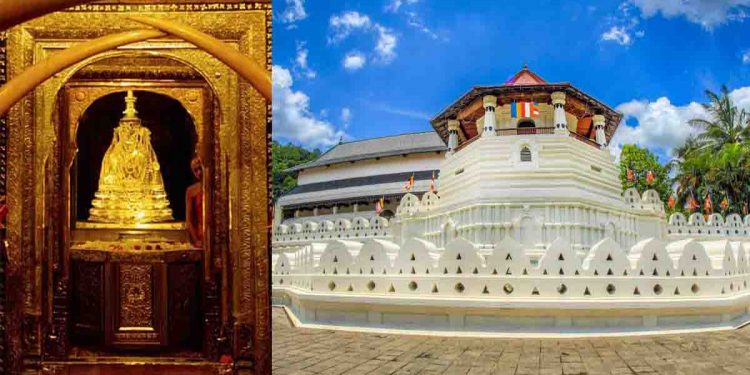
The Sri Dalada Maligawa in Kandy, home to the revered left tooth relic of Gautama Buddha, continues to draw the attention of people locally and globally. The relic, venerated by Buddhists worldwide, symbolizes not just a sacred object but also the profound influence of Siddhartha Gautama Buddha.
Custodianship of the Sri Dalada Maligawa has historically been entrusted to the Malwathu and Asgiri Maha Theros, representing the ancient Buddhist cultural heritage of Sri Lanka. Meanwhile, the lay guardianship of the temple is vested in the position of the Diyawadana Nilame. This year, the highly anticipated election to select the Diyawadana Nilame—a major socio-political event—is scheduled to take place, sparking widespread discussion across the country.
The current government has also shown significant interest in the matter. Reports indicate that the Malwathu and Asgiri Maha Theros have formally requested the government to amend the Vihara Devalagam Act. The Malwathu Maha Thero has conveyed these proposed amendments to the Secretary of the Ministry of Buddha Sasana.
Term Limits and the Diyawadana Nilame Election
A growing number of voices in society are advocating for a reform in the term limits of the Diyawadana Nilame. Many believe that a maximum tenure of ten years is sufficient for the role. Several Basnayake Nilames of historic temples in Kandy expressed to this writer that a decade allows ample time for a Diyawadana Nilame to fulfill their duties effectively.
Under the current laws, the Diyawadana Nilame is permitted to contest for a third term after serving two terms. However, calls for new legislation to limit the tenure to two terms, totaling ten years, have been gaining traction. Comparisons have been drawn with the constitutional term limits for the President of Sri Lanka, who is restricted to two five-year terms. Advocates argue that similar regulations should apply to the Diyawadana Nilame, ensuring a balance of power and opportunities for new leadership.
Unique Voting Traditions and Gender Disparities
The election of the Diyawadana Nilame follows a deeply rooted traditional system governed by specific laws and regulations. Notably, women are excluded from voting in this election. Moreover, women appointed to Divisional Secretariat offices within the Sri Dalada Maligawa or associated temples automatically lose their voting rights, with their votes removed from the total count.
Currently, there are approximately 300 eligible voters in the Diyawadana Nilame election. This group includes the Basnayake Nilames of 13 temples, trustees of key temples, and lay trustees governed by Section 4.1 of the Act, alongside government officials. Among these voters are representatives from Divisional Secretariats across the country.
A Decade of Reflection
As the election approaches, discussions surrounding term limits, the inclusion of women, and the broader implications of this historic process continue to unfold. With calls for reforms to reflect modern values while preserving cultural traditions, the outcome of this year’s election could mark a significant chapter in the history of the Sri Dalada Maligawa.